
Colorectal Cancer
Latest News
Advertisement
Latest Videos

















































Advertisement
More News

Treatment with the novel multikinase inhibitor entrectinib achieved objective responses in 79% of patients with solid tumors associated with NTRK, ROS-1, or ALK rearrangements.

Treatment with ensituximab (NPC-1C), a chimeric IgG1 monoclonal antibody, induced stable disease in nearly half of patients with chemotherapy-refractory metastatic colorectal cancer (mCRC) without contributing significant toxicity.
The protein NOD-like receptor X1 (NLRX1) could be a potential biomarker to predict response for treatments in patients with colorectal cancer (CRC), according to a study published in Cell Reports.
The addition of Yttrium-90 (Y-90) resin microspheres (SIR-Spheres) to standard frontline FOLFOX-based chemotherapy with or without bevacizumab significantly improved liver-specific progression-free survival (PFS) for patients with liver metastatic colorectal cancer (CRC), according to findings from the phase III SIRFLOX study published in the Journal of Clinical Oncology.
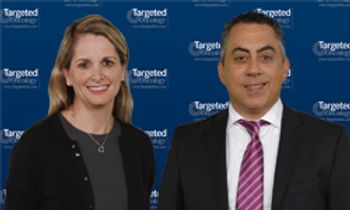
mCRC with Tanios Bekaii-Saab, MD and Tara Seery, MD


The combination of ziv-aflibercept and capecitabine demonstrated an acceptable safety profile and encouraging clinical efficacy for patients with metastatic colorectal cancer, according to findings from the ongoing phase II X-TRAP trial.
Treatments can be better customized and tailored based on each patient's individual desires and characteristics, now that two effective options are available for refractory metastatic colorectal cancer, according to Jennifer Wu, MD.

Jennifer Wu, MD, discusses the issue of deficiencies in enzymes that fix mismatch repairs in colorectal cancer. Wu says targeting the cancer-specific enzymes which allow tumors to repair themselves could stop tumor growth in patients.

John Marshall, MD, discusses the individualization of treatment of patients with colorectal cancer (CRC).
A first-in-human phase I dose-escalation study followed by a small expansion cohort, both of which were conducted solely in Germany, set the stage for what would soon become the FDA-approved dose for regorafenib (Stivarga) of 160 mg/day.

"While adverse events across both populations were broadly similar, some did occur more frequently in patients with longer exposure, an observation that is possibly related to the longer duration in this subgroup," said Axel Grothey, MD.
Regorafenib offers a unique challenge in terms of AE management. AEs with regorafenib have been reported across several clinical trials, and more recently, a clinical case study demonstrated the utility of regorafenib in a "real world" scenario, adding further insight.

To gain further insight into TAS-102 and regorafenib, Targeted Oncology spoke with Tanios Bekaii-Saab, MD, on how he utilizes currently available data to provide optimal care for patients with chemorefractory CRC.
Georgia L. Wiesner, MD, MS, director, Clinical and Translational Hereditary Cancer Program, Ingram Professor of Cancer Research, professor of Medicine, cancer geneticist, Vanderbilt-Ingram Cancer Center, discusses the role genetic testing for colorectal cancer (CRC) plays in families.
Advertisement
Advertisement
Trending on Targeted Oncology - Immunotherapy, Biomarkers, and Cancer Pathways
1
Plinabulin Receives FDA Fast Track Designation in Post-ICI NSCLC
2
FDA Oncology Recap: Approvals, Designations, and Decisions in September 2026
3
Denosumab Biosimilar Approved For Existing Oncology Indications
4
CEPHEUS and Frontline Treatment in Newly Diagnosed Multiple Myeloma
5