




Colorectal Cancer
Latest News

Advertisement
Latest Videos
















































Advertisement
More News

Patients with newly diagnosed metastatic colorectal cancer (mCRC) who had higher levels of vitamin D in their blood lived a median of 8 months longer and experienced greater disease-free survival after their cancer treatment. This research was reported at a press briefing in advance of the 2015 Gastrointestinal Cancers Symposium.

Second-line treatment with the VEGFR2 inhibitor ramucirumab (Cyramza) combined with standard FOLFIRI extended survival by 1.6 months versus FOLFIRI alone in patients with metastatic colorectal cancer (mCRC).

The programmed death receptor-1 (PD-1) ligand, PD-L1, has become a viable target for immunotherapy in cancer, with multiple antibodies now in development.

Randall F. Holcombe, MD, professor, Chief Medical Officer, Cancer, Mount Sinai Health System, discusses the benefits and challenges associated with stool DNA test for colon cancer.

As new therapies enter the treatment landscape for metastatic disease, the role of the oncology nurse becomes even more critical in educating patients about what side effects to look out for and the importance of reporting any adverse events promptly.

The number of therapies available for the treatment of metastatic colorectal cancer (mCRC) has increased dramatically since the mid-1990s, when the only option approved by the FDA was 5-fluorouracil (5-FU).

TAS-102 (tipiracil hydrochloride) has received a fast track designation from the FDA as a treatment for patients with refractory metastatic colorectal cancer (mCRC), according to an announcement by Taiho Oncology, the company developing the drug in the US.

All patients with metastatic colorectal cancer should undergo RAS mutation testing to ensure optimal patient selection for EGFR inhibitor therapy.

The 5-year survival rate for patients with metastatic colorectal cancer (CRC) remains dismal. Liver metastases are a particularly common occurrence, developing in approximately half of all patients with colorectal cancer.

The combination of ramucirumab and FOLFIRI significantly improved overall survival and progression-free survival compared with chemotherapy alone as a second-line treatment for patients with mCRC.

A head-to-head comparison of cetuximab and bevacizumab showed equivalence for chemotherapy plus either agent in terms of OS, PFS, and response rates for patients with certain previously untreated mCRC.

Tanios Bekaii-Saab, MD, Section Chief, Gastrointestinal Oncology, associate professor, Internal Medicine, Pharmacology, The Ohio State University, discusses an analysis of two targeted drugs for the treatment of patients with colorectal cancer (CRC).

Johanna Bendell, MD, director of GI Cancer Research Program, associate director, Drug Development Program, Sarah Cannon Research Institute, discusses the importance of testing CRC patients for BRAF status.

Significantly extended overall survival (OS) and progression-free survival (PFS) was seen with oral nucleoside TAS-102 treatment in patients with metastatic colorectal cancer (mCRC) refractory to standard therapies.

Palliative care involving initial treatment with surgical resection of the primary tumor followed by systemic treatment yielded a 4.7-month OS benefit in patients with mCRC compared with the same treatments administered in the reverse order.

The FDA has approved Cologuard as the first noninvasive stool-based DNA test for the detection of CRC in asymptomatic individuals at average risk, based on clinical trial results demonstrating superiority to the fecal immunochemical test.

Paulo Marcelo Hoff, MD, PhD, FACP, University of São Paulo, Brazil, discusses predicting outcomes with first-line antiangiogenics plus chemotherapy in metastatic colorectal cancer (mCRC).

Two active maintenance regimens following disease stabilization with standard induction therapy demonstrated superior disease-free outcomes compared with no treatment in patients with metastatic colorectal cancer (mCRC).
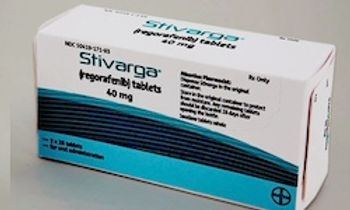
Treatment with regorafenib significantly improved overall survival (OS) and progression-free survival (PFS) in an Asian population of patients with previously treated metastatic colorectal cancer (mCRC).

The liver is a common site of metastatic recurrence for many tumors. For a minority of patients, surgical resection may be an option; however, most patients will not qualify for surgery due to insufficient liver functional reserve or other contraindications.

Paulo Marcelo Hoff, MD, PhD, FACP, University of São Paulo, Brazil, discusses continued angiogenesis suppression following progression on bevacizumab in metastatic colorectal cancer (mCRC).

The FDA has approved the radioactive diagnostic imaging agent Lymphoseek injection to guide sentinel lymph node biopsy in patients with cancer of the head and neck.
Frontline therapy with bevacizumab (Avastin) or cetuximab (Erbitux) combined with either FOLFOX or FOLFIRI yielded a comparable survival benefit of approximately 29 months in patients with <em>KRAS</em> wild-type metastatic colorectal cancer (mCRC).

Paulo Marcelo Hoff, MD, PhD, FACP, discusses a trial that looked at the consistency of effect of ziv-aflibercept in the bevacizumab pre-treated subgroup of patients in the VELOUR trial stratified by first-line progression ≥ 9 months versus < 9 months.

Richard Goldberg, MD, discusses results from the phase III CALGB/SWOG 80405 trial at the 2014 ASCO Annual Meeting.
Advertisement
Advertisement
Trending on Targeted Oncology - Immunotherapy, Biomarkers, and Cancer Pathways
1
Plinabulin Receives FDA Fast Track Designation in Post-ICI NSCLC
2
FDA Oncology Recap: Approvals, Designations, and Decisions in September 2026
3
Denosumab Biosimilar Approved For Existing Oncology Indications
4
CEPHEUS and Frontline Treatment in Newly Diagnosed Multiple Myeloma
5