



HER2 Breast Cancer
Latest News
Advertisement
Latest Videos













































Advertisement
More News

Sunil Verma, MD, MSEd, FRCPC, discusses evolving standards of early stage HER2-positive breast cancer.

Debu Tripathy, MD, co-leader, Women's Cancer Program, University of Southern California Norris Comprehensive Cancer Center, discusses the goals of the SystHERs Registry.

The favorable safety profile of T-DM1 (ado-trastuzumab emtansine; Kadcyla) makes it apt to be looked at in other settings of breast cancer, according to a large study published in the Journal of Clinical Oncology.

Ragene Rivera, MD, medical oncologist, Texas Oncology-El Paso Cancer Treatment Center, discusses the next treatment steps for a patient with HER2-negative chemotherapy-resistant metastatic breast cancer.

Linda D. Bosserman, MD, FACP, president, medical oncologist, Wilshire Oncology Medical Group, discusses how she determines if a patient is resistant to a taxane or anthracyclines.

Linda D. Bosserman, MD, FACP, president, medical oncologist, Wilshire Oncology Medical Group, discusses how she would treat a patient with HER2-negative metastatic breast cancer.

Ragene Rivera, MD, medical oncologist, Texas Oncology-El Paso Cancer Treatment Center, discusses how she decides between hormone therapies in patients with ER+/PR+ tumors.

Joyce A. O’Shaughnessy, MD, from Baylor Charles A. Sammons Cancer Center, discusses the results of a recent breast cancer study.

Robert L. Kirkman, MD, President and CEO, Oncothyreon, discusses the development of ONT-380, an oral HER2-specific inhibitor, for the treatment of patients with HER2-positive metastatic breast cancer.
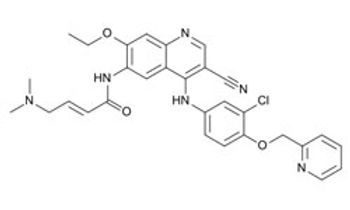
Extended adjuvant treatment with neratinib (PB272, HKI-272) significantly improved disease-free survival (DFS) compared with placebo for patients with HER2-positive breast cancer who received prior adjuvant trastuzumab.
Sara Hurvitz, MD, medical oncologist, UCLA Medical Center, discusses patient outcomes associated with PIK3CA mutations.

Adam M. Brufsky, MD, PhD, discusses the results of a study that looked at the effect of prior trastuzumab on eribulin mesylate in combination with trastuzumab as first-line treatment for HER2-positive locally recurrent or MBC.

Sunil Verma, MD, MSEd, FRCPC, associate professor, University of Toronto, chair, Breast Medical Oncology, Sunnybrook Odette Cancer Centre, discusses targeting HER2 in patients with early-stage breast cancer.

Sunil Verma, MD, MSEd, FRCPC, associate professor, University of Toronto, chair, Breast Medical Oncology, Sunnybrook Odette Cancer Centre, comments on HER2 testing and the utility of Ki67.

Targeted Oncology spoke about progress in the treatment of HER2-positive breast cancer with breast cancer expert, Sunil Verma, MD, MSEd, FRCPC.

The adaptive I-SPY 2 trial has found that a neoadjuvant regimen of neratinib and standard chemotherapy is beneficial for high-risk patients with hormone receptor (HR)-negative, HER2-positive stage II/III breast cancer.

The combination of palbociclib and letrozole more than doubled PFS and showed a non–statistically significant 4.2-month improvement in OS for patients with ER-positive, HER2-negative metastatic breast cancer.

Sunil Verma, MD, MSEd, FRCPC, University of Toronto, Breast Medical Oncology, Sunnybrook Odette Cancer Centre, discusses advances in the treatment of patients with metastatic HER2-positive breast cancer.
The Journal of Targeted Therapies in Cancer discussed various issues regarding new and existing therapies in breast cancer with Richard Finn, MD.

Significant developments in research and treatment for HER2-positive breast cancer have emerged over the past year. Those advances include a growing number of studies measuring the effectiveness of dual agents.
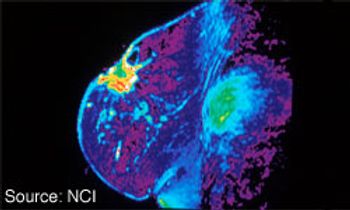
Neoadjuvant and adjuvant therapies, administered before and after primary anticancer therapy, respectively, have been shown in numerous clinical trials to reduce recurrence and improve survival in patients with breast cancer.
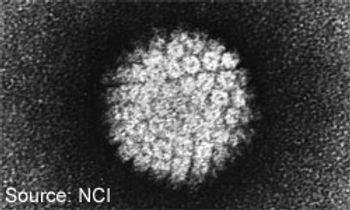
Researchers have completed a comprehensive genomic analysis of cervical cancer in two patient populations. The study identified recurrent genetic mutations not previously found in cervical cancer, including one for which targeted agents have been approved in other cancers.

The I-SPY 2 trial, which is evaluating novel agents in the neoadjuvant treatment of breast cancer, may accelerate and influence the way that oncology drugs are tested and approved in the near future.
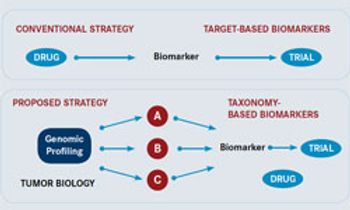
The development of predictive biomarkers is widely accepted as an important milestone in the move toward personalized, or precision, medicine and the ability to identify the right drug for the right patient. JTT interviewed Kopetz about biomarker models.

Findings reported at the 2013 San Antonio Breast Cancer Symposium showed that PIK3CA-mutated tumors in patients with HER2-positive (HER+) breast cancer (BC) are associated with a much lower rate of pathological complete response (pCR).
Advertisement
Advertisement
Trending on Targeted Oncology - Immunotherapy, Biomarkers, and Cancer Pathways
1
Anito-Cel Delivers Durable Responses With Low Neurotoxicity in RRMM
2
Risk, Histology, and Metastatic Site Guide First-Line RCC Treatment Choices
3
FDA Application Withdrawn for I-DXd in Small Cell Lung Cancer
4
Elinzanetant Gets Priority Review for VMS From Breast Cancer Endocrine Therapy
5