


LEUKEMIAS
Latest News
Advertisement
Latest Videos















































Advertisement
More News

CPX-351 (Vyxeos), a fixed-combination of daunorubicin and cytarabine, has been approved by the FDA for adult patients with newly diagnosed therapy-related acute myeloid leukemia (t-AML) or AML with myelodysplasia-related changes (AML-MRC), based on an improvement in overall survival (OS) in a phase III study.
Enasidenib (Idhifa) has been approved by the FDA as a treatment for patients with relapsed or refractory <em>IDH2</em>-mutated acute myeloid leukemia (AML), based on findings from a phase I/II study. A companion diagnostic, the RealTime IDH2 Assay, was also approved for the detection of the <em>IDH2</em> mutation.
The FDA has granted breakthrough therapy designation to venetoclax (Venclexta) for use in combination with low dose cytarabine (LDAC) in treatment-naïve elderly patients with acute myeloid leukemia (AML) who are ineligible for intensive chemotherapy, according to Roche, which is codeveloping the BCL-2 inhibitor with AbbVie.

Midostaurin (Rydapt) has been recommended for approval by the European Medicines Agency's Committee for Medicinal Products for Human Use (CHMP) to treat adults with newly diagnosed acute myeloid leukemia (AML) who are FLT3 mutation–positive.
The Oncologic Drugs Advisory Committee voted 10-0 today to recommend approval of a biologics license application for tisagenlecleucel for the treatment of patients aged 25 or younger with relapsed/refractory B-cell acute lymphoblastic leukemia.
In a 6-1 vote, the FDA’s Oncologic Drugs Advisory Committee (ODAC) voted in favor of approving gemtuzumab ozogamicin in combination with daunorubicin and cytarabine for the treatment of patients with newly-diagnosed CD33-positive acute myeloid leukemia.
Blinatumomab (Blincyto) has been granted a full approval by the FDA as a treatment for adults and children with relapsed/refractory B-cell precursor acute lymphoblastic leukemia, regardless of Philadelphia chromosome status.

Jeff Sharman, MD, discusses findings of the phase III GENUINE study, which explored the combination of ublituximab (TG-1101) and ibrutinib (Imbruvica) for patients with previously treated high-risk chronic lymphocytic leukemia (CLL).
Subcutaneous rituximab has been approved by the FDA for the treatment of adults with previously untreated and relapsed or refractory follicular lymphoma, previously untreated diffuse large B-cell lymphoma, and previously untreated and previously treated CLL.
The FDA has scheduled a public hearing of its Oncologic Drugs Advisory Committee (ODAC) to address a biologics license application (BLA) for tisagenlecleucel-T (CTL019) for patients aged 3 to 25 years with relapsed/refractory B-cell acute lymphoblastic leukemia (ALL). The hearing is planned for July 12, 2017.
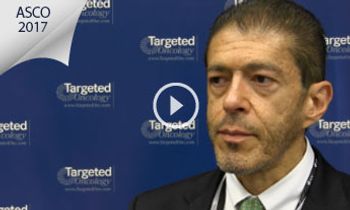
Jorge Cortes, MD, deputy chair of the Department of Leukemia, The University of Texas MD Anderson Cancer Center, discusses initial results from the BFORE trial, which is exploring bosutinib (Bosulif) versus imatinib (Gleevec) for newly diagnosed chronic myeloid leukemia.
A new drug application from Jazz Pharmaceuticals has been accepted by the FDA for a novel CPX-351 injection (Vyxeos) for the treatment of acute myeloid leukemia.
Gail J. Roboz, MD, discusses the recent FDA approval of midostaurin and what else is emerging in the treatment landscape in AML.
Steven Coutre, MD, discusses ongoing efforts to enhance frontline outcomes for patients with CLL.
Richard M. Stone, MD, discusses the impact that midostaurin could have for patients with AML, as well as ongoing research with the agent.
Midostaurin (Rydapt) has been approved by the FDA for the treatment of adult patients with newly diagnosed <em>FLT3</em>-positive acute myeloid leukemia (AML) in combination with standard cytarabine and daunorubicin induction and cytarabine consolidation.
Patients with chronic lymphocytic leukemia (CLL) who stopped treatment with ibrutinib due to toxicities had longer survival than those who discontinued for other reasons, including progression and Richter transformation, according to the results of a recently published study.
The investigational tyrosine kinase inhibitor quizartinib is extremely promising as a monotherapy for patients with <em>FLT3-ITD–</em>positive relapsed acute myeloid leukemia.
Richard M. Stone, MD, discusses what is currently understood regarding the genetic landscape in acute myeloid leukemia (AML).
Andrew Wei, MBBS, PhD, discusses a study which explored the safety and efficacy of the novel BCL-2 inhibitor venetoclax in combination with low-dose cytarabine chemotherapy for treatment-naïve patients over the age of 65 with AML.

Mutations in isocitrate dehydrogenase 1 and 2 (<em>IDH1/2</em>) are not the mutations commonly found in cancer cells, according to a presentation from the 2017 AACR Annual Meeting.

Sudipto Mukherjee, MD, assistant staff, Gaussig Cancer Institute, Cleveland Clinic, discusses a study exploring eltrombopag to enhance platelet count recovery in elderly patients with acute myeloid leukemia (AML).
The FDA has granted a priority review to a supplemental biologics license application (sBLA) supporting the conversion of the accelerated approval of blinatumomab (Blincyto) to a full approval as a treatment for patients with Philadelphia chromosome-negative (Ph-) relapsed/refractory B-precursor acute lymphoblastic leukemia (ALL).
Tisagenlecleucel-T (CTL019) has been granted a priority review designation by the FDA as a treatment for pediatric and young adult patients with relapsed and refractory B-cell acute lymphoblastic leukemia.
Subcutaneous rituximab has received the FDA’s Oncologic Drugs Advisory Committee (ODAC) unanimous (11-0) recommended approval for the treatment of patients with certain blood cancers.
Advertisement
Advertisement
Trending on Targeted Oncology - Immunotherapy, Biomarkers, and Cancer Pathways
1
Plinabulin Receives FDA Fast Track Designation in Post-ICI NSCLC
2
FDA Oncology Recap: Approvals, Designations, and Decisions in September 2026
3
Denosumab Biosimilar Approved For Existing Oncology Indications
4
CEPHEUS and Frontline Treatment in Newly Diagnosed Multiple Myeloma
5