


LEUKEMIAS
Latest News
Advertisement
Latest Videos















































Advertisement
More News

With a number of effective targeted therapies now available for patients with myeloproliferative neoplasms and chronic myeloid leukemia, patient selection for transplantation should rely heavily on prognostic scoring.

Naval Daver, MD, assistant professor, Department of Leukemia, Division of Cancer Medicine, The University of Texas MD Anderson Cancer Center, discusses agents being investigated in acute myeloid leukemia (AML).
Results from the phase Ib M13-365 study showed combining the BCL-2 inhibitor venetoclax (Venclexta) with the anti-CD20 agent rituximab (Rituxan) led to objective responses in 86% of patients with relapsed/refractory chronic lymphocytic leukemia (CLL).
The FDA has approved ofatumumab (Arzerra) in combination with fludarabine and cyclophosphamide as a treatment for patients with relapsed chronic lymphocytic leukemia (CLL). The approval was based on an improvement in progression-free survival (PFS) in the phase III COMPLEMENT-2 study.
Two-thirds of patients with chronic myeloid leukemia who ceased to receive the TKI treatment imatinib did not relapse after six months, according to Johan Richter, MD, PhD.
Blinatumomab almost doubles the overall survival of patients with relapsed/refractory acute lymphoblastic leukemia, according to Max Topp, MD.
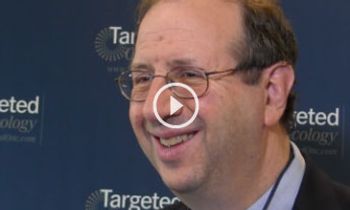
Richard M. Stone, MD, Program Director, Adult Leukemia Program, Dana-Farber Cancer Institute, discusses the CALGB 10603 trial, which explored the use of midostaurin as a treatment for patients with FLT3-mutated acute myeloid leukemia.
Pracinostat has received a breakthrough therapy designation from the FDA, when given in combination with azacitidine, for the treatment of patients with newly diagnosed acute myeloid leukemia (AML) aged 75 years or older, or for those who are ineligible for intensive chemotherapy, according to MEI Pharma, the company developing pracinostat.

Frankie Ann Holmes, MD, medical oncologist, Texas Oncology, discusses the implications of the results of the MA17R trial, which is a randomized phase III clinical trial that examined the benefits of extending aromatase inhibitors with letrozole as a treatment for postmenopausal patients with early breast cancer.
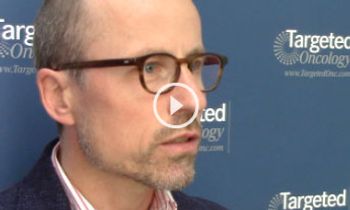
Raoul Tibes, MD, PhD, physician-scientist at the University Hospital Head Myeloid Malignancies, Department of Internal Medicine II at the University Hospital in Würzburg, and adjunct consultant at Mayo Clinic, discusses the role of FLT3 inhibitors in the treatment of patients with acute myeloid leukemia.
Survivors of acute myeloid leukemia (AML) produce antibodies that kill leukemia cells following allogeneic hematopoietic stem cell transplantation (HSCT) that can be used to treat other patients with AML.
Patients with chronic phase chronic myeloid leukemia (CML) can safely conclude treatment of tyrosine kinase inhibitors (TKIs) following a maintained deep molecular remission, according to findings from the large EURO-SKI trial presented at the 2016 European Hematology Association (EHA) Congress.
Final data from a phase III trial of CPX-351 (Vyxeos) in older patients with high-risk, secondary acute myeloid leukemia (AML) revealed that CPX-351 reduced the mortality risk by 31% compared with cytarabine and daunorubicin (7+3), according to findings presented at the 2016 ASCO Annual Meeting.
The FDA has lifted a clinical hold placed on a phase II study exploring the CD19-targeted CAR-T cell therapy JCAR015 for adult patients with relapsed or refractory B cell acute lymphoblastic leukemia.
The anti-CD22 antibody-drug conjugate inotuzumab ozogamicin demonstrated significantly improved progression-free survival (PFS) and complete remission (CR) rates compared with chemotherapy for patients with relapsed or refractory acute lymphoblastic leukemia (ALL).
Ibrutinib (Imbruvica) continued to demonstrate impressive antitumor activity in a pooled analysis of 243 patients with deletion 17p chronic lymphocytic leukemia.

Infusion with 19-28z chimeric antigen receptor (CAR) modified T-cells led to complete response (CR) rates of 77% to 90% and minimal residual disease (MRD)-CR rates of 68% to 70% in adult patients with relapsed or refractory B-cell acute lymphocytic leukemia (B-ALL).
The treatment paradigm for relapsed/refractory chronic lymphocytic leukemia (CLL) is slowly expanding, with clinical trials starting and a new generation of drugs being ushered in, says Susan M. O'Brien, MD.
Despite the RESONATE-2 trial having demonstrated the efficacy of ibrutinib (Imbruvica) in treatment-naive elderly patients with chronic lymphocytic leukemia (CLL), Jennifer Brown, MD, explains that oncologists should carefully select patients to receive the drug depending on their age, comorbidities, and risk.
CPX-351 (Vyxeos) has been granted a breakthrough therapy designation by the FDA as a treatment for patients with therapy-related acute myeloid leukemia or AML with myelodysplasia-related changes.

The FDA has updated the label for ibrutinib to include new overall survival data, an indication for the BTK inhibitor in combination with bendamustine/rituximab, and a new indication for patients with small lymphocytic lymphoma with a 17p deletion.

The FDA has granted a priority review to a supplemental biologics license application that would extend the indication for blinatumomab to include the treatment of pediatric and adolescent patients with Philadelphia chromosome-negative relapsed or refractory B-cell precursor acute lymphoblastic leukemia.
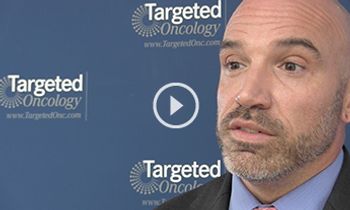
Jeffrey Jones, MD, discusses treatment options for patients with chronic lymphocytic leukemia (CLL) who progress on, or become intolerant of, idelalisib or ibrutinib during their treatment.

The FDA approved the BCL-2 inhibitor venetoclax (Venclexta) for patients with chronic lymphocytic leukemia (CLL) who have a 17p deletion (del[17p]), following at least 1 prior therapy.

Multiple targeted therapies have shown promising signs of efficacy for patients with acute myeloid leukemia (AML), including the FLT3 inhibitor midostaurin and novel IDH inhibitors, with the ongoing potential for combination strategies in the future, according to Eytan M. Stein, MD.
Advertisement
Advertisement
Trending on Targeted Oncology - Immunotherapy, Biomarkers, and Cancer Pathways
1
Plinabulin Receives FDA Fast Track Designation in Post-ICI NSCLC
2
FDA Oncology Recap: Approvals, Designations, and Decisions in September 2026
3
Denosumab Biosimilar Approved For Existing Oncology Indications
4
CEPHEUS and Frontline Treatment in Newly Diagnosed Multiple Myeloma
5