


MULTIPLE MYELOMA
Latest News
Advertisement
Video Series
Latest Videos
Shorts
0:57
Can Myeloma Treatment Be Done at Home?
5 months ago
by
Sikander Ailawadhi, MD
0:46
Combining CELMoDs and Cell Therapies in Myeloma
6 months ago
by
Sagar Lonial, MD, FACP
0:46
Survival With Bispecific Combo Favors Early Use in Myeloma
6 months ago
by
Roberto Mina, MD
1:04
MajesTEC-3 Outcomes Lead to Rapid Myeloma Combo Approval
6 months ago
by
Luciano Costa, MD, PhD
1:30
How Mezigdomide Reinvigorates the Immune System
6 months ago
by
Paul G. Richardson, MD
0:41
How MRD Could Fast-Track Cancer Breakthroughs
6 months ago
by
Sagar Lonial, MD, FACP
1:01
The Power of Perseverance: Finding Strength in Shared Journeys
a year ago
by
Jered Haddad
0:38
Empowering Conversations: A Guide for Supporting New Diagnoses
a year ago
by
Jered Haddad
0:21
Understanding High-Risk Smoldering Multiple Myeloma
a year ago
by
Paula Rodriguez Otero, MD, PhD
1:00
Talquetamab: The Perfect Bridge to CAR T?
a year ago
by
Binod Dhakal, MD, MS








































Advertisement
More News
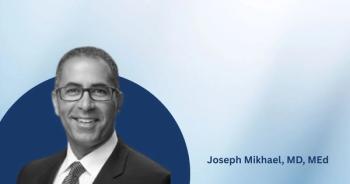
In an interview, Joseph Mikhael, MD, MEd, discusses the impact of the approval of subcutaneous isatuximab and its on-body delivery system in multiple myeloma.

A phase 1 trial of the radiotherapeutic determined a recommended phase 2 dose after promising activity in heavily pretreated multiple myeloma.
Analyses of the CASSIOPEIA trial showed that some patients' outcomes could be associated with disease features besides depth of response alone.
The FDA will review the CELMoD mezigdomide in combination with carfilzomib, and dexamethasone based on the SUCCESSOR-2 trial.
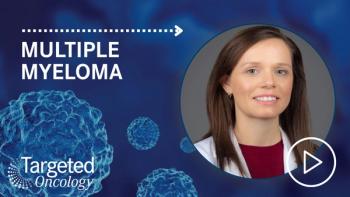
Doris K. Hansen, MD, discusses what she hopes long-term real-world data on CAR T-cell therapy will show in order to better inform treatment of multiple myeloma.
Heather J. Landau, MD, discusses the most exciting outcomes observed in a trial of BCMA-targeted NXC-201 for light chain amyloidosis.
Doris K. Hansen, MD, discusses outcomes from a large retrospective study of patients treated with ciltacabtagene autoleucel for relapsed/refractory multiple myeloma.

During a live event, Prerna Mewawalla, MD, discussed the choice between bispecific antibody therapy and CAR T-cell therapy in myeloma as both therapies have been introduced earlier in sequence.
The FDA approval was based on studies using an on-body injector to administer isatuximab easily.

In an interview, Melody Chang, MBA, RPh, BCOP, explains the work that went into ensuring access to bispecific antibodies across a network of community oncology practices.
Peter Voorhees, MD, discusses the cost-benefit question of adding pomalidomide to daratumumab and talquetamab in early relapsed multiple myeloma.
In an interview, Peter Voorhees, MD, discusses why talquetamab is typically sequenced after BCMA-targeting agents and the unique situations where it might be used first.
During a live event, Sikander Ailawadhi, MD, and participants discussed treatment selection for a patient with heavily pretreated multiple myeloma who was not a candidate for CAR T-cell therapy and had exhausted both BCMA and GPRC5D-targeted bispecific options.
During a live event, Syed Abbas Ali, MBBS, and participants discussed treatment selection for a patient who has not yet received BCMA-targeted therapy after a second relapse of multiple myeloma.
Heather J. Landau, MD, discusses results from a trial of the investigational CAR T-cell therapy NXC-201 in relapsed/refractory AL amyloidosis.

Heather J. Landau, MD, discussed promising results of CAR T-cell therapy in light chain amyloidosis and the challenge of developing trials for this rare plasma cell disorder.
During a live event, Gurbakhash Kaur, MD, and Donna Catamero, ANP-BC, OCN, CCRC, and participants discussed frontline treatment selection, duration of therapy, and the emerging role of MRD-guided decision-making in newly diagnosed multiple myeloma.
Long-term follow-up from IMROZ included findings on MRD dynamics with quadruplet frontline therapy in multiple myeloma.
Andrew Spencer, MBBS, discusses how the inMMyCar trial is finding promise for in vivo CAR T-cell therapy in patients with relapsed/refractory multiple myeloma.
Susan Bal, MD, discusses outcomes with arlo-cel, a GPRC5D-targeted CAR T product in relapsed/refractory multiple myeloma.
During a live event, Prerna Mewawalla, MD, and participants discussed selecting therapy for patients with early relapsed/refractory multiple myeloma who are not candidates for CAR T-cell therapy.
At the EHA 2026 Congress, researchers presented novel treatments and combinations for newly diagnosed multiple myeloma, relapsed disease, and smoldering myeloma.
A retrospective analysis shows strong outcomes with CAR T-cell therapy in real-world patients with multiple myeloma, Doris K. Hansen, MD, explains.
The phase 3 trial showed benefit with talquetamab/daratumumab with or without pomalidomide as early as the second line in myeloma.
In vivo anti-BCMA CAR T infusion shows favorable efficacy and safety with some patients beyond 9 months free of progression.
Advertisement
Advertisement
Trending on Targeted Oncology - Immunotherapy, Biomarkers, and Cancer Pathways
1
Anito-Cel Delivers Durable Responses With Low Neurotoxicity in RRMM
2
Risk, Histology, and Metastatic Site Guide First-Line RCC Treatment Choices
3
FDA Application Withdrawn for I-DXd in Small Cell Lung Cancer
4
Frontline CAR T and Bispecific Antibodies Are the Next Frontier in Myeloma
5