

Ovarian Cancer
Latest News
Advertisement
Latest Videos







































Advertisement
More News

Phase 3 DUO-O study results reveal a promising strategy for patients with HRD-negative advanced ovarian cancer.

Bruno Bockorny, MD, discusses the phase 1 C-800 trial of botensilimab plus bastilimab, specifically for patients in the C-800-01 cohort with recurrent platinum refractory/resistant ovarian cancer.

The approved PARP inhibitor niraparib has been beneficial for patients with recurrent ovarian cancer, but new second-line restrictions for certain patients have led physicians to be more cautious when re-challenging these patients.

ACR-368 generated deep and durable responses across several phase 2 studies. The agent has now been granted fast track designations for patients with platinum-resistant ovarian cancer and endometrial cancer.

In an interview with Targeted Oncology for World Ovarian Cancer Day, Natalie Godbee, DO, discussed the current state of treatment for advanced ovarian cancer and how oncologists can get the best outcomes for their patients.

Impressive efficacy data and consistent safety data continue to be seen with mirvetuximab soravtansine for the treatment of patients with platinum-resistant ovarian cancer, according to data from the confirmatory MIRASOL trial.
Treatment with niraparib elicited durable conditional progression-free survival rates vs placebo in patients with ovarian cancer whose tumors were homologous recombination deficient.

Matthew Anderson, MD, PhD, discusses how the results with niraparib for patients with advanced ovarian cancer impacts the use of somatic profiling in this patient population.
Bruno Bockorny, MD, explains the mechanism of action of botensilimab and its use in combination with balstilimab for ovarian cancer treatment.
During a Targeted Oncology™ Case-Based Roundtable™ event, Paul D. DiSilvestro, MD, discussed the key trials supporting the use of PARP inhibitor maintenance therapy for patients with advanced ovarian cancer.

The safety, tolerability, pharmacokinetics, and pharmacodynamics of IDE161, a potent, selective, small-molecule inhibitor of PARG, is being evaluated in a phase 1 clinical trial for advanced solid tumors.
Using the recommended doses of 50 and 70 mg per day from a phase 1a trial of NXP800, the agent will be further evaluated in patients with platinum-resistant, ARID1a-mutated ovarian cancer.
Mirvetuximab soravtansine is being assessed in combination with bevacizumab as a treatment for patients with folate receptor-alpha-positive recurrent platinum-sensitive ovarian cancer.
In an interview with Targeted Oncology, Bruno Bockorny, MD, discussed background and key takeaways from the phase 1 C-800 study.
In the phase 3 DUO-O study, combing 5 targeted and chemotherapy agents for the treatment of newly diagnosed, advanced, high-grade epithelial ovarian cancer with or without BRCA mutations has shown to extend progression-free survival.
Bruno Bockorny, MD, discusses the findings from a study of botensilimab plus bastilimab for the treatment of patients with recurrent platinum refractory/resistant ovarian cancer.
In updated findings of the ENGOT-OV16/NOVA trial, final overall survival data of niraparib maintenance therapy showed a benefit for patients with recurrent ovarian cancer; however, mature data showed no significant benefit. In updated findings of the ENGOT-OV16/NOVA trial, final overall survival data of niraparib maintenance therapy showed a benefit for patients with recurrent ovarian cancer; however, mature data showed no significant benefit.

Carolina Frailty Index Score can effectively assess frailty status in women with ovarian cancer.
Among patients with newly diagnosed, advanced ovarian cancer, dose modifications to frontline niraparib maintenance therapy did not affect progression-free survival.
The phase 2 KGOG3046 is the first study to show survival outcomes with the dual checkpoint blockades, durvalumab and tremelimumab, combined with neoadjuvant chemotherapy for the treatment of patients with newly diagnosed advanced ovarian cancer.
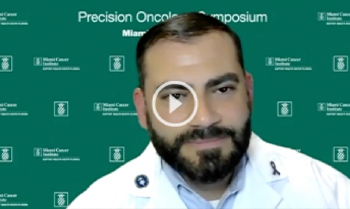
John Diaz, MD, discusses some of the challenges with using targeted therapies in the ovarian cancer space.
According to Vadim Gushchin, MD, treatment with cytoreductive surgery and hyperthermic intraperitoneal chemotherapy should not be limited by concerns of how it may impact a patient’s health-related quality of life.

During a Targeted Oncology™ Case-Based Roundtable™ event, Paul D. DiSilvestro, MD, discussed the updated results of the PAOLA-1 trial of bevacizumab followed by olaparib maintenance in patients with advanced ovarian cancer. This is the third of 3 articles based on this event.
A new study investigation ART0380 and gemcitabine for the treatment of patients with platinum-resistant ovarian cancer has begun.
John Diaz, MD, discusses some of the targeted therapies that are showing promise for patients with ovarian cancer.
Advertisement
Advertisement
Trending on Targeted Oncology - Immunotherapy, Biomarkers, and Cancer Pathways
1
IMS Day 1 Recap: Bispecific and CAR T Data Shape Myeloma Treatment
2
Rusfertide Receives NCCN Category 1 Designation in Polycythemia Vera
3
Life-Years Saved Captures Gains—and Gaps—in Blood Cancer Treatment
4
Global Experts Define Consensus Criteria for Cure in Multiple Myeloma
5