

Ovarian Cancer
Latest News
Advertisement
Latest Videos

































Advertisement
More News
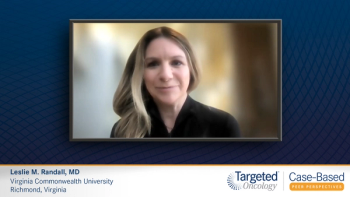
Expert Leslie Randall, MD, discusses the case of a 71-year-old woman who is diagnosed with ovarian cancer. Dr. Randall reviews data with PARP inhibitors and rationale for use of maintenance therapy in patients with platinum-sensitive disease.
During a live virtual event, Adam C. ElNaggar discussed with participants whether patients who respond to PARP inhibitors for advanced ovarian cancer should continue to receive them indefinitely.
Ursula A. Matulonis, MD, discusses the impact of PARP inhibitors on ovarian cancer treatment.

Melissa M. Hardesty, MD, discusses the challenges faced within the community setting in regard to the treatment landscape for advanced ovarian cancer.
Eric Pujade-Lauraine, MD, discusses the differences in testing for homologous recombination repair deficiency in patients with ovarian cancer throughout countries.
During a live virtual event, Adam C. ElNaggar, MD, discussed with participants their experiences with PARP inhibitors in patients with ovarian cancer.
William H. Bradley, MD, discusses the 5-year follow-up of the SOLO-1 trial of olaparib maintenance in patients with BRCA1/2-mutated advanced ovarian cancer.

During a Targeted Oncology case-based roundtable event, Rachel N. Grisham, MD, discussed clinical trials of different PARP inhibitors for patients with ovarian cancer.
Thomas C. Krivak MD, John K. Chan, MD, and Cecelia H. Boardman, MD, share insight on recent updates to maintenance therapy, unmet needs, and the future treatment landscape for ovarian cancer.

Thomas C. Krivak, MD, leads a discussion on initiating antihypertensive therapy for patients with ovarian cancer who develop treatment-associated hypertension.

Experts in gynecologic oncology review the case of a 69-year-old woman with newly diagnosed high-serous carcinoma and discuss their approach to maintenance therapy after first-line chemotherapy plus bevacizumab.
Findings around trametinib as treatment of patients with an ovarian cancer subtype represent a major advance in the treatment of women with this rare ovarian and peritoneal cancer subtype, according to David Gershenson, MD.
Cecelia H. Boardman, MD, John K. Chan, MD, and Thomas C. Krivak, MD, share strategies for monitoring adverse events and the optimal duration for niraparib maintenance therapy for a patient with advanced ovarian cancer.
Thomas C. Krivak, MD; John K. Chan, MD; Cecelia H. Boardman, MD; and Ashley Farione, PA-C, review the optimal approach to maintenance therapeutic options for a patient with stage III, high-grade serous epithelial ovarian cancer.
Experts in gynecologic oncology review the case of a 71-year-old woman who is diagnosed with stage III, high-grade serous epithelial ovarian cancer, and comment on their approach to genetic testing in the frontline setting.
Dr Chirag A. Shah highlights novel emerging treatments in ovarian cancer and provides advice for community oncologists.
Chirag A. Shah, MD, details his personal clinical experience with using niraparib for ovarian cancer maintenance therapies.
An expert shares data from several clinical trials on the use of PARP inhibitors for maintenance therapies in ovarian cancer.
Dr Chirag A. Shah explains the front-line treatment options for ovarian cancer and the factors considered in choosing maintenance therapies.
A gynecologic oncologist discusses the importance of molecular testing in ovarian cancer and how it influences treatment selection.
Chirag A. Shah, MD, presents and reviews the case of a 59-year-old woman with ovarian cancer.

Promising results have been reported from the phase 1 study OCTAVE clinical trial.
Cecelia H. Boardman, MD, John K. Chan, MD, and Thomas C. Krivak, MD, provide insight on dosing schedules for niraparib maintenance in advanced ovarian cancer.
Thomas C. Krivak, MD, leads a discussion on guideline recommendations regarding the use of PARP inhibitors in newly diagnosed advanced ovarian cancer.
Experts in gynecologic oncology review data and clinical implications for the use of PARP inhibitors from the GOG-0218, SOLO-1, PRIMA, and PAOLA-1 trials in advanced ovarian cancer.
Advertisement
Advertisement
Trending on Targeted Oncology - Immunotherapy, Biomarkers, and Cancer Pathways
1
IMS Day 1 Recap: Bispecific and CAR T Data Shape Myeloma Treatment
2
Rusfertide Receives NCCN Category 1 Designation in Polycythemia Vera
3
Life-Years Saved Captures Gains—and Gaps—in Blood Cancer Treatment
4
Global Experts Define Consensus Criteria for Cure in Multiple Myeloma
5