
An investigator reported at the 55th annual meeting of the American Society of Hematology (ASH) that imetelstat, a telomerase inhibitor, has demonstrated significant activity in myelofibrosis, including complete responses.

An investigator reported at the 55th annual meeting of the American Society of Hematology (ASH) that imetelstat, a telomerase inhibitor, has demonstrated significant activity in myelofibrosis, including complete responses.

In patients with previously untreated chronic lymphocytic leukemia (CLL) who are considered inappropriate for fludarabine, the addition of ofatumumab to chlorambucil improves clinical outcomes and is tolerable irrespective of patient age or fitness.

Steven Treon, MD, PhD, reported that ibrutinib rapidly reduced serum immunoglobulin M (IgM) levels and improved hematocrit levels in patients with relapsed or refractory Waldenström’s macroglobulinemia (WM), and the responses to ibrutinib were durable.

According to preliminary results of a phase I clinical trial, nearly half of patients with relapsed or refractory CLL attained objective responses when treated with IPI-145, an oral inhibitor of PI3K-delta and -gamma.

According to data presented at the 55th Annual Meeting of the American Society of Hematology in New Orleans, a first-in-class targeted agent demonstrated activity in patients with relapsed and refractory multiple myeloma.

Shaji K. Kumar, MD, discusses the results of a phase II trial of single agent MLN9708 in patients with relapsed multiple myeloma not refractory to bortezomib.

An orally bioavailable selective inhibitor of the Bcl-2 protein induced remissions in patients with relapsed/refractory CLL and SLL.

A randomized trial showed that patients with CLL and major comorbidities had significantly better outcomes when treated with obinutuzumab, an anti-CD20 monoclonal antibody, instead of rituximab.
In patients with transplant-ineligible NDMM, the combination of continuous lenalidomide and low-dose dexamethasone (continuous Rd) extends PFS and trends toward improving OS compared with the standard combination of MPT.

CRs were seen in a group of high-risk patients following intervention in early or “smoldering†myeloma with a three-drug regimen, suggesting a window of opportunity that may delay or prevent progression to a debilitating disease state.

Jennifer Brown, MD, PhD, discusses final stage 2 results of the CLL11 trial at the 2013 American Society of Hematology (ASH) Meeting.

Results of a small clinical study showed that in patients with posttransplant relapsed B-cell malignancies, treatment with engineered donor T cells led to substantial tumor regression.
James R. Berenson, MD, discusses a study presented at the 2013 American Society of Hematology (ASH) Meeting that looked at arming an anti-CD38, myeloma-targeting antibody with interferon.
Marcel R.M. van den Brink, MD, PhD, Head, Division of Hematologic Oncology, Alan N. Houghton Chair, Memorial Sloan-Kettering Cancer Center, highlights two studies that will be presented at the 2013 American Society of Hematology (ASH) Meeting.

Photos from the 54th American Society of Hematology (ASH) Annual Meeting and Exposition, held at the Georgia World Congress Center, Atlanta, GA, from December 8-11, 2012.

Sundar Jagannath, MD, Director, Multiple Myeloma Program, The Tisch Cancer Institute at The Mount Sinai Medical Center, discusses the use of pomalidomide in relapsed or refractory multiple myeloma.

Expanding the use of brentuximab vedotin to treat patients with advanced Hodgkin lymphoma and sALCL in earlier settings than currently indicated has resulted in high response rates in phase I studies.

Andrew D. Zelenetz, MD, PhD, Vice Chair, Medical Informatics, Department of Medicine; Chief, Lymphoma Service, Memorial Sloan-Kettering Cancer Center, discusses CD30 as a target in lymphoma.

Quizartinib, a novel tyrosine kinase inhibitor, demonstrated a clinical benefit in patients with a particularly deadly form of acute myeloid leukemia in results of a phase II study presented during the 54th Annual ASH Meeting.

Michelle A. Fanale, MD, Associate Professor, Division of Cancer Medicine, The University of Texas MD Anderson Cancer Center, discusses brentuximab vedotin in CD30-positive lymphomas.

An investigational, selective JAK2 inhibitor known as SAR302503 reduced spleen size in patients with myelofibrosis, according to phase II data presented at the 2012 American Society of Hematology Annual Meeting and Exposition.
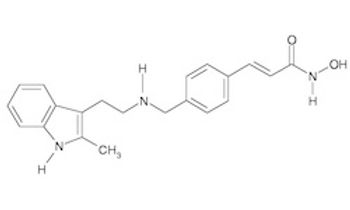
Two studies presented at the 54th ASH Annual Meeting and Exposition, highlighted the possible use of panobinostat in combination with proteasome inhibitors for the treatment of relapsed or refractory multiple myeloma.

The novel targeted agent ibrutinib has demonstrated dramatic activity in hard-to-treat patients with CLL when used alone and in combination with rituximab, raising the prospect of a promising new therapy for elderly and frail patients who currently have few viable options.

Mark J. Levis, MD, PhD, discusses the design and results of a phase II trial of quizartinib in patients with FLT3-ITD positive or negative relapsed/refractory acute myeloid leukemia.

MLN9708 has shown comparable efficacy and greater convenience and tolerability than bortezomib, for patients with multiple myeloma.

Meletios A. Dimopoulos, MD, Alexandra Hospital, Athens, Greece, explains a phase III study that analyzed pomalidomide in combination with low-dose dexamethasone in relapsed/refractory multiple myeloma.
Jorge E. Cortes, MD, Department of Leukemia, University of Texas, MD Anderson Cancer Center, describes the methods and results of a phase II study examining ponatinib.

The combination of pomalidomide and a steroid significantly improved outcomes for patients with multiple myeloma, marking what researchers say is a notable advancement for a sizable proportion of those treated for the disease.

Researchers have demonstrated that ponatinib can overcome a wide range of mutations that cause treatment resistance—including the stubborn T315I mutation—in all stages of CML and Philadelphia chromosome-positive acute lymphoblastic leukemia (Ph+ ALL).