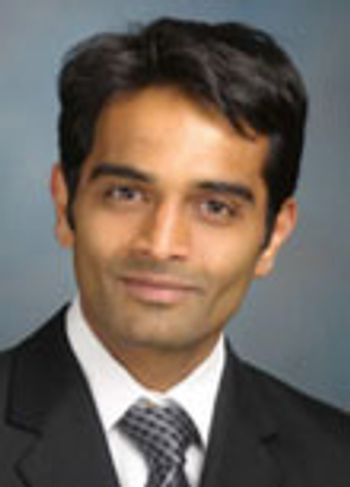
Stacy Loeb, MD, MSc, assistant professor, Department of Urology, Population Health, New York University, at the 2014 AUA Annual Meeting, discusses how urologists can use Twitter.

Your AI-Trained Oncology Knowledge Connection!


Stacy Loeb, MD, MSc, assistant professor, Department of Urology, Population Health, New York University, at the 2014 AUA Annual Meeting, discusses how urologists can use Twitter.

Debu Tripathy, MD, co-leader, Women's Cancer Program, University of Southern California Norris Comprehensive Cancer Center, discusses new personalized therapies on the horizon for advanced breast cancer.

Oliver Sartor, MD, board professor, cancer research, Tulane University, discusses a trial that would study Provenge (sipuleucel-T) in combination with radium-223 as a potential treatment option for patients with prostate cancer.

Timothy S. Pardee, MD, Assistant Professor, Hematology & Oncology, Wake Forest University Baptist Medical Center, describes initial results of the CALGB 10801 (Alliance) study, which added dasatinib to standard induction and consolidation therapy for newly diagnosed patients with core binding factor (CBF) acute myeloid leukemia (AML).

James J. Hsieh, MD, PhD, medical oncologist, Memorial Sloan Kettering Cancer Center, provides an overview of the treatment of kidney cancer.

Judy C. Boughey, MD, associate professor of surgery, director, Breast Surgical Oncology Training Program, Mayo Clinic, discusses implications for axillary radiation following review of the ACOSOG Z11 trial.

Jedd D. Wolchok, MD, PhD, from Memorial Sloan Kettering Cancer Center, discusses ongoing research regarding combinations of immunotherapies.

Roberto Bordonaro, MD, chair, medical oncology, Garibaldi Hospital, Catania, Italy, discusses first-line treatment options for advanced colorectal cancer (CRC).

Rana R. McKay, MD, a clinical oncology fellow at Dana-Farber Cancer Institute, discusses the mechanism of action of dutasteride and its role in a phase II prostate cancer trial.

Richard R. Furman, MD, a member of the Lymphoma/Myeloma Service in the Division of Hematology/Oncology at the New York Weill Cornell Medical Center, discusses the ability to avoid the administration of chemotherapy when using novel agents, such as idelalisib, to treat patients with chronic lymphocytic leukemia.

Sunil Verma, MD, MSEd, FRCPC, associate professor, University of Toronto, chair, Breast Medical Oncology, Sunnybrook Odette Cancer Centre, comments on HER2 testing and the utility of Ki67.

Balazs Halmos, MD, section chief of Thoracic Oncology at New York-Presbyterian Hospital/Columbia University Medical Center, discusses the variety of immune checkpoint inhibitors that are currently being explored as treatments for patients with non-small cell lung cancer (NSCLC).

Michael A. Postow, MD, attending physician, Melanoma and Immunotherapeutics Service, Memorial Sloan Kettering Cancer Center, discusses using PD-L1 as a biomarker of response in melanoma.

Marc Peeters, MD, PhD, department of oncology, Antwerp University Hospital, Antwerpen, Belgium, comments on the future of the treatment of patients with colorectal cancer.

William K. Oh, MD, Chief of the Division of Hematology and Medical Oncology, the Tisch Cancer Institute at Mount Sinai Medical Center, discusses the process of validating a whole-blood prognostic signature in metastatic castration-resistant prostate cancer (mCRPC).

Meir Wetzler, MD, from Roswell Park Cancer Institute, discusses the potential impact of FLT3 inhibitors for the treatment of patients with acute myeloid leukemia.

Grant W. Carlson, MD, from Emory University Hospital, discusses some pros and cons associated with contralateral prophylactic mastectomy.

Marcel R.M. van den Brink, MD, PhD, from Memorial Sloan Kettering Cancer Center, describes a novel CLIA-certified next-generation sequencing-based assay for hematologic malignancies.

Julia White, MD, from The Ohio State University Comprehensive Cancer Center, discusses the utility of ablative radiotherapy in metastatic breast cancer.

Tomasz Beer, MD, FACP, professor of medicine, deputy director of the Knight Cancer Institute, Oregon Health and Science University, characterizes the immune-related adverse events associated with ipilimumab in a phase III metastatic castration-resistant prostate cancer trial.

Smitha Krishnamurthi, MD, associate professor of medicine, Case Western Reserve University, describes GVAX for patients with metastatic pancreatic adenocarcinoma.

E. David Crawford, MD, professor, Urologic and Radiation Oncology, head, Section of Urologic Oncology, University of Colorado at Denver, discusses rebiopsying for prostate cancer.

Henry M. Kuerer, MD, PhD, FACS, from The University of Texas MD Anderson Cancer Center, discusses a paradigm shift in the management of patients with node-positive breast cancer.

Valerie Francescutti, MD, FRCSC, assistant professor, Surgical Oncology, Roswell Park Cancer Institute (RPCI), discusses educating patients with melanoma on their disease.

David F. McDermott, MD, associate professor, Department of Medicine, Harvard Medical School/Dana-Farber Cancer Institute, discusses PD-L1 expression in non-clear cell kidney cancer.

Jasmine Zain, MD, from the Center for the Lymphoid Malignancies, Columbia University Medical Center, discusses two ongoing trials in T-cell lymphomas.

Robert L. Fine, MD, from Columbia University, comments on the utility of CAPTEM in chemotherapy-resistant neuroendocrine tumors.

Robert Dreicer, MD, MS, professor of medicine at the Cleveland Clinic Lerner College of Medicine, chairman, Department of Solid Tumor Oncology, Taussig Cancer Institute, discusses combining and sequencing agents with immunotherapies for the treatment of prostate cancer.

Hyman B. Muss, MD, professor of oncology, University of North Carolina, director, Geriatric Oncology, Lineberger Comprehensive Cancer Center, gives an overview of therapies for patients with HR-positive breast cancer.

William G. Wierda, MD, PhD, professor, Department of Leukemia, Division of Cancer Medicine, The University of Texas MD Anderson Cancer Center, discusses the CLL11 trial, a three-arm trial comparing chlorambucil versus chlorambucil plus rituximab versus chlorambucil plus obinutuzumab in patients with previously untreated chronic lymphocytic leukemia (CLL).