
Adding ribociclib to endocrine therapy shows efficacy and tolerability for those with hormone receptor–positive, HER2-negative advanced breast cancer, even in older patients.

Adding ribociclib to endocrine therapy shows efficacy and tolerability for those with hormone receptor–positive, HER2-negative advanced breast cancer, even in older patients.

In an interview with Targeted Oncology, Neeraj Agarwal, MD, discussed findings from the TITAN trial which were presented at ESMO 2023.

In an interview with Targeted Oncology, Jeff Stein, PhD, discussed the challenges and prospects of CD73-targeting agents.

In an interview with Targeted Oncology, Chris Haqq, MD, PhD, discussed the potential use of cancer vaccines in patients with KRAS-mutated pancreatic and colon cancer.

Results from a phase 1/2a trial showed that plixorafenib had potential regarding safety and efficacy in BRAF-mutated solid tumors, especially in primary central nervous system tumors.
The combination of olaptesed pegol, bevacizumab, and radiotherapy showed an improvement in overall survival among patients with glioblastoma, according to findings from a phase 1/2 study.

Carlos Rojas, MD, discusses preliminary findings from a phase 1 trial which of MK-1084 alone and with pembrolizumab in patients with advanced solid tumors and metastatic non–small cell lung cancer.
Julia Rotow, MD, discussed emerging data on upfront therapies for patients with lung cancer harboring EGFR mutations in a presentation at the 18th Annual New York Lung Cancers Symposium.
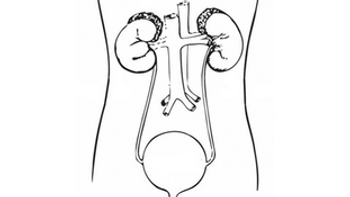
An analysis, based on data from the JAVELIN 100 Bladder trial, found the NCCN/FACT Bladder Symptom Index-18 for assessing quality-of-life in patients with advanced urothelial carcinoma to be reliable and valid.
Arnab Basu, MD, MPH, FACP, discusses molecular residual disease-guided adjuvant therapy in patients with renal cell carcinoma, highlighting the rationale and goals of the MRD gate RCC clinical trial.
Survival benefits for immunotherapy doublets outweigh chemotherapy alone in advanced stage PD-L1-negative non-small cell lung cancer.
Hossein Borghaei, MS, DO, provides an overview on his presentation given at the 18th Annual New York Lung Cancers Symposium.
The early adoption of ctDNA into the clinical workflow improves time to treatment, survival, and monitoring for patients undergoing molecular-based therapy.
Early trials are exploring the benefit of chimeric antigen receptor T-cell therapy in advanced renal cell carcinoma.
In a presentation at the 2023 International Kidney Cancer Symposium, Maxine Sun, PhD, MPH, discussed the relationship between clonal hematopoiesis in patients with kidney cancer and their risk for cardiac events.
The RCC Cancer Immunity Cycle may inform the treatment and development of novel therapies in renal cell carcinoma moving forward.
An expert discussed how the use of circulating tumor DNA in patients with RCC may help guide whether treatment should be intensified or deescalated.
For many immune-related adverse events, steroids are used as frontline treatment. However, it remains unclear if steroids allow for preservation of the antitumor immune response, resulting in the need for more options for patients with cancer.

Alan Tan, MD, discusses areas of interest in the research and development of circulating tumor DNA in renal cell carcinoma.
Results unveiled at the 2023 International Kidney Cancer Symposium revealed that patients with advanced clear cell renal cell carcinoma in the 200-mg dose group achieved an overall response rate of 23.1% based on blinded independent central review.
In a presentation at the 2023 International Kidney Cancer Symposium, Jaleh Fallah, MD, discussed the regulatory agency’s evaluation of data from the phase 2 LITESPARK-004 trial, which led to the approval of belzutifan.
Patients with advanced clear cell renal cell carcinoma treated with zanzalintinib had experienced promising antitumor activity with manageable toxicity regardless of prior treatment with cabozantinib.
An expert discussed how recent studies in patients with translocation RCC, a rare type of RCC, have demonstrated that the disease responds well to immune checkpoint inhibitors, but more focus is needed on novel targets to treat it.

AU-007 demonstrated promising early efficacy and safety data when given alone or in combination with aldesleukin across multiple solid tumor types.

In an exploratory analysis, different doses of fam-trastuzumab deruxtecan-nxki revealed consistent intracranial responses in HER2-mutated non–small cell lung cancer with treated or untreated brain metastases at baseline.

In an interview with Targeted Oncology, Brian Slomovitz, MD, details findings from the innovaTV 301 trial investigating tisotumab vedotin for the treatment of recurrent or metastatic cervical cancer.
Datopotamab deruxtecan delivered promising responses in patients with heavily pretreated non–small cell lung cancer with actionable genomic alterations.
ARX517 showed early efficacy in patients with metastatic castration-resistant prostate cancer in the phase 1/2 APEX-01 study.
Over three-fourths of patients with BCG-unresponsive, high-risk non–muscle-invasive bladder cancer treated with TAR-200 achieved complete responses in the phase 2b SUNRISE-1 trial.