Dr Jamie L. Koprivnikar describes her general approaches to diagnosing and risk stratifying patients with myelodysplastic syndrome, and how she differentiates high-risk and low-risk disease.

Dr Jamie L. Koprivnikar describes her general approaches to diagnosing and risk stratifying patients with myelodysplastic syndrome, and how she differentiates high-risk and low-risk disease.
Jamie L. Koprivnikar, MD, presents the case of a 72-year-old woman diagnosed with single lineage dysplasia myelodysplastic syndrome and shares her initial impressions.
Eytan M. Stein, MD, discusses trials evaluating Menin inhibitors for patients with acute leukemia and unmet needs that persist in the space.

Johannes Schetelig, MD, MSc, discusses the sequencing of allogeneic stem cell transplant to achieve the best response in patients with acute myeloid leukemia/

Chronic GVHD specialists share commentary on long-term effects of graft versus host disease and therapies for the condition.

The panel debates the various treatment options and comments on when they prefer each one.
Se-Hoon Lee, MD, an oncologist at the Samsung Medical Center in Seoul, Korea, discusses his focus of research in the lung cancer space, including the phase 1 CHRYSALIS study of amivantamab and lazertinib in patients with EGFR-mutated non–small cell lung cancer.
Marcia S. Brose, MD, PhD, FASCO, discusses trials LIBRETTO program leading up to LIBRETTO-531.
Eric A. Singer, MD, MS, discusses future developments that could improve the utilization of adjuvant therapy for high-risk renal cell carcinoma.

Expert Joyce O’Shaughnessy, MD, reviews data from the TROPiCS-02 study of sacituzumab govitecan in HR+/HER2- metastatic breast cancer.

Expert perspectives on a second patient case of unmutated metastatic breast cancer and available treatment strategies in this setting.

Sara Tolaney, MD, MPH, discusses key takeaways from the TROPiCS-02 study of sacituzumab govitecan-hziy for patients with hormone receptor-positive/HER2-negative metastatic breast cancer, and highlights other trials evaluating the agent.
Antonio Ucar, MD, explains the rationale behind the phase 3 Peak study of bezuclastinib plus sunitinib in patients with gastrointestinal stromal tumors being treated in the second-line setting.

Robert J. Motzer, MD, provides insights on factors that influence treatment decisions for patients with clear cell renal cell carcinoma.
Continuing discussion on advanced renal cell carcinoma, Robert J. Motzer, MD, reviews recent clinical trial data presented at ASCO 2023 and KCRS 2023.
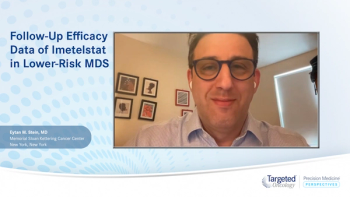
Eytan M. Stein, MD, reviews recent follow-up data from the IMerge trial investigating imetelstat in patients with lower-risk myelodysplastic syndrome.

Ann LaCasce, MD, MMSc, discusses the effects that chemotherapy drug shortages may have on clinical trials and patient accrual.

Oncology Brothers Rohit Gosain, MD, and Rahul Gosain, MD, share key takeaways from their program with Jonathan Friedberg, MD, MMSc, on practice-changing data from the POLARIX and SWOG S1826 clinical trials.

Switching their focus to the SWOG S1826 clinical trial in Hodgkin’s Lymphoma, Rohit Gosain, MD, Rahul Gosain, MD, and Jonathan Friedberg, MD, MMSc, consider the role of frontline R-AVD versus BV-AVD.
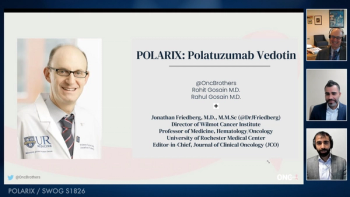
Following their discussion on the phase 3 POLARIX trial in DLBCL, Jonathan Friedberg, MD, MMSc, and the Oncology Brothers consider how frontline polatuzumab vedotin will be used in the real-world setting.
Oncology Brothers Rohit Gosain, MD, and Rahul Gosain, MD, are joined by expert Jonathan Friedberg, MD, MMSc, to review data with frontline polatuzumab vedotin in DLBCL from the phase 3 POLARIX trial.

The clinical trial of a novel agent, axatilimab, is reviewed and analyzed.

Clinical experiences with belusmosudil are shared among the panel.
Chad Tang, MD, discusses ongoing challenges for the treatment of patients with oligometastatic prostate cancer.
Expert panelists consider how they might apply data from the EMERALD study in their real-world management of HR+/HER2- metastatic breast cancer.
A focused review of data from the EMERALD study, which tested elacestrant, an oral SERD, in patients with HR+/HER2- metastatic breast cancer.
Jonathan C. Trent, MD, PhD, discusses why it is necessary for patients with gastrointestinal stromal tumors to have comprehensive testing to find actionable genomic alterations.
The results of a phase 1b trial looking at the use of acalabrutinib for patients with treatment-naive or relapsed/refractory mantle cell lymphoma has provided the support needed for the phase 3 ECHO study of this treatment.
An expert medical oncologist reviews recent data updates on lenvatinib plus pembrolizumab in patients with advanced renal cell carcinoma.
Robert J. Motzer, MD, provides an overview of the CLEAR trial investigating lenvatinib plus pembrolizumab in patients with advanced renal cell carcinoma.