Deric Park, MD, discusses a phase 1/2 study of IGV-001, a novel treatment for glioblastoma.

Deric Park, MD, discusses a phase 1/2 study of IGV-001, a novel treatment for glioblastoma.
Deric Park, MD, discusses what challenges remain in treating glioblastoma, as well as new avenues for research in this difficult disease.
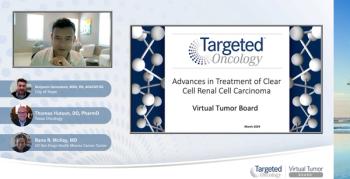
The panel gives an overview of adjuvant immunotherapy options for patients with renal cell carcinoma.
Sumanta Kumar Pal, MD, FASCO, presents the case of a 48-year-old man with renal cell carcinoma, and Rana R. McKay, MD, discusses how she discusses risk of recurrence with patients.
Ariel Lopez-Chavez, MD, discusses ongoing research in the small cell lung cancer space.
Lori J. Wirth, MD, discusses safety data from the phase 3 SELECT trial which evaluated lenvatinib in radioactive iodine-refractory differentiated thyroid cancer.
As part of its Speaking Out video series, Targeted Oncology spoke with Howard D. Edington, MD, about the benefits of using oncolytic viruses in cancer treatment.
In his closing remarks, Yi-Bin Chen, MD, shares his aspirations for the future of graft versus host disease management, emphasizing the need for further clinical trials aimed at replacing steroids as the first-line treatment approach.
In this expert analysis of the AGAVE-201 trial data, the efficacy of a monoclonal antibody in treating graft versus host disease is discussed, with the lowest dose of 0.3 mg/kg administered every 2 weeks demonstrating the highest response rates, exceeding 75%.
Sanjay K. Juneja, MD, delves into what being recognized as an oncology icon for Targeted Oncology means to him.
Raajit K. Rampal, MD, PhD, discusses how the field of gene therapy and precision medicine is evolving in the context of myelofibrosis treatment.

Sima Porten, MD, MPH, discusses the rationale for the phase 3 SunRISe-5 study of TAR-200 in non-muscle invasive bladder cancer and unmet needs in this patient population.

Medical experts discuss a patient case highlighting a 68-year old woman who is uninterested in transplantation and treatment with ruxolitinib has been initiated.
This segment discusses the current classification of myeloproliferative neoplasms (MPNs) and the pathogenesis of these disorders, particularly the role of the JAK-STAT signaling pathway. It also presents a treatment algorithm for higher-risk myelofibrosis, with a focus on the use of JAK inhibitors such as ruxolitinib, fedratinib, pacritinib, and momelotinib.
Roger Li, MD, discusses what the future may hold for the use of TAR-210 for the treatment of patients with intermediate-risk non-muscle-invasive bladder cancer with susceptible FGFR alterations.

Stephen Williams, MD, discusses the phase 3 SunRISe-2 study investigating TAR-200 plus cetrelimab in muscle-invasive bladder cancer being presented at the 2024 American Urological Association Annual Meeting.

Arlene O. Siefker-Radtke, MD, discusses the latest breakthroughs in bladder cancer treatment with erdafitinib, an FGFR1-4 inhibitor.
Mark D. Tyson, II, MD, MPH, discusses the safety and efficacy findings from the BOND-003 trial of cretostimogene grenadenorepvec in high-risk Bacillus Calmette-Guérin-unresponsive non-muscle-invasive bladder cancer with carcinoma in situ.
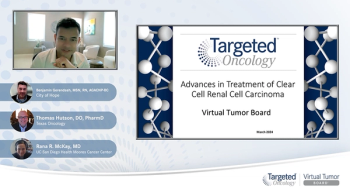
Following a review of the LITESPARK-005 trial, experts on renal cell carcinoma discuss the potential role of belzutifan in the treatment algorithm.
The panel discusses the lenvatinib plus everolimus regimen for patients with advanced renal cell carcinoma, highlighting clinical trial data on its efficacy and safety profile.
Mark D. Tyson, II, MD, MPH, discusses the background of the phase 3 BOND-003 study evaluating cretostimogene grenadenorepvec in patients with high-risk Bacillus Calmette-Guérin-unresponsive non-muscle-invasive bladder cancer with carcinoma in situ.

The final segment explores the potential role of axatilimab, a novel agent, in the management of refractory cGvHD, highlighting its mechanism of action and potential efficacy compared to existing treatment options.
Tina Cascone, MD, PhD, discusses who was included in the phase 3 CheckMate-77T trial and the key end points of the study.

Alex Spira, MD, PhD, discusses a subset analysis of the phase 3 MARIPOSA trial looking at dose interruptions during the course of amivantamab and lazertinib treatment for EGFR-mutant non-small cell lung cancer.

Stacey Stein, MD, discusses the background and outcomes of the IMbrave150 trial of atezolizumab plus bevacizumab in patients with advanced hepatocellular carcinoma.
Lori J. Wirth, MD, discusses the background and design of the phase 3 SELECT trial of lenvatinib vs placebo for the treatment of patients with radioactive iodine-refractory differentiated thyroid cancer.

Brian Slomovitz, MD, details findings from the innovaTV 301 trial investigating tisotumab vedotin for the treatment of recurrent or metastatic cervical cancer.
Mark D. Tyson, II, MD, MPH, concludes his conversation on the BOND-003 trial by discussing the next steps for research on cretostimogene grenadenorepvec.
Regina Barragan-Carrillo, MD, discusses results of a study which sought to assess the association between thymectomy and incidence of renal cell carcinoma.
Yi-Bin Chen, MD, proposes a strategy to enhance patients' quality of life by utilizing virtual monitoring as an alternative to requiring patients to travel to a transplant center, which includes regular remote assessments of blood work, such as liver function tests, lipid panels, and immunoglobulin levels.