Lauren Banks, MD, PhD, explains early findings from a pilot study of lifileucel in dedifferentiated liposarcoma and undifferentiated pleomorphic sarcoma, including treatment feasibility, safety, and response durability.


Hans Lee, MD, and Natasha Edwin, MD, discuss how they prioritize making bispecific antibodies available in the community setting for multiple myeloma.
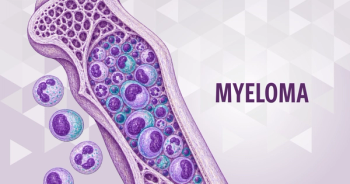
In interviews with Targeted OncTM, Hans Lee, MD, of Sarah Cannon Research Institute in Nashville, Tennessee, and Natasha Edwin, MD, of Providence Portland Medical Center, in Portland, Oregon address the practical barriers to delivering bispecific antibodies for multiple myeloma in community oncology settings and how those barriers are being overcome.
Lee notes that although CAR T therapy and bispecific antibodies share historic access barriers in the community, bispecifics’ barriers are more surmountable. The central challenge is cytokine release syndrome (CRS) risk during step-up dosing, which academic and community practices have learned to manage through prophylactic tocilizumab (Actemra), a shift that has made outpatient administration of step-up dosing possible. He describes 2 common delivery models: smaller practices referring patients to larger community sites like his own in Nashville, or academic centers for initial step-up dosing, then transitioning patients back to their local oncologist for maintenance once the CRS risk drops sharply after cycle 1. Successfully running this process, he says, takes deliberate planning and buy-in from the full care team of physicians, advanced practice providers, infusion and triage nurses, pharmacists, and social workers, but doesn’t require complex infrastructure. Because every practice’s resources differ, he emphasizes that no single “playbook” fits all sites, though the core principles hold everywhere.
Edwin brings a complementary community-oncology lens, pointing to ECOG-ACRIN’s practice of embedding community co-chairs on its disease-specific committees so clinical trials are designed with smaller practices’ feasibility in mind from the outset. She also highlights the patient community’s high engagement, as patients actively research treatment options and often prompt their local oncologists to connect with colleagues at centers with BCMA-directed therapy access, which helps smooth referral pathways. She adds that rising bispecific antibody use across tumor types, including lymphoma and lung cancer, is helping support staff across practices grow more broadly familiar with managing these drugs.