
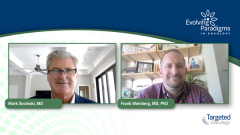
Opinion|Videos|December 22, 2025
Artificial Intelligence and the Future of NSCLC
Author(s)Mark Socinski, MD, Frank Weinberg, MD, PhD
Artificial intelligence (AI) has the potential to transform biomarker testing in early-stage NSCLC by streamlining data analysis, improving interpretation of complex genomic profiles, and predicting actionable mutations from imaging or pathology data.
Advertisement
Episodes in this series
Artificial intelligence (AI) has the potential to transform biomarker testing in early-stage NSCLC by streamlining data analysis, improving interpretation of complex genomic profiles, and predicting actionable mutations from imaging or pathology data. Despite advances, significant unmet needs remain in early-stage NSCLC diagnosis, including limited screening uptake, challenges in obtaining sufficient tissue for comprehensive testing, and delayed identification of high-risk patients. In management, addressing these gaps through personalized treatment pathways, enhanced multidisciplinary coordination, and predictive analytics could improve outcomes and reduce recurrence in early-stage NSCLC.
Newsletter
Stay up to date on practice-changing data in community practice.
SubscribeAdvertisement
Related to this article

Experts weigh IO-TKI vs dual immunotherapy for metastatic ccRCC, highlighting rapid symptom relief, bone/brain response, survival outcomes, and toxicity tradeoffs.
This marks the fourth submission to the FDA for approval of rivoceranib plus camrelizumab for this first-line indication in hepatocellular carcinoma.
The FDA granted FTD to opantistomig, a PD-L1/4-1BB bispecific antibody, for first-line treatment of biliary tract cancer.

Texas Oncology’s virtual care navigation pilot supported 740 patients on oral oncolytics across 11 community sites, offering a scalable model for at-home care.
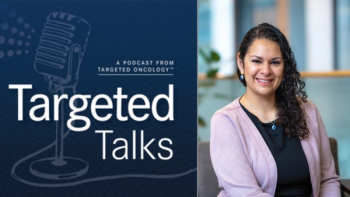
For Hispanic Heritage Month, Narjust Florez, MD, discusses lung cancer risk, biomarker testing, and trial access in Hispanic and Latinx patients.

During a live event, Seth M. Pollack, MD, and participants discussed 2 investigational agents for recurrent diffuse tenosynovial giant cell tumor.
A phase 2 trial is planned for an allogeneic CAR T-cell product in patients with lung or breast cancer with brain metastases.

RYZ101, a targeted alpha radiopharmaceutical, boosts progression-free survival in SSTR+ GEP-NETs after progression, offering a promising post-¹⁷⁷Lu option.
Advertisement
Advertisement
Trending on Targeted Oncology - Immunotherapy, Biomarkers, and Cancer Pathways
1
FDA Grants Breakthrough Status to Multi-Cancer Early Detection Blood Test
2
As New TGCT Therapies Advance, Route, Duration, and Coverage Shape CSF1R Inhibitor Choice
3
FDA Clears Phase 2 Trial of B7-H3 CAR T MT027 for Brain Metastases
4
Alpha-Emitting RYZ101 Meets Phase 3 PFS End Point in Advanced GEP-NETs
5