
Feature|Articles|July 26, 2026
Community Clinical Trials and the Lung Cancer Pipeline
Author(s)Danny Nguyen, MD, Sabrina Serani
Listen
0:00 / 0:00
Key Takeaways
- Community-based trial availability can mitigate access barriers such as insurance limitations, transportation burdens, and caregiver logistics that commonly prevent academic-center enrollment.
- Practice-level feasibility depends on adequate staffing, resources, and infrastructure, underscoring that while most protocols are community-runnable, not all sites are trial-capable.
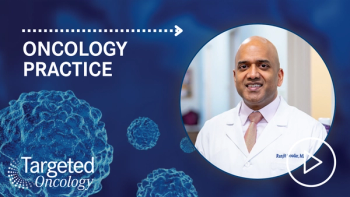
Danny Nguyen, MD, of City of Hope discusses bringing clinical trials to community oncology practices and the latest advances in lung cancer treatment.
Advertisement
Danny Nguyen, MD, is an assistant clinical professor at City of Hope in Orange County, California. In this conversation, Dr Nguyen discusses what first drew him to bring clinical trials into a community oncology practice, the roadblocks that still keep some trials out of the community setting, and where he sees artificial intelligence starting to shape trial design and patient selection.
Targeted OncologyTM: What first got you interested in clinical trials?
Danny Nguyen, MD: I think a lot of people have different motivations for getting into clinical trials. For me, my practice is primarily in the community setting, and when I started, I had a lot of patients who needed other treatment options. So I'd refer them to academic centers for clinical trials. But it got to a point where some of those patients found it really difficult to actually get into an academic center—whether it was insurance issues, transportation, parking, traffic, or asking a caregiver to drive them all the way into the city.
That's what motivated me to bring some of these trials into the community practice instead, and I found a lot of success with it. Patients really appreciated being able to get clinical trials close to home. It's been a good process overall, and I'd say that's the main reason I got into clinical trials in the community.
What are the biggest challenges or roadblocks to bringing trials into the community?
I think almost any clinical trial can be run in the community, but not every community site can run a clinical trial. Sites need to be honest with themselves about whether they have the proper staffing and the resources and infrastructure to run one. That's on the practice side.
On the other side, sponsors need to be more open to reaching out to sites beyond purely academic centers, and to take that leap of faith on them. So it's a multi-faceted challenge. But honestly, a good part of it just comes down to making sure these trials are actually available in the community in the first place.
Are there any other trends you’re seeing in the clinical trial space?
I've seen a lot of buzz around artificial intelligence, and it's starting to get incorporated more into clinical trials, whether that's using AI for trial site selection, which sites might have the biggest impact if a trial opens there, or using AI to help pre-screen patients more effectively. A lot of these ideas are being thrown around right now, and some are actually already being put into practice. I think that's something to keep an eye on going forward, to see how AI can make the whole process more efficient.
Is there anything happening right now in lung cancer that you think is important but isn't getting the attention it deserves?
Honestly, it feels like there are a lot of smart people working on every corner of lung cancer right now. So, itit seems like a lot is coming out for small cell and non–small cell lung cancer alike. If I had to identify a gap in research or care, it's making sure our clinical trials are enrolling patients who reflect the communities we actually treat. Beyond that, it feels like we're making great strides across a lot of different areas of lung cancer.
Looking ahead to the next year or so, what are you anticipating?
I'm really anticipating more antibody-drug conjugates coming to market, targeting different pathways and in other indications. I know there are a few more in the pipeline for both small cell and non–small cell lung cancer. I'm also seeing sponsors use AI as a way to better select patients who are more likely to respond to a given treatment, and I'm hoping we can translate that into something practical for community practice, so we can use it to help our patients too. I think that's going to be impactful going forward.
More broadly, I'm looking forward to all these treatments coming out, but I also think a lot more needs to be done for patients once they progress on some of these newer therapies—figuring out how those patients progress and finding other ways to address their needs.
What are you seeing around patients' willingness to participate in trials, given some of the stigma around lung cancer and smoking?
I think a lot more can still be done here, but I am seeing a shift in willingness to participate in clinical trials. I still hear it sometimes, though—patients assuming that if they're offered a clinical trial, it means there's nothing else to give them, that trials are only for when there's truly no other option left. In reality, a lot of work is done preclinically, and in earlier trials, before these treatments ever reach the clinic, and there's often a really good chance they'll help. So part of it is helping educate patients that clinical trials are genuinely another treatment option—sometimes even better than what's currently available.
In lung cancer specifically, we have a lot of options we're exploring for when patients progress. For example, patients who progress on EGFR inhibitors sometimes develop other mutations that drive that progression, such as EGFR C797S, and we have clinical trials targeting that pathway as well. We also have antibody-drug conjugates available for when these patients progress. So, there's quite a bit we're doing for these patients if or when that happens.
Advertisement
Related Content
Advertisement























Advertisement
Advertisement
Trending on Targeted Oncology - Immunotherapy, Biomarkers, and Cancer Pathways
1
Updated HARMONi Analysis Shows Consistent OS Benefit With Ivonescimab in EGFRm Lung Cancer
2
Community Clinical Trials and the Lung Cancer Pipeline
3
FDA Accepts NDA for Daraxonrasib in Metastatic Pancreatic Cancer
4
How Inherited BRCA Mutations Shape Breast Cancer's Genomic Behavior and Point Toward a New Treatment Paradigm
5