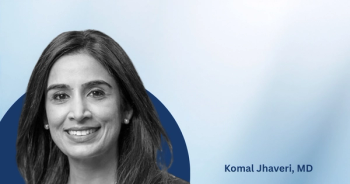
Komal L. Jhaveri, MD, discusses the unmet need, EMBER-3 data, and future directions after the FDA approved imlunestrant plus abemaciclib for ESR1-mutated breast cancer.

Sarah Premji, MD, of Sarah Cannon Research Institute discusses community trial access, biomarker-driven drug development, and key breast cancer studies to watch.
In recognition of October as Breast Cancer Awareness Month, Targeted OncologyTM spoke with Sarah Premji, MD, assistant director of breast cancer research at Sarah Cannon Research Institute (SCRI) in Nashville, Tennessee, about the role of community sites in clinical trials, the pace of recent approvals in breast cancer, and the studies she is watching most closely.
Here, Premji discusses why community representation in clinical trials matters, where gaps remain, and what she hopes the next 5 years of breast cancer care will bring.
Sarah Premji, MD: Being able to represent the patients we see and serve every day is critical. Whenever large trials are presented, the question becomes whether the population really resembles the patients we treat. That applies in many ways: Does it represent them by diversity? Does it represent them based on the conditions they already have and the medications they're already taking? And does it include patients in the community, not only the fittest patients who are able to make it to a large academic center? Those trials are important, and academic centers are doing such important work, but it's also important to incorporate patients from the community, who are probably the greatest representation of who we see on a daily basis.
It's also important for community doctors to have the opportunity to get comfortable with these drugs early on. As novel agents come out, there are new side effects associated with them, and being comfortable and safe in managing those side effects is a very important piece. If community doctors get to use these drugs early, while they're in development, I think uptake of these novel drugs may be a little smoother when they do get approved. That's a big bonus as well.
It's a few different factors. One is making sure patients know that large networks like Sarah Cannon exist—there are many others out there—and that they can access clinical trials through them. Another is making sure sites that want to do research know they can find ways to open clinical trials. There are barriers to that. It's a large initiative, and there are many moving parts to opening and operating a clinical trial, so it's important for everyone to come together to make this happen. That's also why I love being a part of Sarah Cannon, because it does this so well. It brings clinical trials to patients where they are across the country. I know other sites do this important work, too, but it's also about making sure patients know they can come to these places and ask their providers about clinical trials: What's out there, what's the latest and greatest, and how do they get access to it?
It's a really exciting time in breast cancer. Across oncology, there have been so many new approvals, and the last 5 years have been pivotal. Between May and September of 2026, we had 10 new indications in breast cancer, spanning hormone receptor–positive, HER2-positive, and triple-negative disease, in both early and late stages. That included 8 FDA approval actions and 3 first-ever FDA approvals, all in the span of 5 months. That is all the work of clinical trials, and the work of the FDA to review the data, the safety, the efficacy, and how it works in various populations. It's been incredible.
The gaps that may exist are that it takes a long time for a clinical trial to get off the ground, to be conducted, and to read out. That becomes difficult when a standard of care is being tested against a novel combination or agent and the standard of care shifts. Then the control arm may not be most representative of the contemporary time we're in, and it's very difficult to interpret the data in that context. A lot of these trials are also global, and the standard of care in the US may be different from that in other countries, so interpreting the data within that context is a little challenging as well.
As we get new trials, readouts, and data, how do we understand where this fits within the treatment paradigms? I don't think there is a one-size-fits-all algorithm anymore. It's about personalizing therapy for each patient. But understanding how that works—what prior treatments the patient received, including on trials, and how that fits with the patient sitting right in front of you—may be different because the standard is changing.
There are so many. I'll start with therapeutic development. In hormone receptor–positive breast cancer, we got the readout of the lidERA study [NCT04961996], which showed the benefits we may get in patients with high-risk early-stage disease. That rocked the world of breast cancer, because this is a new endocrine therapy [giredestrant] that could be considered for our patients. It comes with a different side effect profile and a different way to look at and address the disease. But with that came a lot of other questions, too.
A number of studies are looking at a switch to the SERD, the selective estrogen receptor degrader, after the use of classical endocrine therapy. Trials like CAMBRIA-1 [NCT05774951], EMBER-4 [NCT05514054], and ELEGANT [NCT06492616] are looking at this with or without a CDK4/6 inhibitor, which again was pivotal to the world of high-risk early-stage hormone receptor–positive breast cancer. These trials will address critical questions about when the right time is to use these SERDs in the early-stage setting and how they might be combined with CDK4/6 inhibitors.
In the metastatic setting, a number of novel targeted therapies are in development. Many trials and novel agents are looking to extend the time a patient could have before they have to move on to antibody-drug conjugates or chemotherapy, and to preserve quality of life during that time. The OPERA-01 study [NCT06016738] is looking at palazestrant, a novel endocrine therapy, vs standard-of-care endocrine therapy. The OPERA-02 study [NCT07085767] is looking at palazestrant with ribociclib [Kisqali] in the first-line setting, which is super important.
There are also other targeted therapies under development beyond the PAM pathway inhibitor we've already been studying in the VIKTORIA-1 trial [NCT05501886]. There are very specific, isoform-selective PI3K alpha inhibitors that are trying to target that particular alteration. There are CDK4, CDK2, and CDK7 inhibitors, and KAT6 inhibitors. So many different targeted therapies are being studied in different combinations to address this critical need. How do we find the right targeted therapy for the right patient at the right time, and in what sequence? A number of trials are looking at using circulating tumor DNA [ctDNA] to understand how these dynamics can help us place the right therapy at the right time. I think SERENA-6 is trying to target that exact question, and a number of other trials are looking at it as well.
In the HER2-positive space, HER2-targeted therapy has been brought into earlier lines, which asks the question of what happens after that. Many agents are being developed: novel tyrosine kinase inhibitors, biparatopic HER2 antibodies, bispecific antibody-drug conjugates, bispecific T-cell engagers, and [chimeric antigen receptor (CAR)] T-cell therapy. Many trials are looking at these novel agents in the HER2 setting and in triple-negative breast cancer, along with vaccine trials and all sorts of immune-modulating agents, dual-target antibody-drug conjugates, and dual payloads. How do we get at the tumor microenvironment?
So in hormone receptor–positive disease, the questions are how we get these new targeted agents and how we extend the endocrine-sensitive interval. In HER2-positive and triple-negative disease, what novel therapies truly target HER2? And how do we understand the bucket of triple-negative breast cancer, defined by the lack of ER, PR, and HER2? What are the different types, and how do we get at the disease biology?
The novel agents are really exciting. What's also exciting is refining our treatments, what we call right-sizing therapy. That means understanding who doesn't need so much therapy for their specific disease. In triple-negative breast cancer, OptimICE-pCR [NCT05812807] is looking at stopping immunotherapy in the adjuvant setting for patients who achieved a pathologic complete response. That's important because immunotherapy comes with side effects, so we want to understand how to optimize therapy for each patient depending on their disease state. The STOP-HER2 trial [NCT05721248] is looking at stopping HER2-targeted maintenance therapy in HER2-positive metastatic breast cancer for patients who achieved a deep response. Do you really need to continue that HER2 therapy?
I think the supportive care trials are really exciting as well. We're trying to understand how to address hair loss and scalp cooling, bone loss, exercise, GLP-1 therapy, integrative therapies, joint pain, muscle aches, and cardio-oncology. Along with these novel agents come side effects and implications. As we hope our patients live longer, what other conditions do they face as a result of their therapies? Maximizing supportive care, and the trials around it, is also really important.
My hope is that we integrate tools we have, such as artificial intelligence, along with novel technologies such as ctDNA and tumor sequencing, to place the right treatment with the right patient. My wish list is that in 5 years, when a patient walks into their oncologist's office, we understand more about the tumor biology of the patient sitting in front of us, and we select what we think is the right treatment based on that information. We have more and more information at our fingertips. The goal is to understand, based on a patient's tumor biology and tumor DNA, which therapy is the right one, for how long, and in what sequence. That is the core of what we hope for: the right amount of treatment for the right patient at the right time and at the right dose. That's where we really want to refine things. We have so many new things coming, and the question is how to get the right thing to the right person.
That's where the hope is over the next 5 years: that we are really honing in on this, so that in many years to come, there may be no cancer left to even address, because we get so good at this. But there are many unanswered questions until we get to that point—many open questions, many active questions. The field of oncology is bustling with them.
This interview has been lightly edited for space and clarity.