
Opinion|Videos|June 2, 2025
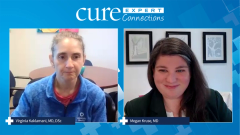
Exploring a Patient Case: Biomarker Testing After Progression and Discussing Treatment Choices With Your Care Team
Author(s)Virginia Kaklamani, MD, DSc, Megan Kruse, MD
Panelists discuss how to communicate genomic testing results to patients and make shared treatment decisions, particularly when multiple targeted therapy options are available for patients with ESR1 and PIK3CA mutations.
Advertisement
Episodes in this series
Video content above is prompted by the following:
Clinical Brief: EMERALD Trial Insights for ESR1-Mutant Breast Cancer
Main Discussion Topics:
- Overview of EMERALD trial design and patient population
- Co-primary end points and efficacy outcomes for ESR1-mutant tumors
- Critical subset analyses identifying best responders (>12 months prior CDK4/6)
- Median PFS outcomes: 8.6 months versus 3.8 months in optimal patients
- Limited relevance of variant allele frequency (VAF) for treatment selection
Key Points for Physicians:
- Elacestrant approved specifically for ESR1-mutant metastatic breast cancer
- Prior CDK4/6 duration greater than 12 months predicts better response (8.6 versus 1.9 months PFS)
- Benefit maintained across visceral disease, multiple metastatic sites
- PIK3CA co-mutations do not negate elacestrant benefit
- VAF is not currently useful for treatment selection decision-making
The EMERALD trial established that patient selection based on endocrine sensitivity duration, rather than just mutation presence, optimizes treatment outcomes with elacestrant.
Advertisement
Related to this article

Digital biopsy data show CAN-2409 plus radiation boosts durable lymphocyte-tumor engagement in localized prostate cancer, hinting at stronger immune surveillance and better control.

Adding subcutaneous epcoritamab to R-CHOP significantly improves progression-free survival in newly diagnosed DLBCL, potentially reshaping frontline therapy with a tolerable safety profile.

Sarah Premji, MD, of Sarah Cannon Research Institute discusses community trial access, biomarker-driven drug development, and key breast cancer studies to watch.

The ADC rinatabart sesutecan showed efficacy regardless of FRα status in heavily pretreated platinum-resistant ovarian cancer with a tolerable safety profile.

A cisplatin patch achieves 95.5% complete responses in early oral lesions, helping patients avoid surgery with durable control and minimal systemic toxicity.

The RASolute 309 trial is investigating frontline daraxonrasib plus the RAS G12D inhibitor zoldonrasib vs chemotherapy in advanced pancreatic ductal adenocarcinoma.

Ohio Medicaid patients with breast cancer often miss genomic tests; use stays under 40%, with stage, race, and long-term care status driving disparities.

Komal L. Jhaveri, MD, discusses the unmet need, EMBER-3 data, and future directions after the FDA approved imlunestrant plus abemaciclib for ESR1-mutated breast cancer.
Advertisement
Advertisement
Trending on Targeted Oncology - Immunotherapy, Biomarkers, and Cancer Pathways
1
Phase 3 Trial of Daraxonrasib Plus Zoldonrasib Begins in RAS G12D PDAC
2
Rinatabart Sesutecan Shows Durable Responses in Platinum-Resistant Ovarian Cancer
3
Behind the FDA Approval of Imlunestrant Plus Abemaciclib in ESR1-Mutated Breast Cancer
4
PRV111 Shows Strong Responses in Early Oral Cancer
5