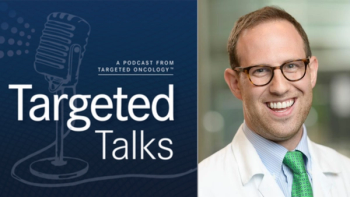
Benjamin Herzberg, MD, discusses KRAS-mutant non–small cell lung cancer, upfront biomarker testing, and the emerging RAS inhibitor toolkit on Targeted Talks.

Ranjit Goudar, MD explains how community oncology practices are expanding hereditary cancer care through genetic testing, workflow redesign, and personalized prevention strategies.
As genetic testing becomes increasingly integrated into oncology care, community practices are playing a larger role in identifying patients and families who may benefit from hereditary cancer risk assessment. Advances in testing technology, broader eligibility criteria, improved insurance coverage, and declining costs have expanded access well beyond the traditional genetics clinic model. At the same time, practices are being challenged to develop workflows that can accommodate growing demand while ensuring patients receive appropriate counseling, interpretation, and long-term management.
Community oncologists are uniquely positioned to coordinate care across specialties and help patients navigate personalized screening and prevention strategies, according to Ranjit Goudar, MD. As the field continues to evolve, many programs are moving beyond testing alone and toward comprehensive risk assessment models that include surveillance, early detection, and risk-reduction interventions.
In an interview with Targeted Oncology, Goudar, director of the Hereditary Cancer Program at Virginia Oncology Associates, discussed how genetic testing has transformed community oncology practice and shared operational strategies for successfully integrating genetic counseling and testing into busy clinical settings.
Ranjit Goudar, MD: Over the last 15 years, early on, most genetic testing was done in our office. Patients were referred in, and they saw one of the oncologists, and then more likely saw one of the genetic counselors to actually have tests performed. What we've seen now is a [streamlining] of this process, so more of our community oncologists are performing the tests themselves. We also see patients who've had tests performed with outside providers—gynecologists, gastroenterologists—and then referred in for long-term management. So, the testing has certainly become more common.
We also have seen that the test panels have expanded dramatically. Even 15 years ago, we were really focused on BRCA1 and BRCA2. Now we have widely available panels—some of them covering rare types of cancer, such as pheochromocytoma, and also broader panels covering multiple different cancer risk genes. We've seen the insurance coverage improve. We have seen the criteria for patients who qualify for genetic testing expand dramatically. We have also seen the cost of testing come down, thankfully. Insurance coverage is quite good; most patients pay $0 or very little. Testing can even be performed out of pocket if needed; that may be in the order of $250 to $300 or less. We certainly prefer patients not to have to pay for that, but the overall thing that I have seen is genetic testing now falls into a spectrum.
When we think about community oncology, we think about the fact that the vast majority of American patients [with cancer] are treated in community centers—around 85%1—and also, most patients treated in the community have family that live near them. So, we are starting to expand our focus away from simply patients with cancer more towards identifying patients at high risk of cancer, [such as] family members at high risk of cancer. We have also seen the rise of universal testing recommendations for patients with certain cancer types. [Putting together] all patients with cancer, around 10% will carry a significant germline mutation that changes their screening. It's a very high percentage, and all patients with ovarian cancer, pancreatic cancer, metastatic prostate cancer, breast cancer, and many combinations thereof will qualify for testing. We are now seeing, in our center, around 3500 patients a year strictly for high-risk management. This is a fairly large community practice…but it's all cancer focused, and our program is trying to move the needle... Currently in America, we screen for very few types of cancer; 90% of American patients present with symptoms at diagnosis, and half of the patients with cancer will present in later stages, [such as] stage 3 or stage 4. So, in order to move that needle forward—from meeting a patient who has a high cancer burden…who needs chemotherapy, to try to move to patients who present at an earlier stage—that's going to require identifying patients at higher risk, developing a personalized screening regimen, and move to early detection. And the next step—our ultimate goal in community oncology—is identifying folks at high risk and trying to reduce risk of cancer. There are certain medications available to reduce cancer risk: antihormonal therapy for breast cancer, things along the order of aspirin, reducing risk of colon cancer and other cancers [in] Lynch syndrome, but to develop additional chemo-preventive or risk reduction medications, that work will have to be done through oncology centers.
The biggest thing that we have done over these last several years is increasing the number of trained providers that we have in our program. We have 3 full-time genetic counselors and are very lucky to have them. Across the US, we probably have just over 1000 genetic counselors who are focused on evaluating adult patients. The number is actually vanishingly small, and the only real practical option is to train other providers—oncologists or advanced practice providers—to discuss these issues and counsel patients to perform testing, so that we can move the focused hereditary cancer oncologists and genetic counselors into a consultation role—interpreting genetic test results as opposed to pretest consent, performing testing, and dealing with insurance issues. So, we're moving later into the stage of genetic testing, but the number of providers we need is larger and larger, and that takes work.
When I was in fellowship, which was 15 years ago, we did talk about genetic testing, but I never consented a patient or performed a test ever. And now, my new patients are exclusively high-risk patients, some of them have a cancer diagnosis and are pursuing testing, some of them are unrelated, unaffected relatives of patients with cancer. So, over these 10 years, since it's been the main focus of my practice, we're probably in the order of 3500 or 4000 patients that I've seen, but even then, through the evolution of our program, my practice will be moving towards personally evaluating and continuing long-term management of patients who have high-risk mutations.
We have another arm that we are developing to follow patients who have negative tests but still high risk of certain cancers based on family history to arrange screening. This is a focus that is best served by oncologists in the community, because we're able to cross multiple tumor types, multiple body systems, and coordinate care between multiple specialists. In some cases, a breast surgeon that may evaluate a patient at high risk of breast cancer may detect a pathogenic mutation, but they're not able to provide all multi-system care on their own; they're not able to coordinate screening between a urologist and a gastroenterologist and a dermatologist, whereas we are well equipped to do that, because that's how we take comprehensive care of patients.