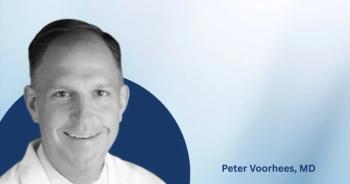
In an interview, Peter Voorhees, MD, discusses his presentation of the CERVINO trial data from the International Myeloma Society meeting.

Andrew Spencer, MBBS, discusses how the inMMyCar trial is finding promise for in vivo CAR T-cell therapy in patients with relapsed/refractory multiple myeloma.
Andrew Spencer, MBBS, of the Alfred Hospital–Monash University Australian Centre for Blood Diseases in Melbourne, Australia, discusses the clinical data from the inMMyCar trial (NCT07075185) of KLN-1010
Instead of forcing critically ill patients to wait 4 to 6 weeks for an external product to be manufactured, this in vivo process theoretically takes place within days. This timeline compression is incredibly advantageous for the patient population, as a substantial proportion of individuals undergoing traditional CAR T manufacturing historically experience rapid disease progression and cannot receive their reinfusion in a timely manner.
With the logistical barriers largely removed, the critical clinical questions shift toward deliverability, safety, and the long-term durability of responses. The early data presented from the trial has delivered highly encouraging efficacy signals. Spencer highlighted that at the one-month post-treatment landmark, all patients with evaluable results achieved minimal residual disease (MRD) negativity at a threshold of 10-5. This profound level of immediate anti-tumor activity was highly unexpected and exceeded investigator expectations.
Thus far, out of the 18 patients treated in the study, only 1 patient has experienced disease progression, and only 1 patient has lost their MRD-negative status. Spencer notes that while no oncology therapy will ever achieve 100% universal efficacy, these exceptional early outcomes are strongly supported by reassuring pharmacodynamic data. Robust cellular expansion and favorable phenotypes of the internally generated cells indicate that this in vivo platform holds immense promise for the future.