
Biomarker-Driven Lung Cancer
Latest News
Advertisement
Latest Videos















































Advertisement
More News



Clinical Decisions in Non-Driver NSCLC
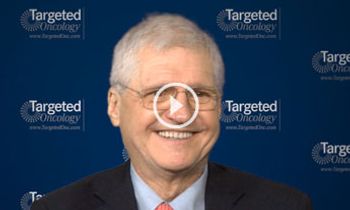
Mark G. Kris, MD, a medical oncologist at Memorial Sloan Kettering Cancer Center, discusses the recent FDA approval of durvalumab (Imfinzi) for the treatment of patients with locally advanced, unresectable stage III non–small cell lung cancer.
In preliminary findings from the single-arm, phase II TRINITY trial investigating Rovalpituzumab Tesirine (Rova-T) in the third-line setting for patients with relapsed/refractory small cell lung cancer (SCLC) demonstrating high DLL3 expression, the DLL3-targeted antobody-drug conjugate delivered disappointing results.
According to Pfizer, manufacturer of a pan-human EGFR tyrosine kinase inhibitor (TKI), a priority review has been granted by the FDA for their TKI inhibitor, dacomitinib, in the frontline setting for patients with <em>EGFR</em>-positive locally advanced or metastatic non–small cell lung cancer.
In an interview with <em>Targeted Oncology</em>, Kris, a medical oncologist and the William and Joy Ruane Chair in Thoracic Oncology at Memorial Sloan Kettering Cancer Center, discussed how the approval of durvalumab has changed the treatment landscape of NSCLC.
The European Society for Medical Oncology in conjunction with the International Association for the Study of Lung Cancer has selected Fabrice Barlesi, MD, PhD, to receive the 2018 Heine H. Hansen Award. Barlesi will be presented with the award at the 2018 European Lung Cancer Congress, which will be held April 11-14 in Geneva, Switzerland.


Treatment of NSCLC With Uncommon EGFR Mutations

The new drug application for larotrectinib (LOXO-101) for treatment of patients with locally advanced or metastatic solid tumors that harbor an NTRK gene fusion has been completed.
The treatment landscape of non-small cell lung cancer has been identifying the importance of immunotherapy already, but combination therapies will soon play a large role in treatment of these patients as well, according to Chad Pecot, MD.
According to findings from the phase III IMpower150 trial, significant improvement was found in overall survival with a treatment regimen of atezolizumab, bevacizumab, carboplatin, and paclitaxel compared to the combination of bevacizumab and chemotherapy alone for patients with advanced nonsquamous non–small cell lung cancer.


Advertisement
Advertisement
Trending on Targeted Oncology - Immunotherapy, Biomarkers, and Cancer Pathways
1
Denosumab Biosimilar Approved For Existing Oncology Indications
2
FDA Oncology Recap: Approvals, Designations, and Decisions in September 2026
3
Plinabulin Receives FDA Fast Track Designation in Post-ICI NSCLC
4
Tile-Based Radiation Improves Local Control in Resected Brain Metastases
5