



BRAIN CANCER
Latest News
Advertisement
Latest Videos











































Advertisement
More News

A move by CVS Health to place in-house physician dispensaries out-of-network for purposes of Medicare Part D drug payment would force hundreds of thousands of cancer patients across the country to find alternate sources for their oral oncolytic drugs, the Community Oncology Alliance (COA) argued in a new white paper.

Rimas Lukas, MD, discusses the next steps in glioblastoma research, as well as the potential use of IDO inhibitors in the treatment of GBM, and recent studies showing promise in the field.
Optune, a noninvasive device that delivers tumor-treating fields to the brain, provides oncologists, specifically those who treat glioblastoma multiforme, an opportunity to apply technology as part of their standard treatment regimen.

Anita Mahajan, MD, professor, The University of Texas MD Anderson Cancer Center, discusses a recent study into the role of stereotactic radiosurgery in treating brain metastases.
For patients who are likely to experience contiguous recurrence of glioblastoma, a new computer simulation using tumor treating fields (TTF) and employing a personalized transducer array, delivered electric field (EF) intensities that exceeded therapeutic intensities in 3 different tumor locations.
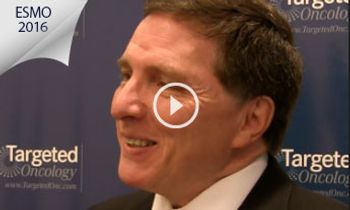
Mark Kieran, MD, PhD, director, Pediatric Medical Neuro-Oncology, Dana-Farber Cancer Institute, discusses the results of a study that evaluated dabrafenib as a treatment for pediatric patients with BRAF V600-mutant relapsed or refractory low-grade gliomas during an interview at the 2016 ESMO Congress.
Goals of "Project Impact: A Campaign to Defeat Pediatric Brain Tumors" include improving clinical outcomes for pediatric brain tumor patients and informing the development of the first-ever standard of care for treating pediatric high-grade gliomas.
As therapeutic approaches with more efficacy and less toxicity are still highly needed, researchers are currently working to identify new targets in the MB field.
Despite some surgical advancements in recurrent glioblastoma, significant progress and a move toward a more personalized approach is still needed, said Jennifer Moliterno Gunel, MD.

Erica Bell, PhD, assistant professor, radiation oncology, Ohio State University Comprehensive Cancer Center, discusses the status of biomarker research in low-grade gliomas.
A therapy that provides an impressive and durable benefit has been mostly out of reach in the primary brain cancer space, particularly for glioblastoma.
The management of medulloblastoma, the most common malignant brain cancer in children, has not changed in decades but breakthroughs are on the horizon.
The National Comprehensive Cancer Network has issued an updated recommendation for Optune for use in combination with temozolomide as standard treatment for patients with newly diagnosed glibolastoma multiforme.

Rose K. Lai, MD, clinical associate professor of Neurology, University of Southern California, discusses the many risk factors that can be associated with glioma.

Frankie Ann Holmes, MD, medical oncologist, Texas Oncology, discusses the implications of the results of the MA17R trial, which is a randomized phase III clinical trial that examined the benefits of extending aromatase inhibitors with letrozole as a treatment for postmenopausal patients with early breast cancer.
The FDA has approved a lighter and more convenient version of the Optune system for patients with glioblastoma multiforme.
David A. Reardon, MD, clinical director, Center for Neuro-Oncology, Dana-Farber Cancer Institute, discusses the important considerations and challenges in using immune checkpoint inhibitors to treat patients with glioblastoma.
Adding temozolomide to short-course radiotherapy after surgery in elderly patients with glioblastoma boosted overall survival by nearly 2 months, bringing 1-year survival rates up from 22.2% to 37.8%.
An immunotherapy/antiangiogenesis combination proved to be safe and tolerable for patients with recurrent glioblastoma.
Dual autologous stem-cell transplant (ASCT) led to a 13% absolute increase in 3-year event-free survival (EFS) for children with high-risk neuroblastoma as compared with a single transplant, a large randomized trial showed.
Patients with anaplastic glioma who did not have a co-deleted 1p/19q chromosome, may have a new standard of care, according to Martin J. van den Bent, MD.
Patients with high-risk, low-grade glioma may soon benefit from radiation plus procarbazine, CCNU, and vincristine (PCV), according to Erica Bell, MD.
The combinations of nivolumab (Opdivo) plus ipilimumab (Yervoy) and pembrolizumab (Keytruda) plus bevacizumab (Avastin ), both show promising efficacy in recent trials, possibly paving the way toward a new era of treatment for patients with glioblastoma.

Patients with recurrent glioblastoma mutliforme reacted well to nivolumab (Opdivo) monotherapy, according to findings from the CheckMate-143 trial that were presented at the 2016 ASCO Annual Meeting. The single agent showed a manageable safety profile and promising efficacy signs during the course of the study.
Neratinib, an experimental TKI being developed for breast cancer, achieved a 36% clinical benefit rate in a phase II trial, according to a poster presented June 5, 2016 at the ASCO Annual Meeting in Chicago.
Advertisement
Advertisement
Trending on Targeted Oncology - Immunotherapy, Biomarkers, and Cancer Pathways
1
Anito-Cel Delivers Durable Responses With Low Neurotoxicity in RRMM
2
Risk, Histology, and Metastatic Site Guide First-Line RCC Treatment Choices
3
FDA Application Withdrawn for I-DXd in Small Cell Lung Cancer
4
Elinzanetant Gets Priority Review for VMS From Breast Cancer Endocrine Therapy
5