













































Julie R. Brahmer, MD, from Johns Hopkins University School of Medicine, Sidney Kimmel Comprehensive Cancer Center, discusses the outlook for immunotherapies in cancer care.

Julie R. Brahmer, MD, from Johns Hopkins University School of Medicine, Sidney Kimmel Comprehensive Cancer Center, discusses the outlook for immunotherapies in cancer care.

Andrew T. Parsa MD, PhD, from the University of California, San Francisco, discusses the background of the prophage G-200 vaccine for recurrent glioblastoma multiforme.

Over the past two decades, there has been a shift away from indiscriminate cell-killing by anticancer agents toward the development of more specific drugs that target key aspects of cancer cell biology.

Paul A. Bunn, Jr, MD, from the University of Colorado, discusses afatinib for patients with activating epidermal growth factor receptor mutation.

Carol Aghajanian, MD, from the Memorial Sloan-Kettering Cancer Center, discusses the difficulties with a gold standard clinical trial endpoint in ovarian cancer.

Andrew T. Parsa MD, PhD, from the University of California, San Francisco, describes the administration of the prophage G-200 for recurrent glioblastoma multiforme.
Antoni Ribas, MD, PhD, the director of the Tumor Immunology Program Area at UCLA's Jonsson Comprehensive Cancer Center, discusses PD-1 and PD-L1 in various cancers.

Richard Finn, MD, from the Jonsson Comprehensive Cancer Center, UCLA, describes the development of cyclin-dependent kinases (CDKs) for the treatment of cancer.

Researchers at the NCI have developed the most comprehensive analysis of coding variants in the most frequently studied human tumor cell lines in cancer research.

Mark R. Gilbert, MD, reviews the trial design and findings from the RTOG 0825 phase III trial evaluating bevacizumab in patients with newly diagnosed glioblastoma.

Andrew T. Parsa MD, PhD, describes the development and trial involving prophage G-200, a vaccine for recurrent glioblastoma multiforme.
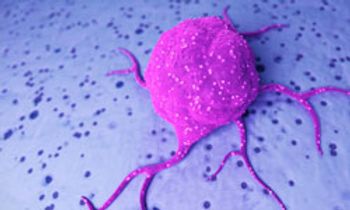
A new study suggests that even tumor cells with a common genetic background can display functional heterogeneity.