



BREAST CANCER
Latest News
Advertisement
Latest Videos



























Advertisement
More News

Based on data from the phase III TAM-01 trial presented at the 41st Annual San Antonio Breast Cancer Symposium, investigators concluded that giving women diagnosed with breast intraepithelial neoplasia a lower dose of tamoxifen following surgery could be as effective and less toxic than the current standard dose.

Charles E. Geyer, Jr, MD, professor of medicine at Virginia Commonwealth University School of Medicine, associate director for clinical research and Harrigan, Haw, Luck Families Chair in Cancer Research at Massey Cancer Center, discusses the impact of pertuzumab (Perjeta) in the treatment of patients with HER2-positive breast cancer at the 2018 San Antonio Breast Cancer Symposium.
At the 2018 San Antonio Breast Cancer Symposium, data demonstrated that use of circulating tumor-cell counts had strong value for selecting endocrine therapy compared to chemotherapy in patients with estrogen receptor–positive, HER2-negative metastatic breast cancer.
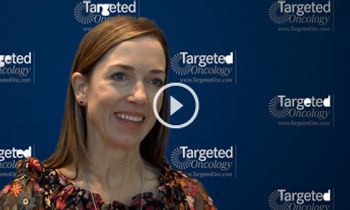
Sara A. Hurvitz, MD, director of the Breast Oncology Program, medical director of the Clinical Research Unit, University of California, Los Angeles Jonsson Comprehensive Cancer Center, discusses response to abemaciclib (Verzenio) in the neoMONARCH trial at the 2018 San Antonio Breast Cancer Symposium.
A biomarker subgroup analysis of the phase III IMpassion130 study in patients with metastatic triple negative breast cancer or inoperable locally advanced TNBC found that progression-free survival and overall survival improvements with the addition of first-line atezolizumab to nab-paclitaxel were exclusive to patients with PD-L1 expression ≥1% in immune cells.
Patients with triple-negative breast cancer who received chemotherapy treatment more than 30 days after surgery had worse survival rates and outcomes than patients who received adjuvant chemotherapy within 30 days of surgery, according to findings from a retrospective study presented at the 2018 San Antonio Breast Cancer Symposium.

Roberto A. Leon Ferre, MD, oncologist, Mayo Clinic, discusses the identification of patients with luminal androgen receptor (LAR) triple-negative breast cancer (TNBC) during the 2018 San Antonio Breast Cancer Symposium.
Adding adjuvant capecitabine to the standard treatment for patients with early-stage triple-negative breast cancer did not lead to a significant improvement in disease-free or overall survival compared with observation, according to findings presented during the 2018 San Antonio Breast Cancer Symposium
Patients with breast cancer who achieved pathologic complete response following neoadjuvant chemotherapy were more likely to have improved survival outcomes, according to findings of a meta-analyses data presented at the 2018 San Antonio Breast Cancer Symposium.
Findings from the phase III KATHERINE study showed adjuvant treatment with ado-trastuzumab emtansine (T-DM1; Kadcyla) reduced the risk of invasive disease recurrence or death by 50% compared with trastuzumab (Herceptin) in patients with HER2-positive early breast cancer who had residual invasive disease following neoadjuvant therapy.

A look back at all the FDA news that happened in the month of November 2018, including several new approvals, priority reviews, a fast track designation, and an accelerated approval, across a variety of cancer types.

Complex drug trials that use a single protocol to test either 1 agent against multiple cancers or multiple agents against 1 cancer can make drug testing faster, cheaper, and more informative, particularly when those trials use the data to constantly improve protocols.



Recurrent HR+ Breast Cancer


A Case of Estrogen-Driven Metastatic Breast Cancer
A supplemental biologics license application for the frontline combination of atezolizumab plus nab-paclitaxel has been granted a priority review by the FDA for the treatment of patients with unresectable locally advanced or metastatic PD-L1–positive triple-negative breast cancer, based on data from the phase III IMpassion130 trial.
Advertisement
Advertisement
Trending on Targeted Oncology - Immunotherapy, Biomarkers, and Cancer Pathways
1
FDA Accepts NDA for Daraxonrasib in Metastatic Pancreatic Cancer
2
Advanced Renal Cell Carcinoma: Tailoring Second-Line Therapy After Prior Immunotherapy
3
Teclistamab/Talquetamab Reduces Risk of Progression by 89% in R/R Multiple Myeloma
4
Updated HARMONi Analysis Shows Consistent OS Benefit With Ivonescimab in EGFRm Lung Cancer
5