


Chronic Lymphocytic Leukemia
Latest News
Advertisement
Latest Videos










































Advertisement
More News


The Therapeutic Approach for High-Risk CLL



Clinical Management of Relapsed CLL

The label for nilotinib (Tasigna) has been updated by the FDA with a provision stating patients with Philadelphia chromosome-positive chronic myeloid leukemia in the chronic phase (Ph+ CML-CP) who have received the BCR-ABL tyrosine kinase inhibitor could be eligible to stop treatment after having recieved for at least 3 years and having achieved the specific predetermined criteria.<br /> <br />

In patients with chronic lymphocytic leukemia (CLL), the addition of ibrutinib to standard frontline chemoimmunotherapy induced negative minimum residual disease (MRD) status in bone marrow for 83% of patients, according to results from a preliminary clinical study presented at the 2017 ASH Annual Meeting.

Ian Flinn, MD, Director of the Blood Cancer Research Program, Sarah Cannon Research Institute, discusses the safety, efficacy, and MRD negativity of a combination of venetoclax (Venclexta) and obinutuzumab (Gazyva) in patients with previously untreated chronic lymphocytic leukemia (CLL) during the 2017 ASH Annual Meeting.<br />
Adding rituximab (Rituxan) to ibrutinib (Imbruvica) in patients with chronic lymphocytic leukemia (CLL) did not improve progression-free survival (PFS) or overall survival (OS) versus ibrutinib alone, despite there being a faster time to complete remission.
In patients with relapsed/refractory chronic lymphocytic leukemia (CLL), ibrutinib (Imbruvica) in combination with venetoclax (Venclexta) induced an objective response rate (ORR) of 100%, according to findings from the TAP CLARITY clinical trial.
Kerry Rogers, MD, Assistant Professor, Internal Medicine, Division of Hematology, The Ohio State University Comprehensive Cancer Center, discusses a phase II trial of early intervention with ibrutinib (Imbruvica) in patients with asymptomatic, high-risk chronic lymphocytic leukemia (CLL) during the 2017 ASH Annual Meeting.<br />
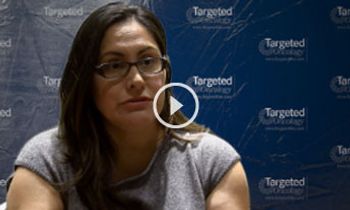
Jacqueline C. Barrientos, MD, associate professor, The Feinstein Institute for Medical Research, Northwell Health, discusses venetoclax (Venclexta) for the treatment of elderly patients with chronic lymphocytic leukemia (CLL).
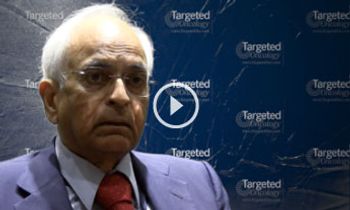
Kanti R. Rai, MD, professor, The Karches Center for Oncology Research, The Feinstein Institute for Medical Research, director, Center for Oncology and Cell Biology, Long Island Jewish Medical Center, professor, Medicine and Molecular Medicine, Hofstra Northwell School of Medicine, discusses optimal treatment sequencing for patients with chronic lymphocytic leukemia (CLL).
The Leukemia & Lymphoma Society (LLS) has awarded Barbara Savoldo, MD, PhD, with a $600,000, 3-year grant in support of her promising research into a CAR T-cell treatment with a “safety switch” that could alleviate potential side effects for patients with acute lymphoblastic leukemia being treated with the immunotherapy.
The American Society of Hematology has announced that James R. Downing, MD, of St. Jude Children’s Research Hospital will be awarded the 2017 E. Donnall Thomas Lecture and Prize for his discoveries related to the hematopathology and molecular biology of childhood leukemia.
Over the past few years, remarkable advances have been achieved in the field of CLL by rationally targeting pathways overexpressed and used by the malignant clone for proliferation and survival. These developments have been achieved by a better understanding of the underlying biology and the disease process.
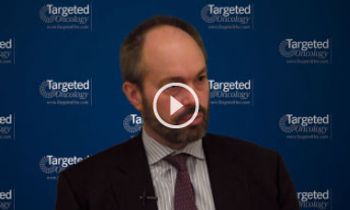
William G. Wierda, MD, PhD, medical director of the Leukemia Center at The University of Texas MD Anderson Cancer Center, discusses sequencing agents in chronic lymphocytic leukemia (CLL).
About 71% of patients (17 of 24) with chronic lymphocytic leukemia exhibited an overall response (complete and/ or partial response) 4 weeks after receiving CAR T cell infusion therapy.

Javier Pinilla-Ibarz, MD, PhD, associate member, Malignant Hematology and Immunology Program at the H. Lee Moffitt Cancer Center, discusses how ibrutinib has transformed the treatment landscape of chronic lymphocytic leukemia.
Results of a small, single-arm study reported at the 2017 Society of Hematologic Oncology meeting showed patients with refractory chronic lymphocytic leukemia achieved a high response rate with CD19-targeted CAR T-cell therapy.
Advertisement
Advertisement
Trending on Targeted Oncology - Immunotherapy, Biomarkers, and Cancer Pathways
1
Anito-Cel Delivers Durable Responses With Low Neurotoxicity in RRMM
2
Risk, Histology, and Metastatic Site Guide First-Line RCC Treatment Choices
3
FDA Application Withdrawn for I-DXd in Small Cell Lung Cancer
4
Elinzanetant Gets Priority Review for VMS From Breast Cancer Endocrine Therapy
5