



Chronic Myeloid Leukemia
Latest News
Advertisement
Latest Videos









































Advertisement
More News

The chimeric antigen receptor (CAR) T-cell therapy JCAR017 elicited a 91% complete remission rate in pediatric patients with relapsed/refractory acute lymphoblastic leukemia (ALL).

Cytogenetic and molecular data are becoming increasingly important in the individualization of treatment of patients with acute myeloid leukemia (AML).

Experts on hematologic malignancies will convene for the 19th Annual International Congress on Hematologic Malignancies, from February 20-21 in Miami, Florida, to provide insight into recent developments in the treatment of the diseases.

The FDA has granted a Fast Track Designation to CPX-351, a liposomal formulation of cytarabine and daunorubicin, for the treatment of elderly patients with relapsed acute myeloid leukemia (AML).

Fulvestrant (Faslodex) improved overall survival (OS) by 5.7 months compared with anastrozole as a frontline treatment for postmenopausal women with HR-positive metastatic breast cancer. These findings from the phase II FIRST trial were presented at the 2014 San Antonio Breast Cancer Symposium.

Jae Park, MD, assistant attending physician, Memorial Sloan Kettering Cancer Center, discusses CAR T-cell therapy for the treatment of acute lymphoblastic leukemia.

The anti-CD19 immunotherapy blinatumomab (Blincyto) has been approved by the FDA as a treatment for patients with Philadelphia chromosome-negative relapsed/refractory B-precursor acute lymphoblastic leukemia (ALL), based on findings from a phase II trial.
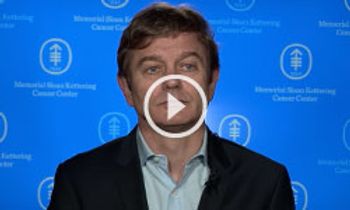
Marcel R.M. van den Brink, MD, PhD, Head, Division of Hematologic Oncology, Memorial Sloan Kettering Cancer Center, discusses two abstracts being presented at ASH looking at CAR T cell therapies for the treatment of ALL and NHL.
As its CAR T cell and high-affinity TCR products continue to advance in clinical trials, Juno Therapeutics, Inc, filed a registration statement for an initial public offering (IPO) of its common stock on November 17.

When Gail J. Roboz, MD, took the stage Wednesday to give her talk on what’s ahead in the treatment of acute myeloid leukemia (AML), she admitted feeling a little jealousy toward her colleagues in the lymphoid diseases.
The investigational chimeric antigen receptor (CAR) therapy CTL019 elicited complete remissions in 27 of 30 pediatric and adult patients (90%) with relapsed/refractory acute lymphoblastic leukemia (ALL) in 2 pilot trials.

The FDA has assigned a priority review designation to blinatumomab as a treatment for adult patients with Philadelphia chromosome-negative (Ph-) relapsed/refractory B-precursor acute lymphoblastic leukemia.
The bromodomain inhibitor, OTX015, may have use in the treatment of hematologic malignancies, including acute leukemia and other hematologic malignancies that include lymphomas and multiple myeloma.
John C. Byrd, MD, a professor of Medicine at The Ohio State University Comprehensive Cancer Center, discusses updates in the treatment of CLL.

Timothy S. Pardee, MD, discusses comorbidities, age, and outcomes among intensively treated patients with acute myeloid leukemia (AML).
John C. Byrd, MD, a professor of Medicine at The Ohio State University Comprehensive Cancer Center, discusses resistance to ibrutinib.
Anas Younes, MD, chief, Lymphoma Service, Memorial Sloan Kettering Cancer Center, discusses IPI-145 and ABT-199 for the treatment of lymphoid malignancies.
The FDA has granted a breakthrough therapy designation to blinatumomab for the treatment of adult patients with Philadelphia-negative relapsed/refractory B-precursor acute lymphoblastic leukemia (ALL).

Timothy S. Pardee, MD, discusses the results of a phase I study of the mitochondrial metabolism inhibitor CPI-613 for relapsed or refractory acute myeloid leukemia (AML).
Joseph Jurcic, MD, head, Hematologic Malignancies, Columbia University Medical Center, discusses using radioimmunotherapy as a treatment option for patients with AML.

The FDA has approved the radioactive diagnostic imaging agent Lymphoseek injection to guide sentinel lymph node biopsy in patients with cancer of the head and neck.

Joseph M. Flynn, DO, MPH, co-director, Division of Hematology; co-director, LIVESTRONG Survivorship Center of Excellence; medical director, James Survivorship Clinics, The Ohio State University, James Cancer Hospital, discusses the results of the phase II GAGE study, which compared 1000 mg vs 2000 mg of obinutuzumab in patients with chronic lymphocytic leukemia (CLL).
Jennifer Woyach, MD, assistant professor of Internal Medicine, Division of Hematology, The Ohio State University Comprehensive Cancer Center, discusses the efficacy findings from the RESONATE trial, a phase III trial that compared ibrutinib versus ofatumumab in relapsed or refractory (R/R) chronic lymphocytic leukemia/small lymphocytic lymphoma.

Treatment with single-agent ibrutinib (Imbruvica) dramatically increased progression-free survival (PFS) by nearly 80% and significantly extended overall survival (OS) by 57% compared with ofatumumab in patients with relapsed or refractory chronic lymphocytic leukemia (CLL).
Harry Erba, MD, PhD, professor of medicine, director, Hematologic Malignancy Program, University of Alabama at Birmingham, discusses the excitement around FLT3 inhibitors for the treatment of acute myeloid leukemia (AML).
Advertisement
Advertisement
Trending on Targeted Oncology - Immunotherapy, Biomarkers, and Cancer Pathways
1
Anito-Cel Delivers Durable Responses With Low Neurotoxicity in RRMM
2
Risk, Histology, and Metastatic Site Guide First-Line RCC Treatment Choices
3
FDA Application Withdrawn for I-DXd in Small Cell Lung Cancer
4
Frontline CAR T and Bispecific Antibodies Are the Next Frontier in Myeloma
5