


Colorectal Cancer
Latest News
Advertisement
Latest Videos














































Advertisement
More News

TheADAGE study has shown that in both young and older patients, chemotherapy is manageable in the adjuvant setting.

Mary F. Mulcahy discusses the potential implications of the EPOCH trial in clinical practice.
Dr Mary Mulcahy, a key opinion leader, describes the efficacy and safety outcomes of the EPOCH clinical trial.
Dr Mary Mulcahy explains the rationale and study design of the phase III EPOCH clinical trial.
Dr Mary Mulcahy, an expert oncologist, details how radioembolization is involved in the treatment of colorectal cancer with liver metastasis.
A recently published study has shown no difference in survival outcomes for patients under 50 with colorectal cancer, despite greater treatment intensity and physical fitness.
Mary F. Mulcahy, MD, describes the treatment options available for colorectal cancer with liver metastasis in the first and second line.
The primary end point of the phase 3 SOLSTICE study of trifluridine and tipiracil plus bevicizumab versus capecitabine and bevacizumab in patients with unresectable metastatic colorectal cancer was not met.
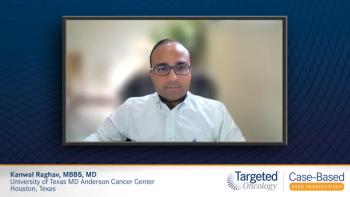
An expert breaks down therapy sequencing in metastatic colorectal cancer and provides some clinical pearls.
Kanwal Raghav, MBBS, MD, explains the rationale for using regorafenib for metastatic colorectal cancer and reviews data from 2 clinical trials.
An oncologist reviews the maintenance therapy options in metastatic colorectal cancer and what clinical findings can lead to a change in therapies.
Kanwal Raghav, MBBS, MD, presents the case of a 72-year-old woman with metastatic colorectal cancer and describes the first-line therapy options.

The last patient has been enrolled in the phase 2 MOUNTAINEER trial, evaluating tucatinib both as a monotherapy and in combination with trastuzumab for the treatment of HER2-positive metastatic colorectal cancer following previous first- and second-line standard of care therapies.
The FDA has approved cetuximab in combination with encorafenib for the treatment of adult patients with metastatic colorectal cancer harboring a BRAF V600E mutation, after prior therapy.
Tanios Bekaii-Saab, MD, FACP, concludes with a discussion of potential outcomes for a 65-year-old patient with stage 4 metastatic colorectal cancer.
Dr Bekaii-Saab reviews options for subsequent lines of therapy for metastatic colorectal cancer, including non-chemotherapy options.
An expert elaborates on the importance of the capecitabine + bevacizumab combination therapy for metastatic colorectal cancer, as well as what signs of progression or recurrence to look for in patients.
Dr Bekaii-Saab discusses therapy options for first-line treatment of metastatic colorectal cancer.
Tanios Bekaii-Saab, MD, FACP, provides an overview of a case involving a 65-year-old man diagnosed with stage 4 metastatic colorectal cancer.

In patients with HER2-positive, metastatic colorectal cancer, fam-trastuzumab deruxtecan-nxki led to improved responses in patients with higher HER2 expression at baseline, whereas responses were seen irrespective of RAS- and PIK3CA mutation status and blood tumor mutational burden levels.
Data from the phase 1/2 KRYSTAL-1 study presented at the 2021 ESMO congress showed promising clinical activity with adagrasib in treating previously treated patients with KRASG12C-mutated colorectal cancer.

John Marshall, MD, speaks on regorafenib sequencing and relays his thoughts on the future of treatment for metastatic colorectal cancer.
Dr Marshall discusses the impact regorafenib has had in the treatment of metastatic colorectal cancer and describes data from the CORRECT and ReDOS clinical trials.
A gastrointestinal cancers expert describes monitoring strategies for progression of metastatic colorectal cancer.
Dr Marshall explains the different frontline treatment options for metastatic colorectal cancer, as well as maintenance therapy.
Advertisement
Advertisement
Trending on Targeted Oncology - Immunotherapy, Biomarkers, and Cancer Pathways
1
FDA Oncology Recap: Approvals, Designations, and Decisions in September 2026
2
Plinabulin Receives FDA Fast Track Designation in Post-ICI NSCLC
3
Denosumab Biosimilar Approved For Existing Oncology Indications
4
CEPHEUS and Frontline Treatment in Newly Diagnosed Multiple Myeloma
5