
Colorectal Cancer
Latest News



Advertisement
Video Series





Latest Videos














































Advertisement
More News

The addition of liver transplantation to chemotherapy led to improved overall survival at 5 years in patients with definitively unresectable colorectal cancer metastasis in the liver.
An FDA advisory committee recommends approval for a new blood test for colorectal cancer screening, potentially offering a more convenient option that could boost screening rates.

During a Case-Based Roundtable® event, Madappa Kundranda, MD, PhD, discussed recent retrospective studies that looked at outcomes of dose optimization of regorafenib for patients with relapsed/refractory advanced colorectal cancer in the first article of a 2-part series.
The FDA has approved ColoSense, a stool screening test with 93% accuracy for colon cancer in average-risk adults over the age of 45. This noninvasive option may boost early detection rates.
During a Case-Based Roundtable® event, Madappa Kundranda, MD, PhD, discussed recent retrospective studies that compared outcomes between the available treatment options in patients with relapsed/refractory advanced colorectal cancer in the first article of a 2-part series.

A phase 2/3 study of GRANITE vaccine in combination with standard therapy shows encouraging early signs of efficacy and safety in patients with metastatic microsatellite-stable colorectal cancer.
In an interview with Targeted Oncology, Muhammad Talha Waheed, MBBS, discussed research on the reliability of using recurrence-free survival as an efficacy end point for trials evaluating patients with colorectal cancer peritoneal metastasis.

Daniel H. Ahn, DO, discusses how regorafenib continues to benefit patients with advanced colorectal cancer as researchers look to modify treatment strategies with the therapy.

For Colorectal Cancer Awareness Month, Jedrzej Wykretowicz, MD, PhD, discussed the importance of early detection and taking steps towards the prevention of colorectal cancer.

The novel cell therapy A2B530 is the first logic-gated cell therapy aimed at selectively killing tumor cells and protecting healthy cells in colorectal cancer.
In an interview with Targeted Oncology, Andreana N. Holowatyj, PhD, MSCI, discussed data from a study which found racial and ethnic differences in susceptibility genes for early-onset colorectal cancer, suggesting current multigene panel tests may not be accurate for diverse populations.
Adagrasib plus cetuximab as a potential treatment option addresses an unmet need in pretreated KRAS G12C-mutated colorectal cancer, offering hope for improved outcomes.
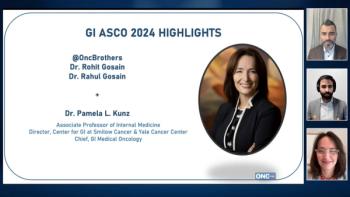
Medical oncologists offer comprehensive insights on the role of circulating tumor DNA in the treatment of patients with colorectal cancer.
Following ASCO GI 2024, Pamela L. Kunz, MD, joins the Oncology Brothers, Rahul Gosain, MD, and Rohit Gosain, MD, to discuss results from the CheckMate 8HW study investigating nivolumab plus ipilimumab in MSI-high/mismatch repair deficient metastatic colorectal cancer.

In this companion article, Dr Tanios Bekaii-Saab provides insights into effective management of patients with metastatic colorectal cancer.
Tanios Bekaii-Saab, MD, reviews real-world data and treatment sequencing for patients with metastatic colorectal cancer.
A dual primary end point of progression-free survival in the phase 3 CheckMate-8HW trial evaluating nivolumab and ipilimumab in metastatic colorectal cancer has been met.
In an interview with Targeted Oncology, Chris Haqq, MD, PhD, discussed the potential use of cancer vaccines in patients with KRAS-mutated pancreatic and colon cancer.

Rohit Gosain, MD, and Rahul Gosain, MD, provide a summary of the key gastrointestinal cancer data updates discussed following the 2023 ESMO Congress Meeting.

Rachna Shroff, MD, details key data from the phase III GASTFOX study comparing FOLFOX to docetaxel (TFOX) in the first line treatment of advanced gastric cancer.
Expert medical oncologists review data from the CABINET trial evaluating cabozantinib compared with placebo in two cohorts of previously treated patients with neuroendocrine tumors.
Rachna Shroff, MD, chief of the Division of Hematology and Oncology in the Department of Medicine at the University of Arizona College of Medicine, highlights key data from the Codebreak300 study evaluating if the combination of sotorasib and panitumumab is superior to standard-of-care trifluridine/tipiracil or regorafenib in the setting of chemorefractory metastatic colorectal cancer.
In an interview with Targeted Oncology, City of Hope cancer center’s Marwan Fakih, MD, further discussed the findings from this phase 3 trial and future directions for evaluating this combination.

In season 4, episode 18 of Targeted Talks, Arvind Dasari, MD, MS, dives into the recent approval of fruquintinib for patients with metastatic colorectal cancer.

The multicenter, open-label, CodeBreaK 300 trial of sotorasib plus panitumumab showed consistent efficacy across key subgroups of patients with metastatic colorectal cancer harboring KRAS G12C mutations.
Advertisement
Advertisement
Trending on Targeted Oncology - Immunotherapy, Biomarkers, and Cancer Pathways
1
FDA Oncology Recap: Approvals, Designations, and Decisions in September 2026
2
Plinabulin Receives FDA Fast Track Designation in Post-ICI NSCLC
3
Denosumab Biosimilar Approved For Existing Oncology Indications
4
CEPHEUS and Frontline Treatment in Newly Diagnosed Multiple Myeloma
5