




Colorectal Cancer
Latest News
Advertisement
Video Series





Latest Videos


















































Advertisement
More News

Trifluridine/tipiracil shows potential in improving disease-free survival in colorectal cancer patients post-surgery, despite safety concerns.
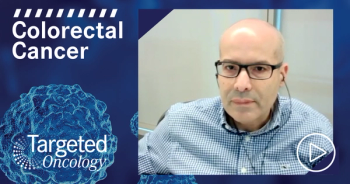
Marwan G. Fakih, MD, discusses barriers that create treatment differences in metastatic colorectal cancer for community oncologists.
The vaccine ELI-002 2P showed favorable relapse-free survival and overall survival in patients with pancreatic and colorectal cancer, particularly if they had strong T-cell responses.
A study reveals real-world outcomes of neoadjuvant immune checkpoint inhibitors in nonmetastatic colon cancer, highlighting lower efficacy and increased toxicity.
Cardiff Oncology reveals promising results for onvansertib in treating KRAS- or NRAS-mutated metastatic colorectal cancer, enhancing response rates significantly.
Anbogen Therapeutics gains FDA approval for ABT-301, initiating a pivotal trial for metastatic colorectal cancer, targeting unmet clinical needs.
A recent meta-analysis reveals no link between pathologic complete response and long-term survival in rectal cancer, challenging its use as a surrogate endpoint.
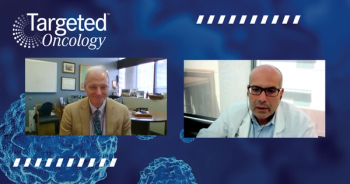
John L. Marshall, MD, and Marwan G. Fakih, MD, discussed the landscape and sequencing of treatment for refractory colorectal cancer.
Unpredictable FDA and funding woes delay crucial drug approvals, depriving thousands of patients access to vital treatments for diseases like colon cancer.
Benjamin Schlechter, MD, discusses the unmet needs and treatment gaps for patients with colorectal cancer.
Agenus reveals promising survival rates for its immunotherapy in metastatic colorectal cancer, potentially transforming treatment for resistant patients.
New trial results reveal zanzalintinib and atezolizumab significantly enhance survival in metastatic colorectal cancer, marking a breakthrough in treatment options.
A recent study reveals rising early-onset colorectal cancer rates, highlighting disparities and the need for improved screening and early detection strategies.

John L. Marshall, MD, discusses unmet needs in the targeted therapy space and the importance of optimizing dosing in colorectal cancer.

With significant survival improvements seen, the FDA has granted approval to retifanlimab for the first-line treatment of advanced anal cancer.
Panitumumab combined with FOLFOX improves survival and reduces recurrence in RAS/BRAF wild-type locally advanced colon cancer.
A groundbreaking study reveals the potential of CISH inhibition in enhancing immunotherapy for metastatic colorectal cancer, showcasing promising patient responses.

Invikafusp alfa elicited clinically meaningful antitumor activity in patients with advanced solid tumors resistant to anti–PD-1/PD-L1 agents.
In an interview with Peers & Perspectives in Oncology, John L. Marshall, MD, discussed treatment approaches and sequencing for refractory colorectal cancer.
John L. Marshall, MD, discusses the sequencing of targeted therapy for refractory metastatic colorectal cancer.
Based on data from the phase 3 CheckMate-8HW trial, the combination of nivolumab and ipilimumab has been approved by the FDA in metastatic colorectal cancer.
A phase 2 trial will evaluate leronlimab’s safety and efficacy for the treatment of patients with microsatellite stable metastatic colorectal cancer.
Pembrolizumab and XL888 in advanced CRC showed manageable safety, though limited responses and potential immunomodulatory warrant further investigation.
John L. Marshall, MD, discusses the impact of the SUNLIGHT trial in patients with refractory metastatic colorectal cancer.

For Colorectal Cancer Awareness Month, Scott Kopetz, MD, PhD, FACP, discussed the BREAKWATER trial in metastatic BRAF V600E-mutated colorectal cancer.
Advertisement
Advertisement
Trending on Targeted Oncology - Immunotherapy, Biomarkers, and Cancer Pathways
1
FDA Oncology Recap: Approvals, Designations, and Decisions in September 2026
2
Plinabulin Receives FDA Fast Track Designation in Post-ICI NSCLC
3
Denosumab Biosimilar Approved For Existing Oncology Indications
4
CEPHEUS and Frontline Treatment in Newly Diagnosed Multiple Myeloma
5