

GI CANCERS
Latest News
Advertisement
Video Series








Latest Videos

















































Advertisement
More News

Dr Richard Goldberg discusses how outdated FDA metrics may delay immunotherapy approvals for oncology agents.
BBO-11818 has received FDA fast track designation for KRAS-mutant pancreatic cancer, with early phase 1 data showing antitumor activity.

Liquid biopsy ctDNA reveals targets and flags residual disease in esophageal and gastric cancers, hinting at earlier relapse detection and tailored care.

Combination of interleukin-12 therapy with HAIP chemotherapy showed strong antitumor activity and manageable safety in metastatic CRC with liver metastases.

New targeted therapies reshape biliary tract cancer care, highlighting FGFR2/IDH1, HER2 and KRAS options plus smarter second-line sequencing.
FDA reviews new zenocutuzumab bid for NRG1 fusion cholangiocarcinoma and NCCN adds new recommendations for use of the bispecific antibody.

During a live event, Mark Yarchoan, MD and participants weighed new phase 3 immunotherapy combos for unresectable HCC, balancing survival gains, response durability, and real‑world toxicity challenges.
Pancreatic cancer research tackles treatment resistance with targeted drug delivery, immune-boosting combinations, and smarter therapy pairings to extend responses in trials.
Daraxonrasib nearly doubled median OS vs chemotherapy in pretreated metastatic pancreatic cancer, per phase 3 RASolute 302 trial data.
Tovecimig plus paclitaxel lifts response rates in second-line biliary tract cancer, prompting FDA orphan status and advancing a potential new option.
New trial data show adding durvalumab/tremelimumab and lenvatinib to TACE delays progression in unresectable HCC, hinting at longer survival.
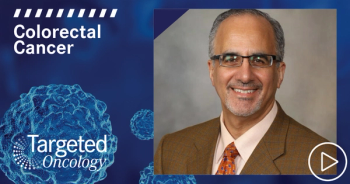
The phase 3 ATOMIC trial is changing the way we treat stage III dMMR colon cancer. In this video, Dr. Sinicrope breaks down the landmark findings, and explains why this trial is now considered practice changing.
The oral FGFR2 inhibitor lirafugratinib is being reviewed by the FDA for the second-line treatment of cholangiocarcinoma harboring FGFR2 alternations.
ATOMIC trial: adding atezolizumab to standard adjuvant chemotherapy cuts recurrence/death risk 50% in stage III dMMR colon cancer.
FDA backs pivotal phase 3 plan for VCN-01 plus chemo in metastatic pancreatic cancer, building on phase 2 VIRAGE trial success.
FDA pushes LNTH-2501 decision to June 2026 for manufacturing review.

Frontline gastric/GE junction cancer care now pairs chemo with checkpoint inhibitors for PD-L1 CPS≥1, improving survival and spotlighting new targets like HER2 and Claudin 18.2.
Phase 1 data show HER2 ADC trastuzumab rezetecan drives responses in advanced gastric/GEJ and colorectal cancers with manageable safety and low ILD.

Learn how ctDNA/MRD testing guides gastroesophageal cancer care—patient counseling, coverage hurdles, and what rising ctDNA means before scans.
New study signals ctDNA MRD clearance and 90% drops predict better gastroesophageal cancer outcomes, fueling calls for prospective trials.
Phase 1 expansion shows Varseta-M delivers notable response rates and manageable safety in heavily pretreated metastatic colorectal cancer, with FDA registrational planning underway.
FDA signals accelerated path for givastomig in CLDN18.2+ gastric/GEJ cancer, as phase 1b data show strong responses and tolerability.
ctDNA MRD monitoring offers new clues for stopping chemo safely in metastatic gastroesophageal cancer, linking molecular response to outcomes.
ctDNA MRD monitoring may augment scans and tumor markers, enabling earlier detection of gastroesophageal cancer recurrence, especially hard-to-image peritoneal relapse.
Academic centers are associated with greater biliary tract cancer surgery success while minority patients and nonacademic care face gaps, urging better resource allocation.
Advertisement
Advertisement
Trending on Targeted Oncology - Immunotherapy, Biomarkers, and Cancer Pathways
1
FDA Oncology Recap: Approvals, Designations, and Decisions in September 2026
2
Plinabulin Receives FDA Fast Track Designation in Post-ICI NSCLC
3
Denosumab Biosimilar Approved For Existing Oncology Indications
4
CEPHEUS and Frontline Treatment in Newly Diagnosed Multiple Myeloma
5