




GI CANCERS
Latest News
Advertisement
Latest Videos















































Advertisement
More News

Nivolumab plus ipilimumab shows significant progression-free survival benefits in metastatic colorectal cancer, establishing a new standard of care.

New research compares transarterial embolization and chemoembolization for treating neuroendocrine liver metastases, revealing unexpected safety differences.
Bemarituzumab combined with mFOLFOX6 shows promising overall survival benefits in advanced FGFR2b-overexpressing gastric cancer, despite safety concerns.
Novel therapies, combinations, and investigational treatments are expanding options and show promise in locally advanced metastatic pancreatic cancer.
Zanzalintinib combined with atezolizumab significantly improves overall survival in metastatic colorectal cancer compared to regorafenib, offering new hope for patients.
Telisotuzumab adizutecan shows promising antitumor activity in advanced pancreatic cancer, with manageable safety and significant clinical benefits in a phase 1 study.
Tislelizumab enhances treatment outcomes in esophageal squamous cell carcinoma, showing improved response rates and survival compared to standard chemoradiotherapy.
Sirexatamab combined with bevacizumab shows promise in improving survival for DKK1-high metastatic colorectal cancer patients, according to recent trial results.
Adjuvant therapy shows promise in achieving ctDNA clearance in colorectal cancer patients, correlating with improved disease-free survival outcomes.
The ALPHAMEDIX-02 trial showed promising results for 212Pb-DOTAMTATE in previously treated gastroenteropancreatic neuroendocrine tumors.
The COMPETE trial reveals ITM-11 significantly improves progression-free survival and overall response rates in GEP-NET patients compared with everolimus.
XTR008 therapy shows significant benefits in treating GEP-NETs, enhancing survival rates and quality of life compared to octreotide LAR.
Regorafenib and nivolumab show promising results in advanced gastric cancer, offering improved response rates and quality of life compared to chemotherapy.
Lenvatinib combined with pembrolizumab and chemotherapy shows no significant survival benefit over pembrolizumab plus chemotherapy in metastatic esophageal cancer.
Anbenitamab plus chemotherapy significantly improves survival rates in HER2-positive gastric cancer patients, offering a promising new treatment option.
Durvalumab combined with FLOT chemotherapy significantly enhances overall survival in resectable gastric adenocarcinoma, establishing a new standard of care.
A new study reveals serplulimab significantly improves event-free survival in gastric cancer, offering a promising alternative to traditional chemotherapy.
Discover the most anticipated abstracts on gastrointestinal cancers at the 2025 ESMO Congress, featuring groundbreaking studies and innovative treatments.
The FDA fast-tracks NG-350A, an innovative immunotherapy for advanced rectal cancer, aiming to enhance treatment options and patient outcomes.
New dosimetry data highlights the safety and efficacy of ITM-11 for treating patients with gastroenteropancreatic neuroendocrine tumors, promising improved outcomes.
A phase 2 trial reveals that ONO-4578 and nivolumab significantly extend progression-free survival in advanced gastric cancer patients.
Atebimetinib combined with modified gemcitabine/nab-paclitaxel shows remarkable survival rates in first-line pancreatic cancer, surpassing standard treatments.
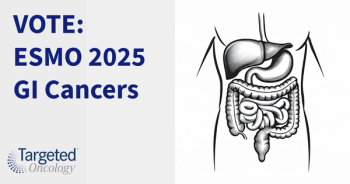
Discover the most anticipated late-breaking abstracts in gastrointestinal cancers at ESMO 2025 and influence the conversation in oncology research.
Mitazalimab shows promising efficacy and safety in metastatic pancreatic cancer, paving the way for a pivotal phase 3 trial.
A novel combination therapy shows promising results in metastatic colorectal cancer, offering improved response rates and survival compared to existing treatments.
Advertisement
Advertisement
Trending on Targeted Oncology - Immunotherapy, Biomarkers, and Cancer Pathways
1
FDA Oncology Recap: Approvals, Designations, and Decisions in September 2026
2
Plinabulin Receives FDA Fast Track Designation in Post-ICI NSCLC
3
Denosumab Biosimilar Approved For Existing Oncology Indications
4
CEPHEUS and Frontline Treatment in Newly Diagnosed Multiple Myeloma
5