





GYNECOLOGIC CANCERS
Latest News
Advertisement
Latest Videos





































Advertisement
More News
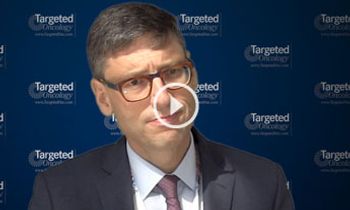
Antonio Gonzalez Martín, MD, discusses the results from the phase III PRIMA study, which evaluated the PARP inhibitor niraparib versus placebo as a frontline treatment of patients with newly diagnosed ovarian cancer who responded to platinum-based chemotherapy.

Integrating a geriatric assessment into the care of older adults who are receiving cancer treatment in communi­ty oncology practices improves patient and caregiver satisfaction and encourages commu­nication about aging-related concerns, accord­ing to results of a clinical trial that enrolled 541 patients with advanced cancer.
In an interview with Targeted Oncology, Eric Pujade-Lauraine, MD, PhD, discussed the data from the JAVELIN Ovarian 200 trial, which he presented at the 2019 Society of Gynecologic Oncology Annual Meeting. He highlighted the need for biomarkers in this space, as well as some data from an exploratory analysis from this trial.

The supplemental New Drug Application for olaparib, a PARP inhibitor, in combination with bevacizumab has been granted Priority Review by the FDA as maintenance treatment of patients with advanced ovarian cancer who are in complete or partial response to first-line platinum-based chemotherapy, based on the results from the phase III PAOLA-1 trial, according to a press release from AstraZeneca and Merck & Co, Inc.1<br />
The present and future benefits of telehealth in oncology can be observed through Tahoe For­est Cancer Center and its affiliation with the UC Davis Cancer Center, use of other remote clinics, and participation in virtual tumor boards. Even though there are roadblocks to telehealth reaching more locations and more patients, the potential benefit warrants the time needed to get over those hurdles.

Aiwu Ruth He, MD, discusses the current role of immune checkpoint inhibitors in upper gastrointestinal and gastric cancers and which patients are most likely to benefit from the anti–PD-1 agents.


First-Line PARPi Maintenance in Advanced Ovarian Cancer
Preliminary data showed that the combination of sitravatinib and tislelizumab is well tolerated and may promote antitumor activity when administered to patients with platinum-resistant ovarian cancer, according to a press release from BieGene, Ltd, which reported data from a phase Ib study at the 2019 European Society of Oncology Immuno-Oncology Congress in Geneva, Switzerland.<br />

Timil Patel, MD, discusses how to sequence therapies in a patient with rectal cancer with a single lung nodule.
Emese Zsiros, MD, PhD, FACOG, assistant professor of oncology, Department of Gynecologic Oncology, Center for Immunotherapy, Roswell Park Comprehensive Cancer Center explains the rationale for the a phase II study, which combined pembrolizumab with bevacizumab in patients with recurrent ovarian cancer. Zsiros presented data on the study in early 2019 at the SGO Annual Meeting.
In patients whose solid<strong> </strong>tumors harbor a mutation in <em>KRAS </em>G12C, therapy with MRTX849 has produced promising responses and acceptable toxicity across 3 tumors types, according to data presented at the 2019 American Association for Cancer Research–National Cancer Institute–European Organization for Research and Treatment of Cancer International Conference on Molecular Targets and Cancer Therapeutics.

Jonathan Ledermann, MD, professor of oncology, UCL Cancer Institute, University College London, discusses the results of a subanalysis from the phase III ARIEL trial of rucaparib maintenance treatment for patients with recurrent ovarian carcinoma.
Overall survival was not improved with secondary cytoreduction followed by chemotherapy compared with chemotherapy alone in the phase III GOG-0213 trial, which missed its primary endpoint.

Ovarian Cancer

Given the frequency of <em>FGFR2</em> alterations in intrahepatic cholangiocarcinoma, investigators have identified it as a potential prognostic indicator of survival and a rational target of systemic cancer therapies.
The early development of PARP inhibitors in 2003 focused on their use in combination with cytotoxic chemotherapy agents, but this was eventually abandoned because of excess toxicity.
Advertisement
Advertisement
Trending on Targeted Onc
1
FDA Does Not Approve Ivonescimab for EGFR-Mutant NSCLC
2
FDA Approves Giredestrant Plus Everolimus in ESR1-Mutated Breast Cancer
3
Cretostimogene Cuts Recurrence Risk by 68% in Intermediate-Risk NMIBC
4
FDA Approves Pertuzumab Biosimilar in HER2-Positive Breast Cancer
5