


GYNECOLOGIC CANCERS
Latest News
Advertisement
Latest Videos

















































Advertisement
More News
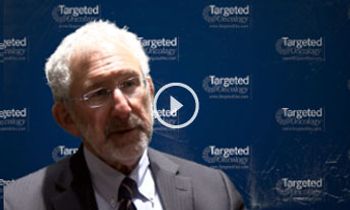
Maurie Markman, MD, president of medicine and science, Cancer Treatment Centers of America, discusses valuable endpoints beyond overall survival (OS) that can be used in ovarian cancer clinical trials.
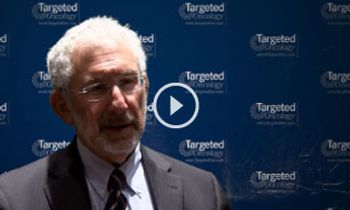
Maurie Markman, MD, president of medicine and science, Cancer Treatment Centers of America, discusses overall survival as an endpoint in ovarian cancer.

According to results reported at the 2017 international meeting of the European Society of Gynaecological Oncology (ESGO 20), maintenance therapy with olaparib monotherapy was safe and provided clinically significant, long-term treatment benefits in patients with platinum-sensitive relapsed serous ovarian cancer.
PARP inhibitors offer great potential to improve outcomes for patients with ovarian cancer, and evidence will hopefully support their use in the first-line management of these patients, said Susana M. Campos, MD, a gynecologic oncologist at Dana-Farber Cancer Institute and an assistant professor at Harvard Medical School, during her talk at the 35th annual CFS<sup>®</sup> meeting.
Ovarian cancer is the most lethal of the gynecologic malignancies. Over 22,000 new cases of ovarian cancer are diagnosed each year in the United States, resulting in more than 14,000 deaths per year.
Amultihistology basket study proved the targetability of the <em>AKT1 E17K</em> mutation in human cancers by treating patients with various types of cancer harboring an <em>AKT1 E17K </em>mutation with AZD5363, an oral pan-AKT inhibitor, according to findings published in the <em>Journal of Clinical Oncology</em>.

A supplemental biologics application for bevacizumab (Avastin) has been accepted by the FDA for the first-line treatment of advanced ovarian cancer, according to Genentech, the manufacturer of the angiogenesis inhibitor.
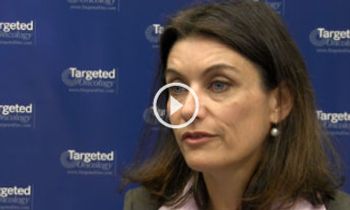
Julia Elvin, MD, PhD, vice president and senior associate medical director, Foundation Medicine, discusses a study that explored the different characteristics of subtypes of ovarian cancer, peritoneal tumors, and fallopian tube tumors.
Peter R. Dottino, MD, discusses the utilization of molecular methods to identify ovarian cancer following treatment with chemotherapy, and how this type of research impacts the field going forward.
Researchers in the Perelman School of Medicine at the University of Pennsylvania evaluated the genetic profiles of 160 breast and ovarian cancers associated with germline mutations in <em>BRCA1 </em>and <em>BRCA2 </em>and determined that there is a relationship between the genetics of <em>BRCA 1/2 </em>mutations and the risk of resistance to platinum-based chemotherapy.
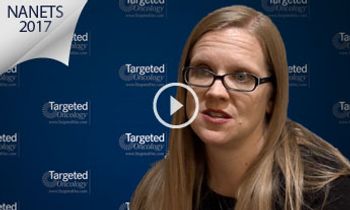
Jennifer Eads, MD, assistant professor of medicine, senior clinical instructor of medicine, University Hospitals Cleveland Medical Center, discusses the difficulties in diagnosing G3 neuroendocrine tumors (NETs) and neuroendocrine carcinomas (NECs), and the varying treatment approaches for these subsets of patients.

David Metz, MD, chair of the North American Neuroendocrine Tumor Society, discusses the focus on multidisciplinary care and exciting areas of research being presented during the 10th Annual NANETS Symposium.
Based on findings from the phase III ARIEL3 trial, a supplemental new drug application has been submitted to the FDA for rucaparib as maintenance therapy for patients with recurrent epithelial ovarian, fallopian tube, or primary peritoneal cancer who are in a complete or partial response to platinum-based chemotherapy.
Douglas A. Levine, MD, professor, Department of Obstetrics and Gynecology, and director, Division of Gynecologic Oncology, NYU Langone Medical Center, discusses the efficacy of niraparib (Zejula) on progression-free survival in patients with recurrent ovarian cancer with partial response to the last platinum-based chemotherapy.
Dmitriy Zamarin, MD, PhD, discusses the potential for immunotherapy in the treatment of ovarian cancer.

There is genuine excitement within the gynecologic cancer clinical and research communities for the potential role of PARP inhibitors in the management of ovarian cancer.
Michael J. Birrer, MD, PhD, discusses the introduction of poly ADP-ribose polymerase inhibitors to the ovarian cancer treatment landscape.
Investigators recently evaluated the genetic profiles of 160 breast and ovarian cancers associated with germline mutations in <em>BRCA1 </em>and <em>BRCA2 </em>and<em> </em>determined that there is a relationship between the genetics of <em>BRCA</em>1/2 mutations and the risk of resistance to platinum-based chemotherapy.

Efforts to improve outcomes in pediatric acute lymphoblastic leukemia should follow leads provided by next-generation sequencing and appropriate use of minimal residual disease criteria, a pediatric hematologist said at the 2017 Society of Hematology Oncology Annual Meeting in Houston.
Today, ABP-215, a biosimilar for bevacizumab developed by Amgen and Allergan, received FDA approval for the treatment of several different cancer types, making it the first biosimilar approved for the treatment of cancer.

The PARP inhibitor Rucaparib (Rubraca) improved median progression-free survival by 11.2 months compared with placebo as a maintenance treatment for patients with <em>BRCA</em>-mutant platinum-sensitive ovarian cancer, according to findings from the phase III ARIEL3 trial presented at the 2017 ESMO Congress.

Jonathan Ledermann, MD, professor of medical oncology in the University College London Cancer Institute and director of Cancer Research UK and UCL Cancer Trials Centre, discusses the toxicities associated with rucaparib (Rubraca) for the treatment of ovarian cancer.
A look back at all the FDA news that occurred in the month of August.
A historic approval of the first chimeric antigen receptor (CAR) T-cell therapy has been issued by the FDA, authorizing the use of tisagenlecleucel (Kymriah) for the treatment of patients up to 25 years of age with B-cell precursor acute lymphoblastic leukemia that is refractory or in second or later relapse.
Jane McElroy, PhD, discusses the association between higher cadmium levels and an increased risk of endometrial cancer.
Advertisement
Advertisement
Trending on Targeted Oncology - Immunotherapy, Biomarkers, and Cancer Pathways
1
Denosumab Biosimilar Approved For Existing Oncology Indications
2
Plinabulin Receives FDA Fast Track Designation in Post-ICI NSCLC
3
FDA Oncology Recap: Approvals, Designations, and Decisions in September 2026
4
Tile-Based Radiation Improves Local Control in Resected Brain Metastases
5