



GYNECOLOGIC CANCERS
Latest News
Advertisement
Latest Videos













































Advertisement
More News

Development of chimeric antigen receptor T-cell therapies is in the works for both hematologic malignancies and solid tumors, but the most promising results to date have been seen with CD19-targeted CAR T cells in the treatment of B-cell acute lymphoblastic leukemia.

Julia A. Elvin, MD, PhD, discusses her genomic research in ovarian cancer and how it could potentially impact treatment decisions for patients.
Douglas Levine, MD, provides his insight on some of the recent data with PARP inhibitors in ovarian cancer, as well as his predictions for the field in the next several years.<br />

Ursula A. Matulonis, MD, professor of Medicine, Harvard Medical School, medical director of Gynecologic Oncology, Dana-Farber Cancer Institute, discusses the toxicities that are associated with PARP inhibitors in ovarian cancer.
Rebecca C. Arend, MD, discusses some of the key abstracts presented during ASCO, as we as other key developments in endometrial cancer.
Women with node-positive stage IB-IIB cervical cancer who received systemic chemotherapy post-surgery were at a reduced risk of distant recurrence, according to results from a retrospective study of Japanese women published in the <em>International Journal of Cancer</em>.
Nivolumab (Opdivo) demonstrated clinical activity in women with recurrent/metastatic cervical cancer, and was active to a lesser extent in vaginal and vulvar cancers, according to phase I/II results from CheckMate-358.

In a 17-0 vote, the FDA’s Oncologic Drugs Advisory Committee unanimously recommended the approval of ABP-215, a biosimilar for bevacizumab.
Rucaparib improved progression-free survival versus placebo as a maintenance treatment for women with platinum-sensitive, high-grade ovarian, fallopian tube, or primary peritoneal cancer, according to results from the phase III ARIEL3 trial.
A recent study is offering insight into the age at which BRCA1/2-positive women are most at risk for deveoping breast and ovarian cancer.
Immunotherapy combinations with PARP inhibitors or checkpoint inhibitors may represent the future of treatment for patients with ovarian cancer, said Samir N. Khleif, MD, during the 2017 ASCO Annual Meeting.
Michael J. Birrer, MD, PhD, has been named director of the University of Alabama (UAB) at Birmingham Comprehensive Cancer Center. His position will take effect August 1.
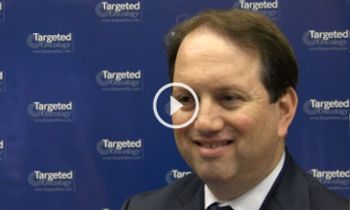
Douglas A. Levine, MD, professor, Department of Obstetrics and Gynecology, and director, Divison of Gynecologic Oncology, NYU Langone Medical Center, discusses the impact of PARP inhibitors on the landscape of ovarian cancer.
Julia Elvin, MD, PhD, vice president and senior associate medical director, Foundation Medicine, discusses a study of comprehensive genomic profiling with loss of heterozygosity to identify therapeutically relevant subsets of ovarian cancer.

The FDA has scheduled a public hearing of its Oncologic Drugs Advisory Committee (ODAC) to address a biologics license application (BLA) for tisagenlecleucel-T (CTL019) for patients aged 3 to 25 years with relapsed/refractory B-cell acute lymphoblastic leukemia (ALL). The hearing is planned for July 12, 2017.

Approximately 25% of patients with <em>BRCA</em> wild-type serous ovarian cancer may benefit from treatment with PARP inhibitors, along with 12.7% of patients with a non-serous histology, according to findings of genomic analyses in patients with ovarian cancer presented during the 2017 ASCO Annual Meeting that demonstrate that comprehensive genomic profiling is a valuable tool to integrate into routine ovarian cancer treatment decision making and clinical trial design.
Lurbinectedin (PM01183) shows activity as a single agent as well as in combination with doxorubicin or paclitaxel in patients with advanced endometrial cancer, according to findings presented during the 2017 ASCO Annual Meeting.
Kathleen N. Moore, MD, assistant professor, The Stephenson Cancer Center, The University of Oklahoma, discusses results of an ongoing clinical trial exploring mirvetuximab soravtansine (IMGN853), a folate receptor alpha-targeting antibody-drug conjugate, in platinum-resistant epithelial ovarian cancer patients, during the 2017 ASCO Annual Meeting.
The PARP inhibitor niraparib (Zejula) provided significant benefits in patients with recurrent ovarian cancer who had a partial response, with similar treatment effects in patients with or without germline <em>BRCA</em> mutations, according to a post-hoc analysis of data from the ENGOT-OV16/NOVA trial presented at the 2017 ASCO Annual Meeting.
Progression-free survival (PFS) continues to be superior with the combination of cediranib maleate and olaparib (Lynparza) compared with olaparib alone in patients with recurrent platinum-sensitive ovarian cancer in a randomized open-label study with follow-up to December 2016.
Napabucasin, a first-in-class cancer stemness inhibitor, can be safely combined with full-dose weekly paclitaxel to treat patients with advanced, platinum-resistant ovarian cancer.
Patients with recurrent, platinum-sensitive ovarian cancer and germline <em>BRCA</em> mutations had significant improvement in progression-free survival (PFS) with no decrement in health-related quality of life (hr-QoL) during maintenance therapy with olaparib (Lynparza), according to a review of patient-reported outcomes in a randomized trial.
Mirvetuximab soravtansine (IMGN853), a folate receptor alpha-targeting antibody-drug conjugate, showed promising activity in patients with platinum-resistant ovarian cancer who had received 1 to 3 prior lines of therapy.
The PARP inhibitor olaparib (Lynparza) provides clinically significant, long-term treatment benefits in patients with platinum-sensitive relapsed serous ovarian cancer, according to the protocol-specified final overall survival (OS) analysis of the phase II Study 19 trial presented during the 2017 ASCO Annual Meeting.
Michael Birrer, MD, PhD, Director, University of Alabama Comprehensive Cancer Center, discusses adverse event results of the phase III SOLO2 trial, which explored maintenance olaparib (Lynparza) tablets in patients with <em>BRCA</em>-mutated platinum-sensitive relapsed serous ovarian cancer.
Advertisement
Advertisement
Trending on Targeted Oncology - Immunotherapy, Biomarkers, and Cancer Pathways
1
Plinabulin Receives FDA Fast Track Designation in Post-ICI NSCLC
2
Denosumab Biosimilar Approved For Existing Oncology Indications
3
FDA Oncology Recap: Approvals, Designations, and Decisions in September 2026
4
Tile-Based Radiation Improves Local Control in Resected Brain Metastases
5