

HCC
Latest News
Advertisement
Video Series
Latest Videos



























Advertisement
More News
October is Liver Cancer Awareness Month, and strides continue to be made in the realm of liver cancer diagnosis and treatment. Two experts, Joan Culpepper-Morgan, MD, and Susanne G. Warner, MD, shed light on some of the treatment options available in the space.

In an interview with Targeted Oncology during the International Liver Cancer Association Annual Conference 2023, Tim F. Greten, MD, discussed the key highlights from his presentation on tissue biopsy, and his thoughts on the opposing argument in favor of liquid biopsy.
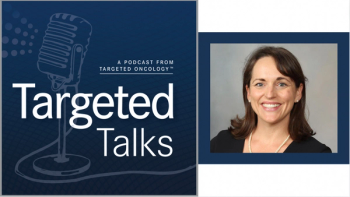
In season 4, episode 16 of Targeted Talks, Susanne G. Warner, MD,discusses the importance of tailoring treatments for patients with liver cancer, taking into account the staging of the cancer.

Tislelizumab met its primary end point of overall survival and exceeded that of sorafenib in patients with unresectable hepatocellular carcinoma.
At median follow-ups of 9.2 and 9.9 months in a phase 1b/2 study, the confirmed objective response rate with the TPST-1120 triplet was 30% vs 13.3% in the control arm, respectively.
Richard S. Finn, MD, and R. Kate (Katie) Kelley, MD, emerged in a discussion about the factors that inform treatment decisions for patients with hepatocellular carcinoma during the International Liver Cancer Association Annual Conference 2023.

UCLA professor, Richard S. Finn, MD, discusses the next possible regimen for hepatocellular carcinoma.
In an interview with Targeted Oncology, Richard S. Finn, MD, discussed his ILCA Annual Conference 2023 presentation on optimal frontline treatment in hepatocellular carcinoma and how this standard of care could evolve in the future.
During a webcast, experts discussed the current and future treatment landscape of hepatocellular carcinoma and the need to explore combinations with chemotherapy.
Interim analysis results from a study of fostroxacitabine bralpamide plus lenvatinib show positive preliminary efficacy and safety.

During a Targeted Oncology™ Case-Based Roundtable™ event, Renuka Iyer, MD, discussed subgroup analyses of the HIMALAYA trial of frontline durvalumab plus tremelimumab for patients with hepatocellular carcinoma. This is the second of 2 articles based on this event.
Ghassan K. Abou-Alfa, MD, discusses the phase 3 RATIONALE-301 trial of frontline tislelizumab vs sorafenib in patients with hepatocellular carcinoma.
Significant progression-free survival and overall survival benefits were demonstrated with rivoceranib plus camrelizumab for patients with unresectable hepatocellular carcinoma when used in the first-line setting.
During a Targeted Oncology™ Case-Based Roundtable™ event, Renuka Iyer, MD, discussed the study designs, patient populations, and efficacy outcomes of the IMbrave150 and HIMALAYA trials of frontline immunotherapy-containing regimens for patients with hepatocellular carcinoma. This is the first of 2 articles based on this event.

During a Targeted Oncology™ Case-Based Roundtable™ event, Mark A. Lewis, MD, discussed the results of the SHARP, REFLECT, IMbrave150, and HIMALAYA trials of frontline regimens for patients with hepatocellular carcinoma.
The acceptance of a new drug application for rivoceranib plus camrelizumab by the FDA is supported by data from the phase 3 CARES 310 study in patients with unresectable hepatocellular carcinoma.
According to investigators of the phase 3 HIMALAYA trial, updated findings confirm the role of the STRIDE regimen in the unresectable hepatocellular carcinoma treatment paradigm.
According to the developer of TTI-101, the REVERT-Liver Cancer trial is the second of three phase 2 trials involving the agent.
During a Targeted Oncology™ Case-Based Roundtable™ event, Amit Singal, MD, discussed next steps after diagnosing a patient with metastatic hepatocellular carcinoma.
Promise has been shown with serplulimab plus HLX04 for the treatment of advanced hepatocellular carcinoma, according to phase 2 international research.
The phase 2a portion of a study will evaluate fostrox as a triplet in earlier lines of immunotherapy combinations for patients with hepatocellular carcinoma.

Phase 3 results from the combination of rivoceranib and camrelizumab have excited investigators enough to seek FDA approval for patients with unresectable hepatocellular carcinoma.
TPST-1120 shows promising efficacy and safety data in a phase 1b/2 study of the agent among patients with unresectable or metastatic hepatocellular carcinoma.
Promising efficacy has been seen with the use of immunotherapy for the management of patients with hepatocellular carcinoma, Now, durvalumab and tremelimumab combination therapy is being studied for this patient population listed for a liver transplant.
During a Targeted Oncology™ Case-Based Roundtable™ event, Amit Singal, MD, discussed next steps for a patient with a LI-RADS 5 hepatic mass who has cirrhosis, Crohn disease, and a history of variceal bleeding.
Advertisement
Advertisement
Trending on Targeted Oncology - Immunotherapy, Biomarkers, and Cancer Pathways
1
FDA Accepts NDA for Daraxonrasib in Metastatic Pancreatic Cancer
2
Advanced Renal Cell Carcinoma: Tailoring Second-Line Therapy After Prior Immunotherapy
3
Teclistamab/Talquetamab Reduces Risk of Progression by 89% in R/R Multiple Myeloma
4
IMNN-001 Plus Chemo Cuts MRD Rate in Frontline Ovarian Cancer
5