



HEMATOLOGY
Latest News
Advertisement
Latest Videos




CME Content






































Advertisement
More News

During a <em>Targeted Oncology </em>live case-based peer perspectives program, Christopher Maisel, MD, recently discussed the treatment options and considerations he makes when treating patients with multiple myeloma.

A look back at all the FDA news that happened in March 2019, including several new approvals, a clinical hold, an orphan drug designation, and more.

Overall survival was significantly improved in patients with relapsed/refractory <em>FLT3</em> mutation–positive acute myeloid leukemia who were treated with the FLT3 inhibitor gilteritinib, according to updated findings presented during the 2019 AACR Annual Meeting.
Investigational agent tinostamustine (EDO-S101), a first-in-class alkylating deacetylase inhibiting molecule, has been granted orphan drug designation by the FDA for the treatment of patients with T-cell prolymphocytic leukemia.
During a <em>Targeted Oncology</em> live case-based peer perspectives program, B. Douglas Smith, MD, discussed his clinical consideration for the management of acute myeloid leukemia. Smith explained his treatment decisions during the dinner event in 2 case scenarios of patients with AML.
The FDA has granted ivosidenib plus azacitidine a breakthrough therapy designation for the treatment of newly diagnosed patients with acute myeloid leukemia who harbor an <em>IDH1 </em>mutation and are ≥75 years old or have comorbidities that would prevent them from receiving intensive induction chemotherapy.
Under the updated guideline from the National Comprehensive Cancer Network for the management of chronic myeloid leukemia, discontinuation of TKI therapy is considered safe with careful monitoring in adult patients with CML in the chronic phase who achieve and maintain a major molecular response.
A supplemental biologics license application has been submitted to the FDA for the potential approval of a new indication for daratumumab. The sBLA was for the combination of daratumumab plus bortezomib, thalidomide, and dexamethasone for the treatment of newly diagnosed patients with multiple myeloma who are eligible for autologous stem cell transplant.
Be careful with the investigational use of venetoclax (Venclexta) for the treatment of patients with multiple myeloma, the FDA has warned in an alert to healthcare professionals and clinical investigators.
During a <em>Targeted Oncology </em>case-based peer perspectives program, Elias Jabbour, MD, discussed his clinical considerations for the management of chronic myeloid leukemia in chronic phase. Jabbour explained his treatment decisions during the live event based on a case scenario of a patient with CML-CP.
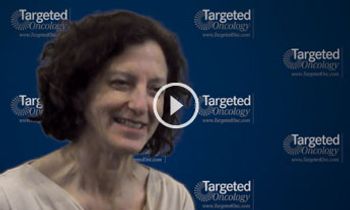
Susan Prockop, MD, discusses an option available for the treatment of central nervous Epstein-Barr virus-positive posttransplant lymphoproliferative disease.<br />
A partial clinical hold has been placed on all clinical trials examining venetoclax in multiple myeloma, according to AbbVie, co-developer of the BCL-2 inhibitor with Genentech. This hold, placed by the FDA, halts enrollment of new patients on the studies.
Following a recommendation from the Oncologic Drugs Advisory Committee against the accelerated approval of selinexor for the treatment of patients with penta-refractory multiple myeloma, the FDA has added 3 months to the review period for the new drug application, making the new action date July 6, 2019.

The healthcare community is still awaiting a response from the Centers for Medicare & Medicaid Services to the opposition of the agency’s proposal to substantially revise the Medicare Part D protected drug classes.
In a review of over 300 hematopoietic cell transplantation cases, thrombotic microangiopathy occurred in as many as 36% of patients and significantly raised the risk of related death, according to findings reported at the 2019 Transplantation and Cellular Therapy Meetings.
David Miklos, MD, discusses his advice for community oncologists treating patients with diffuse large B-cell lymphoma.

Overtreating men 70 years or older with prostate cancer cost Medicare more than $1.2 billion from 2004 to 2007, according to the results of a retrospective study using the Surveillance, Epidemiology, and End Results–Medicare linked database.

Jacqueline C. Barrientos, MD, MS, discusses the role of acalabrutinib, a second-generation BTK inhibitor, that is available for patients with chronic lymphocytic leukemia, but not yet approved.
Genomic testing could increasingly be utilized to guide treatment decisions for Veteran patients with cancer. Two recent announcements confirm an emerging focus from Veterans Affairs on genetic testing that provides more informed and tailored cancer care for US Veterans.
Sagar Lonial, MD, discussed some of the emerging agents for the treatment of patients with late relapse in multiple myeloma.
Eytan M. Stein, MD, sheds light on the current treatment landscape of AML and underscored the importance of molecular monitoring. In addition, he highlights where the field of AML is headed.
The combination regimen of venetoclax and obinutuzumab is seeking FDA approval; a supplemental new drug application has been submitted to the FDA for the combination as a treatment for patients with previously untreated chronic lymphocytic leukemia who also have coexisting medical conditions, according to an announcement from Genentech (Roche).
Natalie S. Grover, MD, discusses the potential role of CD30-specific chimeric antigen receptor T cells in patients with relapsed/refractory Hodgkin Lymphoma.
Jacqueline C. Barrientos, MD, MS, discusses emerging agents and combinations in CLL based on recent trial data.
Sangmin Lee, MD, discusses a potential way to overcome resistance to venetoclax in acute myeloid leukemia.
Advertisement
Advertisement
Trending on Targeted Oncology - Immunotherapy, Biomarkers, and Cancer Pathways
1
Subcostal Robotic Surgery Cuts Thoracic Pain
2
David DiBardino, MD, on the Rationale for Intratumoral Therapy in Lung Cancer
3
Risk-Adapted Quadruplet Therapy Sustains 5-Year Survival Benefit in High-Risk Myeloma
4
Four Approvals Reflect Growth in Hormone-Sensitive Prostate Cancer Treatment
5