




HEMATOLOGY
Latest News
Advertisement
Latest Videos





CME Content



































Advertisement
More News

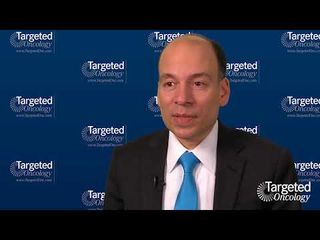
A Q&A with Andrew D. Zelenetz, MD, PhD, medical oncologist specializing in lymphoma at Memorial Sloan-Kettering Cancer Center, New York City.
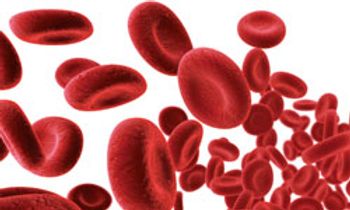
The monoclonal antibody ofatumumab (Arzerra) has received Breakthrough Therapy designation from the FDA that could allow for earlier use in patients with chronic lymphocytic leukemia (CLL), according to a joint announcement released by GlaxoSmithKline and Genmab, who are developing and distributing the drug.

Following a positive interim analysis, a phase III study of the PI3K-delta inhibitor idelalisib in combination with rituximab (Rituxan) has been stopped.

The FDA has placed a partial hold on the clinical development of the BCR-ABL inhibitor ponatinib (Iclusig), following the high occurrence of arterial thrombosis in patients treated with the drug.
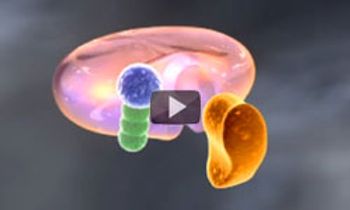
Volasertib (BI 6727) is a potent and selective inhibitor of PLK1 in vitro that is currently being evaluated for its therapeutic potential to target the cell cycle.

Jennifer Woyach, MD, discusses peripheral lymphocytosis in patients with chronic lymphocytic leukemia (CLL) following treatment with ibrutinib.
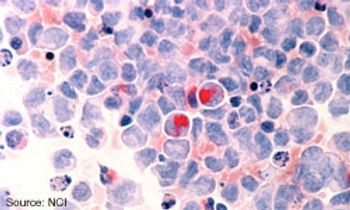
The FDA has granted a Breakthrough Therapy designation to the novel PLK1 inhibitor volasertib in combination with LDAC for its potential as a treatment for patients with untreated AML who are ineligible for intensive remission induction therapy.

Valentin Goede, MD, Department I of Internal Medicine and Center of Integrated Oncology Cologne-Bonn, University of Cologne, Germany, discusses the findings of the phase III CLL11 trial.

Jennifer Woyach, MD, discusses the benefit of a combination therapy with ibrutinib for patients with chronic lymphocytic leukemia (CLL).

Over the past two decades, there has been a shift away from indiscriminate cell-killing by anticancer agents toward the development of more specific drugs that target key aspects of cancer cell biology.
Craig L. Tendler, MD, discusses the mechanism of action of ibrutinib in various tumor types.

Daniel H. Fowler, MD, discusses the challenges of graph-versus-host-disease (GVHD) in patients with high-risk lymphoma.

The use of tyrosine kinase inhibitors (TKIs) to inhibit BCR-ABL protein in chronic myeloid leukemia (CML) is one of the major milestones in modern oncology.

Clinical study results presented at the 2013 American Society of Clinical Oncology Annual Meeting may offer new hope for patients with chronic lymphocytic leukemia.

Catherine Bollard, MBChB, MD, from the Baylor College of Medicine, discusses T cells and TGF-beta in Hodgkin's lymphoma and Non-Hodgkin lymphoma.

Paul A. Bunn, Jr, MD, from the University of Colorado, discusses afatinib for patients with activating epidermal growth factor receptor mutation.
Carol Aghajanian, MD, from the Memorial Sloan-Kettering Cancer Center, discusses the difficulties with a gold standard clinical trial endpoint in ovarian cancer.

A dual-target PI3 kinase inhibitor demonstrated activity in several types of relapsed and refractory non-Hodgkin lymphoma.
Jennifer Woyach, MD, discusses Bruton's tyrosine kinase inhibition and the mechanism of action of ibrutinib.

Julian Adams, PhD, from Infinity Pharmaceuticals, discusses PI3K inhibitors and chemotherapies for the treatment of hematologic malignancies.
At the 18th Annual Conference of the National Comprehensive Cancer Network (NCCN), experts presented the latest updates to the NCCN Clinical Practice Guidelines in Oncology.

Daniel H. Fowler, MD, senior investigator, Center for Cancer Research, National Cancer Institute, describes how T-rapa cells work.

Adding the BTK inhibitor ibrutinib to standard rituximab (R)-CHOP chemotherapy for non-Hodgkin lymphoma (NHL) resulted in an objective response rate of 100%.

Ibrutinib was well tolerated and highly effective in eradicating tumor cells in both treatment-naïve and relapsed/refractory patients with chronic lymphocytic leukemia.

Two DNA demethylation biomarkers could potentially be used to more accurately determine response to epigenetic drugs for myelodysplastic syndromes.
Advertisement
Advertisement
Trending on Targeted Oncology - Immunotherapy, Biomarkers, and Cancer Pathways
1
Subcostal Robotic Surgery Cuts Thoracic Pain
2
FDA Grants Final Approval to Cabozantinib Capsule Formulation
3
David DiBardino, MD, on the Rationale for Intratumoral Therapy in Lung Cancer
4
Risk-Adapted Quadruplet Therapy Sustains 5-Year Survival Benefit in High-Risk Myeloma
5