


HEMATOLOGY
Latest News
Advertisement
Latest Videos



CME Content






































Advertisement
More News
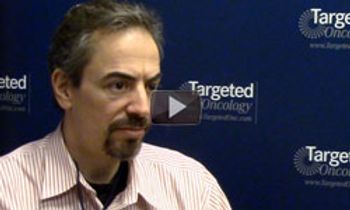
Ari Melnick, MD, a professor of medicine at the Weill Cornell Medical College, discusses the challenges associated with measuring tumor heterogeneity.
Meir Wetzler, MD, chief, Leukemia Section, Department of Medicine, Professor of Medicine, Department of Medicine, Roswell Park Cancer Institute, discusses a phase I trial that studies the side effects and immune response to DEC-205/NY-ESO-1 fusion protein CDX-1401 and decitabine in patients with myelodysplastic syndrome (MDS) or acute myeloid leukemia
Eunice Wang, MD, discusses an ongoing phase III trial looking at vincristine sulfate liposomes injection (Marqibo) for the treatment of patients ≥ 60 years old with newly diagnosed acute lymphoblastic leukemia (ALL).

William G. Wierda, MD, PhD, professor, Department of Leukemia, Division of Cancer Medicine, The University of Texas MD Anderson Cancer Center, comments on the impact of targeted therapies for the treatment of chronic lymphocytic leukemia (CLL).
Harry Erba, MD, PhD, professor of medicine, director, Hematologic Malignancy Program, University of Alabama at Birmingham, discusses BCR-ABL Ratios in patients with chronic-phase chronic myeloid leukemia

Andre Goy, MD, chairman, director, and chief of the Lymphoma Division at the John Theurer Cancer Center, discusses the treatment of elderly patients with lymphoma.

Screening for prostate-specific antigen (PSA) significantly cuts the death rate from prostate cancer, but at the same time, America’s medical community should work harder to avoid the screen’s potential pitfalls.
Alessandra Ferrajoli, MD, associate professor, Department of Leukemia, Division of Cancer Medicine, The University of Texas MD Anderson Cancer Center, discusses the management of chronic lymphocytic leukemia (CLL) in elderly patients.
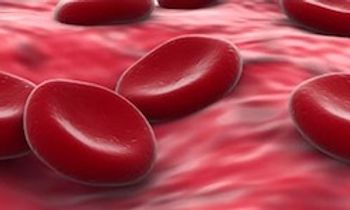
The non-Hodgkin’s lymphomas are a diverse and heterogeneous group of neoplasms most commonly originating in B lymphocytes (80%-85%), but also in T lymphocytes (15%-20%), and, rarely, in natural killer cells.
Harry Erba, MD, PhD, professor of medicine, director, Hematologic Malignancy Program, University of Alabama at Birmingham, discusses tipifarnib for the treatment of older, untreated patients with AML.

Renier J. Brentjens, MD, PhD, associate professor, chief, Cellular Therapeutics Center, Memorial Sloan Kettering Cancer Center, discusses the outlook for CAR-modified T cells.

With the growing knowledge of immune system components, signaling processes, and regulatory networks, cancer immunotherapy has yielded increasingly favorable treatment outcomes.
Mark R. Litzow, MD, chair, ECOG-ACRIN Leukemia Committee, professor of medicine, Division of Hematology, Mayo Clinic, discusses ways of conducting minimal residual disease (MRD) assessments in patients with ALL.
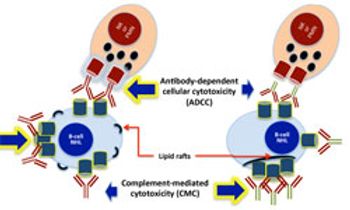
Monoclonal antibodies (mAbs) that target key “restricted†antigens in cancer cells have become an integral part of the management of multiple hematologic and solid tumor malignancies.
Anas Younes, MD, chief, Lymphoma Service, Memorial Sloan Kettering Cancer Center, discusses treatment with idelalisib for chronic lymphocytic leukemia (CLL) and indolent non-Hodgkin lymphoma (iNHL)

Ari Melnick, MD, a professor of medicine at the Weill Cornell Medical College, discusses EZH2 and its potential as a target in diffuse large B cell lymphoma
William G. Wierda, MD, PhD, professor, Department of Leukemia, Division of Cancer Medicine, The University of Texas MD Anderson Cancer Center, discusses treatment options for patients with CLL who harbor the 17p deletion.
Renier J. Brentjens, MD, PhD, associate professor, chief, Cellular Therapeutics Center, Memorial Sloan Kettering Cancer Center, discusses the utility of CAR-modified T cells in myeloid malignancies.

Ibrutinib (Imbruvica) has received an FDA approval to include the treatment of patients with chronic lymphocytic leukemia (CLL) who have received at least one previous therapy.
Jennifer Brown, MD, PhD, Director, Chronic Lymphocytic Leukemia Center, Dana-Farber Cancer Institute, Assistant Professor of Medicine, Harvard Medical School, discusses the Bcl-2 inhibitor ABT-199 for the treatment of patients with CLL.
John C. Byrd, MD, from OSUCCC – James, describes a phase I/Ib trial looking at dinaciclib for patients with relapsed or refractory chronic lymphocytic leukemia (CLL).

The intravenous pan-HDAC inhibitor belinostat (Beleodaq) as a treatment for patients with relapsed or refractory peripheral T-cell lymphoma (PTCL) has received a priority review designation from the FDA.
Timothy S. Pardee, MD, from Wake Forest University Baptist Medical Center, discusses the mechanism and utility of the pyruvate dehydrogenase complex inhibitor CPI-613 for the treatment of patients with advanced hematologic malignancies.
Jasmine Zain, MD, discusses how her institution is working on improving the outcome of patients with T cell lymphoma that undergo transplants.
Jae Park, MD, attending physician, Leukemia Service, Memorial Sloan-Kettering Cancer Center, describes the design of a trial analyzing vemurafenib for the treatment of patients with hairy cell leukemia.
Advertisement
Advertisement
Trending on Targeted Oncology - Immunotherapy, Biomarkers, and Cancer Pathways
1
Subcostal Robotic Surgery Cuts Thoracic Pain
2
FDA Grants Final Approval to Cabozantinib Capsule Formulation
3
David DiBardino, MD, on the Rationale for Intratumoral Therapy in Lung Cancer
4
Risk-Adapted Quadruplet Therapy Sustains 5-Year Survival Benefit in High-Risk Myeloma
5