



HEMATOLOGY
Latest News
Advertisement
Latest Videos




CME Content


































Advertisement
More News

The landscape in lymphoma management continues to evolve, with new therapies and approaches improving established treatment paradigms.

As the targeted therapy era in chronic lymphocytic leukemia (CLL) continues to unfold, two next-generation agents are generating responses with improved safety profiles as single agents and in combination regimens.

The combination of a FLT3L-primed in situ vaccine, low-dose radiotherapy, and a TLR 3 agonist has been shown to be feasible, safe, and immunologically and clinically effective in a phase I/II study for patients with low-grade lymphoma.

Joshua Brody, MD, assistant professor, Icahn School of Medicine, director, Lymphoma Immunotherapy Program, Mount Sinai Hospital, discusses vaccine strategies in follicular lymphoma.
The investigational chimeric antigen receptor (CAR) therapy CTL019 elicited complete remissions in 27 of 30 pediatric and adult patients (90%) with relapsed/refractory acute lymphoblastic leukemia (ALL) in 2 pilot trials.

The FDA has approved bortezomib (Velcade) in combination with rituximab, cyclophosphamide, doxorubicin, and prednisone (VR-CAP) as a frontline treatment for patients with mantle cell lymphoma.

The FDA has assigned a priority review designation to blinatumomab as a treatment for adult patients with Philadelphia chromosome-negative (Ph-) relapsed/refractory B-precursor acute lymphoblastic leukemia.

Despite a recent decline in utilization, consolidated radiation therapy (RT) has been shown to improve 10-year survival rates for patients with stage I/II Hodgkin's lymphoma following treatment with chemotherapy.
Julian Adams, PhD, president, Research and Development, Infinity Pharmaceuticals, discusses the rationale behind the DUO trial.
The bromodomain inhibitor, OTX015, may have use in the treatment of hematologic malignancies, including acute leukemia and other hematologic malignancies that include lymphomas and multiple myeloma.

The FDA has expanded the approval of ibrutinib (Imbruvica) to include the treatment of patients with chronic lymphocytic leukemia (CLL) who have received at least one previous therapy and harbor a 17p deletion.
Jennifer Woyach, MD, assistant professor of Internal Medicine, Division of Hematology, The Ohio State University Comprehensive Cancer Center, discusses the association of disease progression on ibrutinib therapy with the acquisition of resistance mutations as seen at The Ohio State University Comprehensive Cancer Center.

Kenneth R. Carson, MD, assistant professor, Division of Oncology, Washington University, discusses post-therapy imaging in lymphoma.
John C. Byrd, MD, a professor of Medicine at The Ohio State University Comprehensive Cancer Center, discusses updates in the treatment of CLL.

Frits van Rhee, MD, PhD, MRCP, professor of medicine, Myeloma Institute for Research and Therapy, University of Arkansas for Medical Sciences, discusses treatment options for multicentric Castleman's disease.

The investigational CD19-targeted chimeric antigen receptor (CAR) therapy CTL019 has received a breakthrough therapy designation from the FDA as a potential treatment for pediatric and adult patients with relapsed/refractory acute lymphoblastic leukemia (ALL).
Timothy S. Pardee, MD, discusses comorbidities, age, and outcomes among intensively treated patients with acute myeloid leukemia (AML).
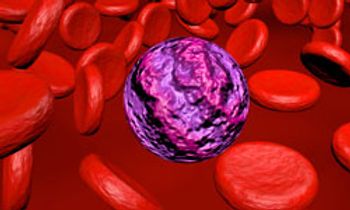
In the spring of 2014, a search of the clinicaltrials.gov web site with the key words acute myeloid leukemia and phase II, III returned a list of just over 340 open studies. Most of those trials involving novel agents can be grouped into 1 of 2 general categories: immunomodulators or kinase inhibitors.
B-cell malignancies include non-Hodgkin lymphomas (NHL) and chronic lymphocytic leukemia (CLL). NHLs are a heterogeneous group of more than 30 cancers of B lymphocytes and T lymphocytes.
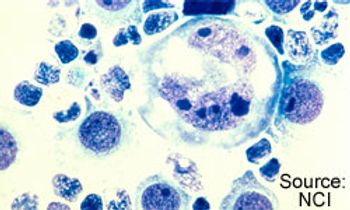
Follicular lymphoma is the malignancy of germinal center B cells in the lymph nodes. It is the second most commonly diagnosed non-Hodgkin’s lymphoma, accounting for approximately 35% of all such cases.
John C. Byrd, MD, a professor of Medicine at The Ohio State University Comprehensive Cancer Center, discusses resistance to ibrutinib.
Anas Younes, MD, chief, Lymphoma Service, Memorial Sloan Kettering Cancer Center, discusses IPI-145 and ABT-199 for the treatment of lymphoid malignancies.

Creating new treatment options for CLL, particularly for high-risk patient populations such as those with fludarabine-refractory disease or with 17p deletions, is the goal of an intense effort by clinical researchers and pharmaceutical companies.

A Q&A with Jacqueline Claudia Barrientos, MD, assistant professor at Hofstra North Shore-LIJ School of Medicine, New York.
Advertisement
Advertisement
Trending on Targeted Oncology - Immunotherapy, Biomarkers, and Cancer Pathways
1
Subcostal Robotic Surgery Cuts Thoracic Pain
2
FDA Grants Final Approval to Cabozantinib Capsule Formulation
3
David DiBardino, MD, on the Rationale for Intratumoral Therapy in Lung Cancer
4
Risk-Adapted Quadruplet Therapy Sustains 5-Year Survival Benefit in High-Risk Myeloma
5