




HEMATOLOGY
Latest News

Advertisement
Latest Videos


CME Content






































Advertisement
More News

Experts on hematologic malignancies will convene for the 19th Annual International Congress on Hematologic Malignancies, from February 20-21 in Miami, Florida, to provide insight into recent developments in the treatment of the diseases.
Jae Park, MD, assistant attending physician, Memorial Sloan Kettering Cancer Center, discusses toxicities associated with CAR-modified T cell therapy.

Ibrutinib (Imbruvica) showed promising activity in heavily pretreated, relapsed/refractory chronic lymphocytic leukemia (CLL) after allogeneic stem cell transplantation (ASCT).

Ian W. Flinn, MD, PhD, discusses the mechanism of action and toxicity profile of duvelisib (IPI-145). Duvelisib is being studied for the treatment of hematologic malignancies.

Representatives Diana DeGette (D, Colorado) and Fred Upton (R, Michigan) recently released a "discussion draft" of the 21st Century Cures Act.

Gareth Morgan, MD, PhD, the director of the Myeloma Institute at the University of Arkansas, discusses gene expression profiling for patients with smoldering myeloma.

The FDA has expanded the approval of ibrutinib (Imbruvica) for the treatment of patients with Waldenström’s Macroglobulinemia.
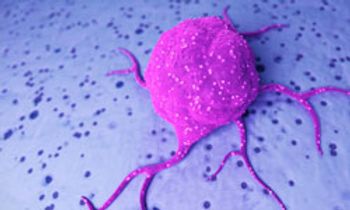
Metastatic disease accounts for the vast majority of cancer-related deaths. Ensuring a definitive diagnosis and the most effective treatment in a timely fashion is essential for extending life expectancy.

The FDA has granted a Fast Track Designation to CPX-351, a liposomal formulation of cytarabine and daunorubicin, for the treatment of elderly patients with relapsed acute myeloid leukemia (AML).

ASCO named the improved outlook for patients with chronic lymphocytic leukemia (CLL) as its inaugural “Cancer Advance of the Year.â€

Bayard L. Powell, MD, discusses a phase I study that looked at CPI-613 in combination with high dose ARA-C and mitoxantrone for the treatment of patents with relapsed/refractory acute myeloid leukemia (AML).

Fulvestrant (Faslodex) improved overall survival (OS) by 5.7 months compared with anastrozole as a frontline treatment for postmenopausal women with HR-positive metastatic breast cancer. These findings from the phase II FIRST trial were presented at the 2014 San Antonio Breast Cancer Symposium.

Treatment with the tyrosine kinase inhibitor (TKI) sorafenib in combination with standard chemotherapy increased event-free survival (EFS) by 11.3 months in patients with newly diagnosed AML.

In a phase II trial, some patients with heavily treated acute myelogenous leukemia (AML) benefited from treatment with the BCL-2 inhibitor venetoclax (ABT-199).

Jae Park, MD, assistant attending physician, Memorial Sloan Kettering Cancer Center, discusses CAR T-cell therapy for the treatment of acute lymphoblastic leukemia.

The novel drug AG-221 generated durable remissions in patients with acute myeloid leukemia (AML) by targeting a mutation of the IDH2 gene in a small, first-in-man study that represents a new, chemotherapy-free approach for attacking the malignancy. Eytan M. Stein, MD, reported these findings during a press briefing at the 56th Annual Meeting of the American Society of Hematology (ASH).

Patients with HIV-associated lymphoma can effectively be treated with autologous hematopoietic stem cell transplantation (AHCT), with outcomes that are similar to patients without HIV. Joseph Alvarnas, MD, presented results from a phase II study at the 2014 ASH Annual Meeting.

Treatment with nilotinib (Tasigna) in combination with chemotherapy elicited complete hematological remissions (CHR) in 87% of elderly patients with newly diagnosed Philadelphia-positive acute lymphoblastic leukemia (Ph+ ALL).

Adrian Wiestner, MD, PhD, senior investigator, National Institutes of Health, discusses curing or managing patients with chronic lymphocytic leukemia (CLL).

Idelalisib monotherapy shows activity in treatment-naïve patients ≥65 years with chronic lymphocytic leukemia (CLL) or small lymphocytic lymphoma (SLL) — nearly 90% of patients enrolled in a phase II study demonstrated a partial response.

Joseph Alvarnas, MD, Director of Medical Quality, associate clinical professor, City of Hope, discusses the treatment of HIV-associated lymphoma.

Patients with relapsed and difficult-to-treat Hodgkin lymphoma who received brentuximab vedotin following treatment with high-dose chemotherapy and stem cell transplant had an unprecedented 50% higher likelihood of continuing to experience PFS at 2 years.
The anti-CD19 chimeric antigen receptor (CAR)-modified T-cell therapy CTL019 demonstrated a 92% complete response (CR) rate in pediatric patients with relapsed/refractory acute lymphoblastic leukemia (ALL).
The anti-CD19 immunotherapy blinatumomab (Blincyto) has been approved by the FDA as a treatment for patients with Philadelphia chromosome-negative relapsed/refractory B-precursor acute lymphoblastic leukemia (ALL), based on findings from a phase II trial.
Marcel R.M. van den Brink, MD, PhD, Head, Division of Hematologic Oncology, Memorial Sloan Kettering Cancer Center, discusses two abstracts being presented at ASH looking at CAR T cell therapies for the treatment of ALL and NHL.
Advertisement
Advertisement
Trending on Targeted Oncology - Immunotherapy, Biomarkers, and Cancer Pathways
1
Subcostal Robotic Surgery Cuts Thoracic Pain
2
FDA Grants Final Approval to Cabozantinib Capsule Formulation
3
David DiBardino, MD, on the Rationale for Intratumoral Therapy in Lung Cancer
4
Risk-Adapted Quadruplet Therapy Sustains 5-Year Survival Benefit in High-Risk Myeloma
5