





HEMATOLOGY
Latest News
Advertisement
Latest Videos




CME Content






































Advertisement
More News
Christoph Roellig, MD, University Hospital Dresden, Dresden, Germany, discusses FLT3 ITD/NPM1 mutation status for patients with AML who are in first remission.

Carfilzomib (Kyprolis) in combination with dexamethasone, was recently granted a priority review designation by the FDA for patients who have relapsed multiple myeloma, following prior treatment with at least one therapy.
Farhad Ravandi, MD, The University of Texas MD Anderson Cancer Center, discusses the treatment of patients with relapse/refractory acute myeloid leukemia (AML).

Aziz Nazha, MD, discusses a new mutational model to predict response to hypomethylating agents in myelodysplastic syndromes (MDS).
Srdan Verstovsek, MD, PhD, the University of Texas MD Anderson Cancer Center, discusses immunotherapy in myelofibrosis.

AbbVie has submitted a supplemental new drug application for its BTK inhibitor ibrutinib (Imbruvica) as a therapy for treatment-naive patients with chronic lymphocytic leukemia (CLL) who are over the age of 65.

Jennifer R. Brown, MD, PhD, Dana-Farber Cancer Institute, discusses new drugs on the horizon for the treatment of patients with chronic lymphocytic leukemia (CLL).
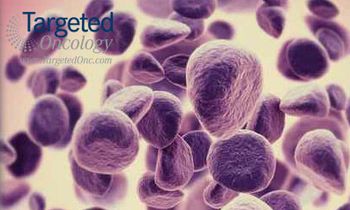
Ixazomib (MLN9708), an oral proteasome inhibitor, was recently granted a priority review designation by the FDA, in combination with lenalidomide and dexamethasone for the treatment of patients who have relapsed and/or refractory multiple myeloma.

Daratumumab was recently assigned a priority review designation by the FDA as a treatment for patients who have multiple myeloma.

US Veterans, including former Air Force personnel who participated in Operation Ranch Hand, have a 2.4-fold increased risk of multiple myeloma’s precursor state, MGUS,

A new study suggests that the presence of persistent genetic mutations, 30 days after induction chemotherapy, predicted relapse and survival in patients with acute myeloid leukemia (AML), as well as intermediate-risk patients.
The therapeutic palette for Hodgkin Lymphoma is growing, along with improvements in survival and cure rates.

Genetic testing may improve treatment for multiple myeloma by helping oncologists identify patients at risk for developing more aggressive disease.

The development of novel targeted drugs, such as brentuximab vedotin (Adcentris), against discrete cell surface proteins, such as CD30, has awakened a new way of thinking about targeted cancer biology
Sagar Lonial, MD, professor, School of Medicine, executive vice chair, Department of Hematology & Medical Oncology, chief medical officer, Winship Cancer Institute, Emory University, discusses the ELOQUENT-2 study in patients with relapsed/refractory multiple myeloma.

Philip McCarthy, MD, professor of oncology, director, Blood and Marrow Transplant Center, Department of Medicine, Roswell Park Cancer Institute, discusses the toxicities associated with lenalidomide for multiple myeloma in the CALGB 100104 study.

Sarah Holstein, MD, PhD, assistant professor of oncology, Roswell Park Cancer Institute, discusses a randomized study that compared lenalidomide with placebo for patients with multiple myeloma, following a single autologous stem cell transplant (ASCT).

Venetoclax (ABT-199) monotherapy showed promising phase II results, which will be submitted to regulatory agencies for patients with relapsed or refractory chronic lymphocytic leukemia (CLL) harboring the 17p deletion.
Jeffrey Jones, MD, MPH, assistant professor, Internal Medicine, section head, Chronic Lymphocytic Leukemia (CLL) research program, Ohio State University, discusses idelalisib (Zydelig) for previously treated CLL.

Ravi Vij, MD, associate professor of medicine, Division of Oncology, Section of Bone Marrow Transplant, Washington University School of Medicine, discusses the monoclonal antibody daratumumab for the treatment of patients with heavily pretreated multiple myeloma.
This review addresses the basics of CAR T-cell design and reviews data from published clinical studies in leukemia.

Data from a phase I/II single-arm trial of the NY-ESO-1 T-Cell Receptor (TCR) therapy, recently published in Nature Medicine, is the first to show feasibility and antitumor responses in patients who have multiple myeloma.
According to findings from a phase II study released by Amgen, monotherapy with blinatumomab (Blincyto) showed promising complete remission (CR) or CR with partial hematological recovery (CRh) rates in adult patients with relapsed or refractory Philadelphia chromosome-positive (Ph+) B cell precursor acute lymphoblastic leukemia (ALL).
Peter Voorhees, MD, associate professor, School of Medicine, UNC-Chapel Hill, Clinical Research, Leukemia, Lymphoma, and Myeloma Program, UNC Lineberger Comprehensive Cancer Center, discusses a phase II study examining daratumumab for the treatment of patients with multiple myeloma.

CPX-351 demonstrated a complete response (CR) or CR with incomplete hematologic recovery rate of 47.7% in elderly patients with untreated secondary acute myeloid leukemia.
Advertisement
Advertisement
Trending on Targeted Oncology - Immunotherapy, Biomarkers, and Cancer Pathways
1
Subcostal Robotic Surgery Cuts Thoracic Pain
2
FDA Grants Final Approval to Cabozantinib Capsule Formulation
3
David DiBardino, MD, on the Rationale for Intratumoral Therapy in Lung Cancer
4
Risk-Adapted Quadruplet Therapy Sustains 5-Year Survival Benefit in High-Risk Myeloma
5