

HEMATOLOGY
Latest News
Advertisement
Latest Videos


CME Content






































Advertisement
More News

Brentuximab vedotin (Adcetris) has been granted FDA approval for use in combination with chemotherapy for the frontline treatment of patients with CD30-expressing peripheral T-cell lymphoma, based on findings from the phase III ECHELON-2 trial.

Susan M. O’Brien, MD, discusses the challenges with the 3 oral agents approved in chronic lymphocytic leukemia.

During the 2018 Association of Community Cancer Centers National Oncology Conference, Olalekan Oluwole, MBBS, MPH, discusses some of the challenges he has encountered with chimeric antigen receptor T-cell therapy.

CLL is a malignant disease characterized by progressive accumulation of immature, immunophenotypically distinct lymphocytes in the blood, bone marrow, and lymphatic tissues. Although the clinical course of CLL can be unpredictable, this disease is typically slow-progressing and occurs most often in patients ≥65 years of age. As such, treatment, if indicated, is typically conservative. Current CLL treatments are not considered to be curative; however, long-term remission can be achieved in some patients using allogenic stem cell transplantation.
Chronic lymphocytic leukemia is characterized by the clonal proliferation and accumulation of small, mature-appearing CD5-positive B lymphocytes in the blood, bone marrow, and secondary lymphoid tissues. A CLL diagnosis is established by the presence of more than 5x10⁹/L peripheral lymphocytes co-expressing CD5, CD19, and CD23, and weakly expressing CD20, CD79b, and surface immunoglobulin. Small lymphocytic lymphoma represents a clinical variant of CLL and is similarly managed.
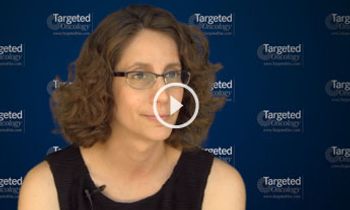
Sarah Holstein, MD, PhD, explains her rationale for choosing a triplet regimen over a quadruplet in patients with multiple myeloma.
A supplemental new drug application (sNDA) for avatrombopag (Doptelet) as a treatment for patients with chronic immune thrombocytopenia (ITP) who have had an inadequate response to prior treatment has been accepted for review by the FDA.
Richard Furman, MD, discusses how survival times for patients with chronic lymphocytic leukemia have increased dramatically in the past decade, thanks to an ever-expanding armamentarium of novel agents and more patients now being diagnosed earlier.
Based on findings from the phase III ECHELON-2 trial, brentuximab vedotin (Adcetris) has been submitted to the FDA for approval in combination with chemotherapy for the frontline treatment of patients with CD30-expressing peripheral T-cell lymphoma.

A look back at all the FDA news that happened in the month of October 2018, including several new FDA approvals, priority reviews, a breakthrough therapy designation, and more, in a variety of cancer types.<br />
Treatment-naïve patients with chronic lymphocytic leukemia who had comorbidities saw a reduction in the risk of disease progression or death after treatment with venetoclax combined with obinutuzumab versus obinutuzumab plus chlorambucil.
James L. Wade III, MD, FACP, FASCO, discusses the importance of clinical trials in the community.
I think one of the most important advancements in biomedical technology that has improved our understanding of the complexities of cancer is the ability to sequence the cancer genome for any individual patient, in a rapid and cost-effective manner, to help us make treatment decisions in the clinic.
Groundbreaking developments in cancer therapies can change lives, extending survival and sending patients who previously thought their chances were slim into remission. But these therapies come at a cost, and many patients reel at the prospect of heavy financial burdens. To help patients and programs meet the challenges of affording cancer treatments, community cancer centers are expanding the role of financial advocates in their organizations.

Thomas A. Gallo, MS, MDA, president of the Association of Community Cancer Centers, discusses his mission as president to “reflect, renew, and reignite” in order to create a more resilient oncology team for the community.
Larotrectinib induced an objective response rate of 80% in patients with advanced solid tumors who harbored <em>NTRK </em>gene fusions, according to results pooled from 3 small trials of the TRK inhibitor. Results were presented during the 2018 ESMO Congress.

Rising prescription drug prices continue to add to the burden of paying for quality healthcare. In an effort to confront such costs, the Centers for Medicare & Medicaid Services has rescinded a prohibition on step therapy for Medicare Advantage plans. But some contend such a policy will reduce patient access to optimal medication.
Sarah K. Tasian, MD, discusses what she finds most interesting about Philadelphia chromosome (Ph-like) acute lymphoblastic leukemia.

Julie M. Vose, MD, MBA, discusses resistance to BTK inhibitors in patients with non-Hodgkin lymphoma.
With 2 CAR T-cell therapies now approved and more moving quickly through early-phase clinical trials, 4 healthcare experts reflected on the evolving field of CAR T-cell therapy, their understanding of its current and future applicability for patients, the process for administration and the challenges and obstacles that remain unaddressed during an Association of Community Cancer Centers interactive panel.<br />
A supplemental new drug application for ibrutinib (Imbruvica) has been granted a priority review by the FDA for use in combination with obinutuzumab (Gazyva) as a frontline treatment for adult patients with chronic lymphocytic leukemia or small lymphocytic lymphoma.
David G. Maloney, MD, PhD, reviews the latest developments with CAR T-cell therapy in patients with non-Hodgkin lymphoma.
Lloyd Damon, MD, discussed novel therapies in AML with a focus on FLT3 and IDH1/2 inhibitors.<br />

Daniel A. Pollyea, MD, MS, discusses how far the field of acute myeloid leukemia has come in the last 1 to 2 years.

Danielle Brander, MD, discusses the current treatment landscape in the frontline setting for patients with chronic lymphocytic leukemia.
Advertisement
Advertisement
Trending on Targeted Oncology - Immunotherapy, Biomarkers, and Cancer Pathways
1
Subcostal Robotic Surgery Cuts Thoracic Pain
2
David DiBardino, MD, on the Rationale for Intratumoral Therapy in Lung Cancer
3
Four Approvals Reflect Growth in Hormone-Sensitive Prostate Cancer Treatment
4
FDA Grants Final Approval to Cabozantinib Capsule Formulation
5