


HEMATOLOGY
Latest News
Advertisement
Latest Videos


CME Content





































Advertisement
More News

A third of patients with previously treated, high- and intermediate-risk myelofibrosis had objective responses to the investigational second mitochondria-derived activator of caspases mimetic LCL161.
Multiple myeloma expert Kenneth C. Anderson, MD, will serve as president of the American Society of Hematology through the end of this year.
A full regulatory approval is being sought for blinatumomab as a treatment for patients with Philadelphia chromosome-negative relapsed/refractory B-precursor ALL.
Results from the phase I portion of the first trial testing axicabtagene ciloleucel, an autologous CD3ζ/CD28-based CAR T-cell therapy, indicate that the regimen can safely be administered and lead to durable CR after more than 12 months in refractory diffuse large B-cell lymphoma.
Philadelphia chromosome Ph–like acute lymphoblastic leukemia accounts for more than 20% of all adult patients with ALL and is associated with a poor outcome, according to findings published in the Journal of Clinical Oncology.
According to results of a phase I trial, the addition of the CDK 4/6 inhibitor palbociclib can help patients with mantle cell lymphoma overcome resistance to the BTK inhibitor ibrutinib.
Lead study author Jennifer A. Woyach, MD, discusses a phase II trial of MOR208, which includes cohorts of patients with relapsed/refractory CLL, treatment-naïve disease, Richter’s transformation, and those with CLL who have been treated with ibrutinib.
Saad Z. Usmani, MD, discusses the POLLUX update and PAVO findings presented at ASH, as well as the latest developments with daratumumab.
The FDA has granted an accelerated approval to ibrutinib as a treatment for patients who require systemic therapy with marginal zone lymphoma following at least one prior anti-CD20-based therapy.
Chi Van Dang, MD, PhD, has been appointed scientific director of the Ludwig Institute for Cancer Research.

Kevin R. Kelly, MD, PhD, discusses the differences seen between ethnic groups in multiple myeloma diagnosis and response to treatment.
Several phase I trials of vadastuximab talirine in acute myeloid leukemia have been placed on hold by the FDA, according to Seattle Genetics, the manufacturer of the antibody-drug conjugate.
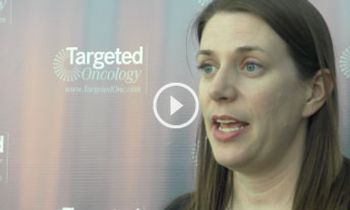
Jennifer Woyach, MD, associate professor, Ohio State University, discusses a study combining MOR208 with Lenalidomide for the treatment of chronic lymphocytic leukemia (CLL).
Lenalidomide (Revlimid) monotherapy led to hematologic improvement with erythroid response in almost 40% of patients with low or intermediate-1 risk myelodysplastic syndrome who were refractory to or unlikely to respond to erythropoietin and granulocyte-colony stimulating factor.
The American Society of Hematology (ASH) recently presented Charles Mullighan, MD, of St. Jude Children’s Research Hospital, with the 2016 William Dameshek Prize in recognition of his leadership in defining the landscape of genetic alterations of acute lymphocytic leukemia (ALL).
The American Society of Hematology (ASH) recently honored Thalia Papayannopoulou, MD, with the Wallace H. Coulter Award for Lifetime Achievement in Hematology in recognition of her innovative contributions to the field of hematology.
According to recent study findings, the investigational BTK inhibitor acalabrutinib was shown to be well-tolerated and effective in patients with chronic lymphocytic leukemia (CLL) and small lymphocytic leukemia (SLL) who display intolerance to ibrutinib (Imbruvica).
The Society for Immunotherapy of Cancer (SITC) has announced that Paul M. Sondel, MD, PhD, will receive the 2017 Richard V. Smalley, MD Memorial Lectureship Award.
Treatment with the BTK inhibitor BGB-3111 had an objective response rate (ORR) of 96% for patients with chronic lymphocytic leukemia (CLL) and small lymphocytic leukemia (SLL).
The CD19-directed CAR T-cell therapy JCAR017 demonstrated a 60% complete response (CR) rate in patients with relapsed or refractory CD19-positive non-Hodgkin lymphoma.

Graham Jackson, MD, PhD, Northern Institute for Cancer Research, Newcastle University, discusses results of a study that determined lenalidomide (Revlimid) is a highly-effective maintenance therapy in myeloma patients of all ages.
Findings of a recent randomized trial showed patients with myelofibrosis and thrombocytopenia had significantly greater reductions in spleen volume and symptoms when treated with the multikinase inhibitor pacritinib, compared with the best available therapy (BAT).
Combining the PI3 kinase inhibitor TGR-1202 and ibrutinib (Imbruvica) for patients with relapsed/refractory chronic lymphocytic leukemia (CLL) and mantle cell lymphoma (MCL) demonstrated a high response rate without dose-limiting toxicities (DLTs).
The CAR T-cell therapy CTL019 demonstrated an 82% complete remission or CR with incomplete blood count recovery rate for pediatric and young adult patients with relapsed/refractory B-cell acute lymphoblastic leukemia.
The next-generation BTK inhibitor acalabrutinib produced an objective response rate (ORR) of 38.1% as a monotherapy for patents with Richter transformation (RT), according to findings from the phase I/II ACE-CL-001 study presented at the 2016 ASH Annual Meeting.
Advertisement
Advertisement
Trending on Targeted Oncology - Immunotherapy, Biomarkers, and Cancer Pathways
1
Four Approvals Reflect Growth in Hormone-Sensitive Prostate Cancer Treatment
2
David DiBardino, MD, on the Rationale for Intratumoral Therapy in Lung Cancer
3
FDA Grants Final Approval to Cabozantinib Capsule Formulation
4
Subcostal Robotic Surgery Cuts Thoracic Pain
5