


HEMATOLOGY
Latest News

August 16th 2017
By Jason Harris
A supplemental biologics license application (sBLA) for brentuximab vedotin (Adcetris) has been granted a priority review by the FDA for the treatment of patients with cutaneous T-cell lymphoma (CTCL), according to Seattle Genetics, which codevelops the antibody-drug conjugate with Takeda.
Advertisement
Latest Videos




CME Content





































Advertisement
More News

Supplemental New Drug Applications were recently submitted in the United States and Europe for carfilzomib (Kyprolis). The sNDAs were submitted based on data from 2 phase III studies showing carfilzomib improves overall survival for patients with relapsed/refractory multiple myeloma.
The combination of carfilzomib (Kyprolis), lenalidomide (Revlimid), and dexamethasone reduced the risk of death by 21% compared with lenalidomide and dexamethasone alone for patients with relapsed multiple myeloma following prior treatment with 1 to 3 regimens.
Mutations in FLT3 have long been recognized in a portion of patients with acute myeloid leukemia. Yet it took more than 15 years until an agent targeting FLT3 mutations came to fruition with the FDA approval of midostaurin in April 2017, marking about 40 years since the last new agent was approved to treat patients with AML.
Duvelisib, a PI3K-delta/gamma inhibitor, in combination with fludarabine, cyclophosphamide, and rituximab showed high rates of responses and bone marrow minimal residual disease negativity in younger patients with previously untreated chronic lymphocytic leukemia.
Keith Stewart, MB, ChB, discusses treatment decisions centered around the care of patients with multiple myeloma, including the roles of autologous stem cell transplant and MRD testing.
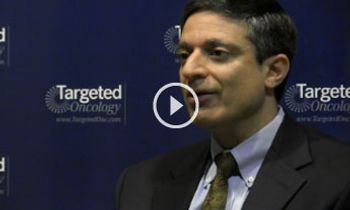
Sagar Lonial, MD, professor and chair, Department of Hematology & Medical Oncology, Emory University School of Medicine, chief medical officer, Winship Cancer Institute of Emory University, discusses CAR T-cell therapy for myeloma and other hematologic malignancies.

CPX-351 (Vyxeos), a fixed-combination of daunorubicin and cytarabine, has been approved by the FDA for adult patients with newly diagnosed therapy-related acute myeloid leukemia (t-AML) or AML with myelodysplasia-related changes (AML-MRC), based on an improvement in overall survival (OS) in a phase III study.
A new drug application (NDA) for acalabrutinib has been granted a priority review by the FDA for patients with previously-treated mantle cell lymphoma (MCL), according to AstraZeneca, the manufacturer of the highly selective, potent BTK inhibitor.
A look back at all the FDA news that occurred in July.
Acalabrutinib has been granted a breakthrough therapy designation by the FDA for patients with previously-treated mantle cell lymphoma (MCL), according to AstraZeneca, the manufacturer of the highly selective, potent BTK inhibitor.
Enasidenib (Idhifa) has been approved by the FDA as a treatment for patients with relapsed or refractory <em>IDH2</em>-mutated acute myeloid leukemia (AML), based on findings from a phase I/II study. A companion diagnostic, the RealTime IDH2 Assay, was also approved for the detection of the <em>IDH2</em> mutation.
The FDA has granted breakthrough therapy designation to venetoclax (Venclexta) for use in combination with low dose cytarabine (LDAC) in treatment-naïve elderly patients with acute myeloid leukemia (AML) who are ineligible for intensive chemotherapy, according to Roche, which is codeveloping the BCL-2 inhibitor with AbbVie.
Midostaurin (Rydapt) has been recommended for approval by the European Medicines Agency's Committee for Medicinal Products for Human Use (CHMP) to treat adults with newly diagnosed acute myeloid leukemia (AML) who are FLT3 mutation–positive.
Obinutuzumab (Gazyvaro, EU; Gazyva, US) has been recommended for approval by the European Medicines Agency’s Committee for Medicinal Products for Human Use (CHMP) in the frontline setting for the treatment of patients with follicular lymphoma.

Sundar Jagannath, MDDS, professor, Medicine, Hematology, and Medical Oncology, Mount Sinai Hospital, discusses the mechanism of action of selinexor for the treatment of multiple myeloma.
The Oncologic Drugs Advisory Committee voted 10-0 today to recommend approval of a biologics license application for tisagenlecleucel for the treatment of patients aged 25 or younger with relapsed/refractory B-cell acute lymphoblastic leukemia.
A supplemental new drug application for dasatinib (Sprycel) for use in children with Philadelphia chromosome-positive chronic phase chronic myeloid leukemia has been accepted by the FDA.
In a 6-1 vote, the FDA’s Oncologic Drugs Advisory Committee (ODAC) voted in favor of approving gemtuzumab ozogamicin in combination with daunorubicin and cytarabine for the treatment of patients with newly-diagnosed CD33-positive acute myeloid leukemia.
Blinatumomab (Blincyto) has been granted a full approval by the FDA as a treatment for adults and children with relapsed/refractory B-cell precursor acute lymphoblastic leukemia, regardless of Philadelphia chromosome status.

Jeff Sharman, MD, discusses findings of the phase III GENUINE study, which explored the combination of ublituximab (TG-1101) and ibrutinib (Imbruvica) for patients with previously treated high-risk chronic lymphocytic leukemia (CLL).
A clinical hold has been placed on the phase III KEYNOTE-183 and KEYNOTE-185 pembrolizumab trials and the discontinuation of the lenalidomide/dexamethasone/pembrolizumab arm of the KEYNOTE-023 trial has been ordered by the FDA.
A look back at all the FDA news that happened in the month of June, including in multiple myeloma, hematology, sarcoma, and lung cancer.
ClearLLab multicolor reagents (T1, T2, B1, B2, M) has been approved by the FDA for the detection of chronic leukemia, acute leukemia, non-Hodgkin lymphoma, multiple myeloma, myelodysplastic syndrome, and myeloproliferative neoplasms.
Sundar Jagannath, MDDS, professor, Medicine, Hematology, and Medical Oncology, Mount Sinai Hospital, discusses a first in-human multicenter study of bb2121 anti-BCMA CAR T-cell therapy for relapsed/refractory multiple myeloma.
According to findings from a small phase I study, all patients with multiple myeloma showed a response following treatment with an active dose of bb2121, an investigational anti–B-cell maturation antigen chimeric antigen receptor T-cell construct.
Advertisement
Advertisement
Trending on Targeted Oncology - Immunotherapy, Biomarkers, and Cancer Pathways
1
David DiBardino, MD, on the Rationale for Intratumoral Therapy in Lung Cancer
2
FDA Grants Final Approval to Cabozantinib Capsule Formulation
3
Four Approvals Reflect Growth in Hormone-Sensitive Prostate Cancer Treatment
4
Subcostal Robotic Surgery Cuts Thoracic Pain
5