
HEMATOLOGY
Latest News
Advertisement
Latest Videos





CME Content






































Advertisement
More News


Multiple Myeloma
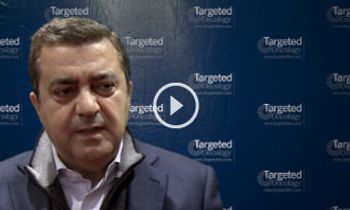
Anas Younes, MD, Chief of Lymphoma Service, Memorial Sloan Kettering Cancer Center, discusses the interim analysis of a study exploring the safety and efficacy of atezolizumab (Tecentriq) in combination with obinutuzumab (Gazya) and bendamustine in patients with previously untreated follicular lymphoma.

Based on data from the phase III 482 study, denosumab (Xgeva) has been granted FDA approval for the prevention of skeletal-related events in patients with multiple myeloma, according to Amgen, the developer of the RANK ligand inhibitor.
Eltrombopag (Promacta) has been granted a breakthrough therapy designation by the FDA for use in combination with standard immunosuppressive therapy for the first-line treatment of patients with severe aplastic anemia.
The FDA closed out the year by approving several new agents last month, including bevacizumab for glioblastoma, cabozantinib for renal cell carcinoma, nivolumab for melanoma, bosutinib for chronic myeloid leukemia, and pertuzumab for HER2+ breast cancer. In addition, several agents were granted a priority review designation. Here is a look back at all the FDA activity that took place in December.
Based on findings from the phase III ECHELON-1 trial, a supplemental biologics application (sBLA) for brentuximab vedotin (Adcetris) in combination with Adriamycin, vinblastine, and dacarbazine (AVD) has been granted a priority review by the FDA for the frontline treatment of advanced classical Hodgkin lymphoma, according to a statement from the company developing the CD30-targeted antibody-drug conjugate, Seattle Genetics.

Mark W. Bustoros, MD, a postdoctoral fellow at Dana-Farber Cancer Institute, Harvard Medical School, discusses ongoing research exploring the use of liquid biopsies in patients with smoldering multiple myeloma.

The proteasome inhibitor ixazomib has received a recommendation from the United Kingdom's National Institute for Health and Care Excellence for patients with relapsed/refractory multiple myeloma.
Acute myeloid leukemia (AML) therapy is guided mainly by cytogenetic profile, such as chromosomal duplication or deletion, and molecular mutations. <em>FLT3</em> mutations are the most common genetic abnormalities detected in patients with AML and are usually associated with a high relapse rate and short overall survival. Given the dismal outcomes in patients with <em>FLT3</em>-mutant AML, a great effort has been underway over the last several years to develop clinically effective FLT3 inhibitors.
Based on results of a phase I trial presented at the 2017 ASH Annual Meeting, a new drug applicaton for ivosidenib has been submitted for FDA approval for the treatment of patients with relapsed/refractory IDH1-mutant acute myeloid leukemia, according to a statement from Agios Pharmaceuticals, the company developing the targeted therapy.
The label for nilotinib (Tasigna) has been updated by the FDA with a provision stating patients with Philadelphia chromosome-positive chronic myeloid leukemia in the chronic phase (Ph+ CML-CP) who have received the BCR-ABL tyrosine kinase inhibitor could be eligible to stop treatment after having recieved for at least 3 years and having achieved the specific predetermined criteria.<br /> <br />


Managing Relapsed Chronic Myeloid Leukemia
Bosutinib (Bosulif) has been approved by the FDA as a first-line treatment for patients with Philadelphia chromosome-positive (Ph+) chronic myeloid leukemia (CML).

Tatyana Feldman, MD, John Theurer Cancer Center, Hackensack University Medical Center, discusses the phase III Echelon-1 study, which found brentuximab vedotin plus doxorubicin, vinblastine, and dacarbazine (AVD) demonstrated superior modified progression-free survival (PFS) versus ABVD in patients with previously untreated stage III or IV Hodgkin lymphoma.
In patients with chronic lymphocytic leukemia (CLL), the addition of ibrutinib to standard frontline chemoimmunotherapy induced negative minimum residual disease (MRD) status in bone marrow for 83% of patients, according to results from a preliminary clinical study presented at the 2017 ASH Annual Meeting.
Rapid and durable responses were induced with the combination of selinexor, weekly bortezomib (Velcade), and low-dose dexamethasone (Vd), according to results of a dose escalation/expansion trial of patients with relapsed/refractory multiple myeloma (RRMM) presented at the 2017 ASH Annual Meeting.
After 4 years of follow-up, a majority of patients with polycythemia vera (PV) that responded to treatment with ruxolitinib (Jakafi) maintained their responses, results from a randomized trial showed.
Ivosidenib (AG-120), an IDH1 inhibitor, demonstrated an objective response rate (ORR) of 41.6% in patients with relapsed/refractory <em>IDH1</em>-mutant acute myeloid leukemia (AML), according to findings from a single-arm phase I study.

Srdan Verstovsek, MD, of MD Anderson Cancer Center, discusses a study of sotatercept (ACE-011) alone and in combination with ruxolitinib in patients with myeloproliferative neoplasm (MPN)-associated myelofibrosis and anemia.
Advertisement
Advertisement
Trending on Targeted Oncology - Immunotherapy, Biomarkers, and Cancer Pathways
1
David DiBardino, MD, on the Rationale for Intratumoral Therapy in Lung Cancer
2
FDA Grants Final Approval to Cabozantinib Capsule Formulation
3
Four Approvals Reflect Growth in Hormone-Sensitive Prostate Cancer Treatment
4
Subcostal Robotic Surgery Cuts Thoracic Pain
5