

HEMATOLOGY
Latest News
Advertisement
Latest Videos


CME Content






































Advertisement
More News
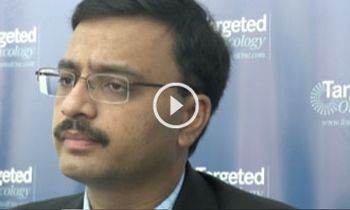
Nitin Jain, MD, assistant professor, Department of Leukemia, The University of Texas MD Anderson Cancer Center, discusses a phase II trial combining nivolumab (Opdivo) with ibrutinib (Imbruvica) for chronic lymphocytic leukemia (CLL) and richter transformation (RT) during the American Society of Hematology (ASH) Annual Meeting.<br />
Treatment with enasidenib (AG221) was active and was well tolerated in pretreated patients with IDH2-mutated myelodysplastic syndrome, including those who failed hypomethylating agents, according to findings from a phase I/II study.
Combination induction therapy with ibrutinib (Imbruvica) and obinutuzumab (Gazyva) after bendamustine debulking induced a 100% response rate in patients with chronic lymphocytic leukemia (CLL), according to findings from the phase II CLL2-BIG trial.
The combination of lirilumab and azacytidine was well tolerated and showed early signals of activity in heavily pretreated patients with acute myeloid leukemia (AML), according to phase Ib/II findings presented at the 2016 ASH Annual Meeting.
Lenalidomide as maintenance following first-line immunochemotherapy substantially improves progression-free survival in the treatment of patients with high-risk chronic lymphocytic leukemia (CLL), according to interim analysis of the phase III CLLM1 study.
Findings from the longest follow-up to date evaluating up to 5 years of ibrutinib (Imbruvica) in patients with chronic lymphocytic leukemia/small lymphocytic lymphoma (CLL/SLL) show that the agent is safe and effective.
Combining obinutuzumab (Gazyva) with chemotherapy in the first-line setting reduced the risk of disease progression or death by 34% versus rituximab (Rituxan) plus chemotherapy in patients with follicular lymphoma, according to findings from the phase III GALLIUM study.
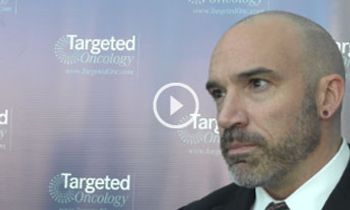
Jeffrey Jones, MD, MPH, associate professor of Internal Medicine, Division of Hematology, Department of Internal Medicine, Ohio State University Wexner Medical Center, discusses the benefits of venetoclax in chronic lymphocytic luekemia (CLL).
With treatment for newly diagnosed acute myeloid leukemia remaining essentially unchanged over the last 4 decades, researchers are hopeful that the addition of the investigational agent vadastuximab talirine to standard 7+3 induction therapy may improve survival for these patients.
Brentuximab vedotin (Adcetris) induced responses lasting at least 4 months in 56% of patients with cutaneous T-cell lymphoma versus 13% in patients receiving physician’s choice of standard therapies, according to findings from the phase III ALCANZA trial.
TKIs can safely be stopped or dose-reduced without jeopardizing long-term outcomes for select patients with chronic myeloid leukemia who have obtained a major molecular response.
Treatment with the combination of nivolumab (Opdivo) and ibrutinib (Imbruvica) showed encouraging activity and safety in a small phase II study of patients with chronic lymphocytic leukemia and Richter transformation.
An exploratory subgroup analysis of older patients with high-risk acute myeloid leukemia who took the liposomal formulation CPX-351 (Vyxeos) before allogeneic hematopoietic cell transplantation demonstrated that the drug improves overall survival and reduces the risk of early death.
Miguel Perales, MD, deputy chief, Adult Bone Marrow Transplant Service, and director, Adult Bone Marrow Transplantation Fellowship Program, gives an overview of the PROGRESS II trial in acute leukemia and myelodysplastic syndrome during the ASH Annual Meeting.

The FDA has granted a priority review to a supplemental biologics license application (sBLA) for pembrolizumab (Keytruda) for use as a treatment for patients with refractory classical Hodgkin lymphoma.
Thomas E. Witzig, MD, hematologist-oncologist, Mayo Clinic, discusses some of the issues that still need to be addressed in diffuse large B-cell lymphoma.
The FDA has granted a full approval and label update to ponatinib (Iclusig) for patients with chronic phase (CP), accelerated phase, or blast phase chronic myeloid leukemia (CML) or Philadelphia chromosome-positive acute lymphoblastic leukemia (Ph+ ALL).
The European Commission has granted a conditional approval to ixazomib (Ninlaro) in combination with lenalidomide and dexamethasone for adult patients with multiple myeloma.
Robert A. Figlin, MD has been appointed the deputy director of the Integrated Oncology Service Line at the Samuel Oschin Comprehensive Cancer Institute, Cedars-Sinai Medical Center.
Clinical trial findings from the past year will likely have a game-changing effect on the multiple myeloma landscape, according to Rafael Fonseca, MD.
The American Society of Hematology (ASH) has announced that it will honor the late David Grimwade, PhD, with the 2016 Exemplary Service Award.
Daratumumab (Darzalex) has received FDA approval in combination with lenalidomide (Revlimid) and dexamethasone or bortezomib (Velcade) and dexamethasone for patients with relapsed multiple myeloma following at least 1 prior therapy.
The FDA has granted a priority review to the multikinase inhibitor midostaurin as a treatment for patients with newly-diagnosed <em>FLT3</em>-mutated acute myeloid leukemia or advanced systemic mastocytosis.
The FDA has granted a breakthrough therapy designation to the brentuximab vedotin for the treatment of patients with CD30-positive mycosis fungoides or primary cutaneous anaplastic large cell lymphoma following at least 1 prior systemic therapy. <br />
When it comes to adverse events and duration of response, next-generation BTK inhibitors in chronic lymphocytic leukemia compare favorably with ibrutinib.
Advertisement
Advertisement
Trending on Targeted Oncology - Immunotherapy, Biomarkers, and Cancer Pathways
1
Four Approvals Reflect Growth in Hormone-Sensitive Prostate Cancer Treatment
2
David DiBardino, MD, on the Rationale for Intratumoral Therapy in Lung Cancer
3
FDA Grants Final Approval to Cabozantinib Capsule Formulation
4
Subcostal Robotic Surgery Cuts Thoracic Pain
5