



IMMUNOTHERAPY
Latest News
Advertisement
Latest Videos





























Advertisement
More News

Ryan Motte, PharmD, CSP, reviewed the global cancer burden among men and its projected trajectory to 2050, highlighting the role specialty pharmacies can play in combating this issue.

Alexa Simon Meara, MD, discusses the importance of including a rheumatology approach to immunotherapy treatment for cancer.

The combination of HBI-8000 and nivolumab induced a response in nearly two-thirds of patients with advanced melanoma and no prior anti–PD-1/PD-L1 treatment.

Joe DePinto, MBA, discusses some of the key challenges to equitable access to cell and gene therapies, especially in underserved populations.

The subcutaneous version of the cancer treatment atezolizumab is approved in all adult intravenous indications, including in lung, liver, and skin cancers.

Meredith McKean, MD, discusses a novel mRNA therapy for the treatment of solid tumors.

Matthew Hadfield, DO, discusses what community oncologists should know about immunotherapy toxicities.
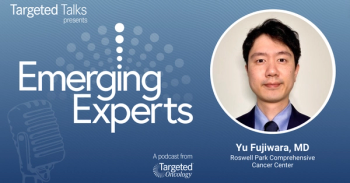
In this episode of Emerging Experts, Yu Fujiwara, MD, shares his journey from Japan to the United States and his path to becoming a specialist in hematology and oncology.
SenoVax, a novel senolytic immunotherapy for NSCLC, has been submitted as an investigational new drug application to the FDA, initiating a clinical trial to test its efficacy.
The FDA’s Oncologic Drugs Advisory Committee convened to assess the need for rigorous trial designs evaluating perioperative regimens in resectable non–small cell lung cancer.
Matthew Hadfield, DO, discusses his interest in immunotherapy and the toxicities associated with them.

The tyrosine kinase inhibitor entrectinib shows promising responses in patients with non–small cell lung cancer harboring a ROS1 mutation.
Juneko Grilley-Olson, MD, discussed findings from a phase 2 study investigating the addition of immunotherapy to chemotherapy for the treatment of advanced angiosarcoma.
Robert Jotte, MD, PhD, discussed findings from the phase 3 KRYSTAL-12 study evaluating adagrasib vs docetaxel in previously treated KRAS G12C-mutated non–small cell lung cancer.

Ajaz M. Khan, MD, MBA, CPE, provides his insights into the novel biomarkers and up-front immunotherapies that are changing the landscape of treatment for patients with lung cancer.
The SKYSCRAPER-06 trial for the first-line treatment of non–small cell lung cancer was stopped because the combination of tiragolumab and atezolizumab did not improve survival compared with the control of pembrolizumab and chemotherapy.

Neil Segal, MD, discussed findings from a phase 1/2 trial investigating REGN7075 in patients with solid tumors refractory to immunotherapy.
Anthony Conley, MD, discussed findings from a phase 1/2 study investigating the oncolytic virus AdAPT-001 in patients with solid tumors presented at ASCO 2024.
A decision on the supplemental new drug application of osimertinib in this population is expected in the fourth quarter of 2024.
Alexa Simon Meara, MD, discussed how rheumatology and oncology can work together to improve outcomes for patients undergoing immunotherapy treatment for cancer.
If approved, zenocutuzumab would be the first targeted therapy for neuregulin 1 fusion-positive lung and pancreatic cancers.

Tina Cascone, MD, PhD, discusses who was included in the phase 3 CheckMate-77T trial and the key end points of the study.

A study suggests that a novel CAR T-cell therapy could be a curative treatment for some patients with chronic lymphocytic leukemia, with 25% of responders still in remission after 6 years.
The phase 1 study of HEMO-CAR-T in patients with acute myeloid leukemia can proceed following the lifted clinical hold.
In an interview with Targeted Oncology, Mark Dybul, MD, discussed a breakthrough method of immunotherapy in solid tumors.
Advertisement
Advertisement
Trending on Targeted Oncology - Immunotherapy, Biomarkers, and Cancer Pathways
1
FDA Accepts NDA for Daraxonrasib in Metastatic Pancreatic Cancer
2
Advanced Renal Cell Carcinoma: Tailoring Second-Line Therapy After Prior Immunotherapy
3
Teclistamab/Talquetamab Reduces Risk of Progression by 89% in R/R Multiple Myeloma
4
IMNN-001 Plus Chemo Cuts MRD Rate in Frontline Ovarian Cancer
5