
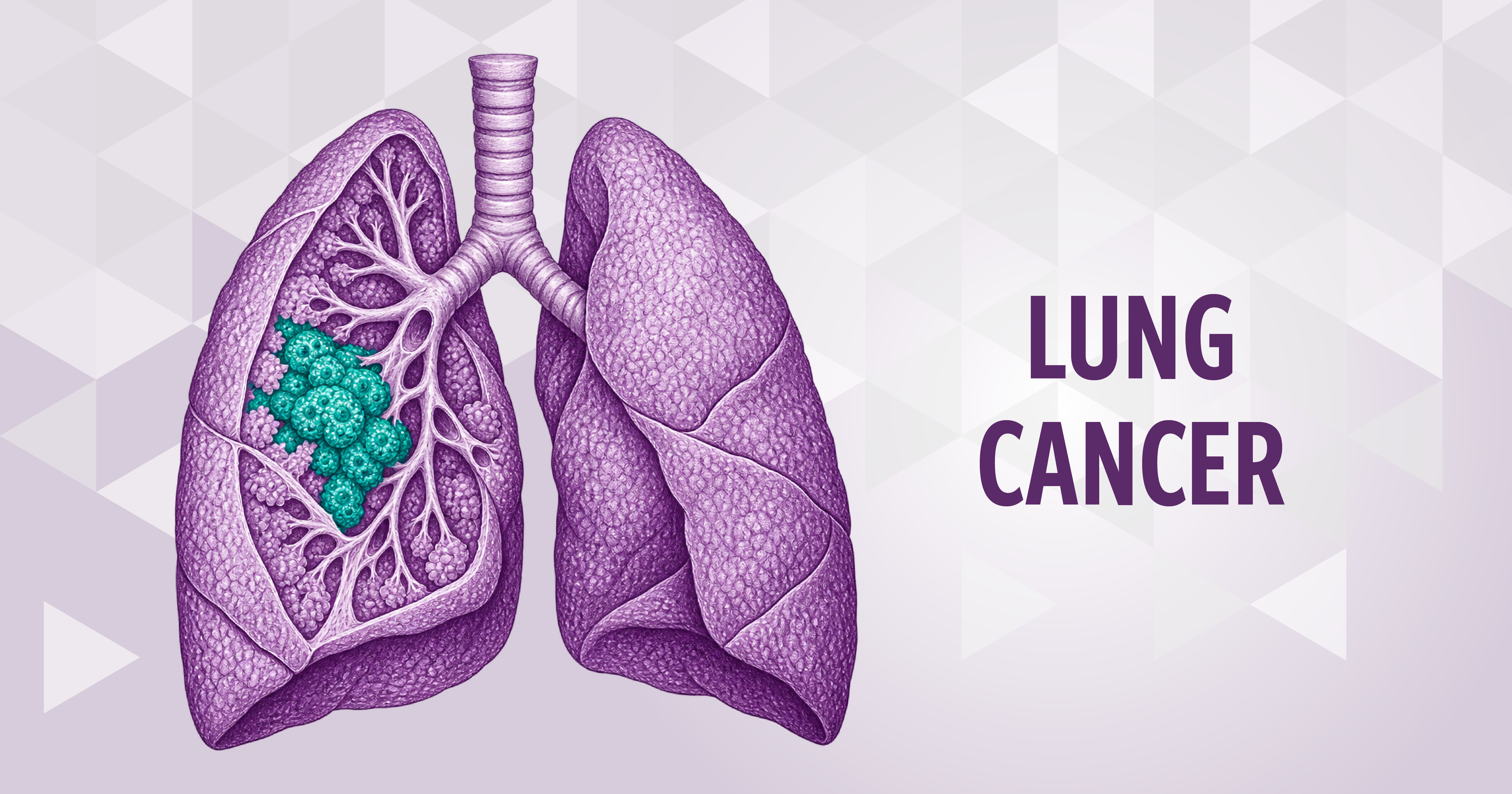


LUNG CANCER
Latest News
Advertisement
Video Series



Latest Videos







Shorts

0:46
Encouraging Healthy Weight Loss in Patients With Cancer
4 days ago
by
Sai Yendamuri, MD, MBA, FACS

0:49
Is liquid biopsy the game-changer for lung cancer treatment?
9 days ago
by
Valsamo Anagnostou, MD, PhD

0:34
When to Consider Dual Immunotherapy in NSCLC
20 days ago
by
Matthew A. Gubens, MD, MS

1:05
Using Chemo Before Targeted Therapy in NSCLC?
23 days ago
by
Lyudmila Bazhenova, MD

0:39
Stop Assuming, Start Asking: Understanding the 'No'
a month ago
by
Narjust Florez, MD

0:37
Are KRAS Mutations More Common Than We Think?
a month ago
by
Benjamin Herzberg, MD

0:35
Changing Treatment Paradigms in ROS1+ Lung Cancer
2 months ago
by
Jorge Nieva, MD

0:55
Why Radiation Therapy Hits a Wall
2 months ago
by
David DiBardino, MD
0:51
Why Do Promising Cancer Drugs Fail in Phase 3?
2 months ago
by
David DiBardino, MD

0:31
The "Holy Grail" of Lung Cancer Surgery?
2 months ago
by
Gavin M. Wright, MBBS, FRACS, PhD
Podcasts



CME Content





















Advertisement
More News
Hoth Therapeutics stopped the phase 2a CLEER-001 trial of topical HT-001 early after an interim review and will seek FDA input on phase 3.
Real-world study shows outpatient tarlatamab for relapsed SCLC is feasible, with mostly low-grade CRS, rare ICANS, low ICU use, and similar disease control.

Catch up on October 2026 FDA oncology actions: approvals for pirtobrutinib, tucatinib, and dostarlimab, plus BLA and NDA submissions and a new designation.

New study shows CT-measured body fat, not BMI, links obesity to higher lung cancer risk via immune T-cell changes—hinting at prevention through weight loss.

Phase 3 data presented ESMO 2026 showed that sac-TMT and iza-bren beat chemotherapy in NSCLC, whereas chemo plus pembrolizumab extended PFS in PD-L1–high disease.
ESMO 2026: Divarasib, Savolitinib, Ivonescimab Show OS Gains in Phase 3 Trials
Published: | Updated:
ESMO 2026 Presidential Symposium II recap: survival benefits reported across phase 3 Krascendo 1, SAFFRON, CLARITY-Gastric01, and HARMONi-GI1 trials.
Sunvozertinib is FDA approved for patients with NSCLC with EGFR exon 20 insertion mutations that progressed on or after platinum-based chemotherapy.

Vopimetostat yielded favorable outcomes in a phase 1/2 trial in combination with daraxonrasib or zoldonrasib in MTAP-deleted, RAS-mutant pancreatic cancer or lung cancer.

During a live event, Mary Jo Fidler, MD, and participants discussed how an intermediate-risk regimen, insurance resistance, and limited experience with trilaciclib shape neutropenia prevention in extensive-stage disease.

A phase 2 trial is planned for an allogeneic CAR T-cell product in patients with lung or breast cancer with brain metastases.

Theodore Wagener, PhD, of The Ohio State University discusses the design of the phase 2 DREAM LUNG study of psilocybin-assisted therapy for depression in non–small cell lung cancer.
FDA grants 2 breakthrough therapy designations to Temab-A, speeding development for hard-to-treat colorectal cancer and c-Met–expressing lung cancer.

Lyudmila Bazhenova, MD, explains why the updated taletrectinib label does not change her practice and reviews new WCLC subgroup data in ROS1+ NSCLC.
Advertisement
Advertisement
Trending on Targeted Onc
1
FDA Approves OncoMate MSI Dx For Pembrolizumab in MSI-H Tumors
2
Novocure’s Optune Mya Gets FDA Not Approvable Letter
3
FDA Approves Pimicotinib for Symptomatic Tenosynovial Giant Cell Tumor
4
Anbal-Cel Demonstrates Clinical Activity in Relapsed LBCL
5