


LUNG CANCER
Latest News

Advertisement
Latest Videos





































Advertisement
More News

The TKI zongertinib is currently being reviewed by the FDA for a potential approval for patients with HER2 mutation–positive non–small cell lung cancer.
Shirish M. Gadgeel, MD, discussed long-term data from the MARIPOSA trial of lazertinib and amivantamab in EGFR-mutated non–small cell lung cancer.

During a live event, Alexander I. Spira, MD, PhD, and participants discuss efficacy, adverse events, and sequencing of EGFR-mutated NSCLC treatments.
Jennifer Marie Suga, MD, shares the lung cancer research she’s eager to explore as new data emerges.
The FDA granted orphan drug status to rhenium-186 obisbemeda for treating leptomeningeal metastases in lung cancer.
Alexander Spira, MD, PhD, FACP, discusses the PAPILLON trial, including its methods, design, and rationale as well as new data from the study.
During a live event, Alexander I. Spira, MD, PhD, and participants NGS testing practices and the rationale behind their approaches.
Based on data from the Beamion LUNG-1 trial, the FDA granted a priority review to zongertinib for patients with HER2-mutant advanced non–small cell lung cancer.
The FDA granted fast track status to IBI363 for the treatment of patients with advanced squamous lung cancer after prior treatment.
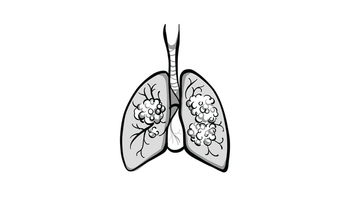
During a Case-Based Roundtable® event, Julie R. Brahmer, MD, MSC, reviewed the CheckMate 9LA, KEYNOTE-407, and POSEIDON trials of immunotherapy in patients with metastatic non–small cell lung cancer.

The California wildfires severely affected patients with cancer, requiring evacuation protocols, community support, and learning for future disaster preparedness.
The FDA granted breakthrough status to Serial CTRS, an AI tool that improves survival predictions in non–small cell lung cancer.
During a Community Case Forum event in partnership with the Medical Oncology Association of Southern California, Edward S. Kim, MD, MBA, discussed the FLAURA2 and MARIPOSA trials of newer regimens for EGFR-positive lung cancer.
In separate, live virtual events, Vincent K. Lam, MD, and Chul Kim, MD, MPH, discuss molecular assays and treatment options for a patient with metastatic non–small cell lung cancer (NSCLC), with participants.
During a Case-Based Roundtable® event, Joshua K. Sabari, MD, continued discussion of key outcomes from the MARIPOSA trial and toxicity management in patients with EGFR-mutated non–small cell lung cancer in the second article of a 2-part series.
Abenacianine, a tumor-targeted fluorescent imaging agent, received fast track designation from the FDA after demonstrating its safety and efficacy in visualizing lung tumors in a phase 2 study.
Luis E. Raez, MD, discusses when minimal residual disease testing can be performed as an option for patients with lung cancer.
The phase 1 INSIGHT-003 trial of efti, pembrolizumab, and chemotherapy for first-line advanced nonsquamous NSCLC has completed enrollment.
Significant advancements in lung cancer treatment were seen throughout 2024, from new drug approvals to promising clinical trial results.
Recent regulatory activities suggest that the understanding of TROP2-directed therapies remains muddled.

Joseph Greer, PhD, discussed a study evaluating in-person vs telehealth modalities of early integrated palliative care for patients with advanced lung cancer.
During a Case-Based Roundtable® event, Joshua K. Sabari, MD, discussed the mechanism of action of amivantamab and the MARIPOSA trial in patients with EGFR-mutated non–small cell lung cancer in the first article of a 2-part series.
The FDA granted priority review to taletrectinib in ROS1-positive advanced NSCLC, with a target decision date of June 2025.
Luis E. Raez, MD, discusses the current liquid biopsy options for patients with lung cancer through assessing circulating tumor DNA.

During a Case-Based Roundtable® event, Chul Kim, MD, moderated a discussion on current use of ALK TKIs in lung cancer in the second article of a 2-part series.
Advertisement
Advertisement
Trending on Targeted Oncology - Immunotherapy, Biomarkers, and Cancer Pathways
1
SOT106 Receives New FDA FTD and ODD in Sarcoma
2
Iberdomide Doubles MRD-Negative CR Rate in Phase 3 EXCALIBER-RRMM Trial
3
IMS 2026 Day 4 Recap: MRD-Guided Regimens Highlight Final Sessions
4
Trispecifics: A New Strategy to Prevent Antigen Escape
5