

LUNG CANCER
Latest News

Advertisement
Latest Videos




































Advertisement
More News

Oleg Gligich, MD, discusses utilizing circulating tumor DNA to assess patients with lung cancer.
Panelist discusses how the future treatment landscape for EGFR-mutant advanced non–small cell lung cancer is evolving to address current unmet needs and offers clinical pearls to community oncologists for optimizing patient care in this rapidly changing field.
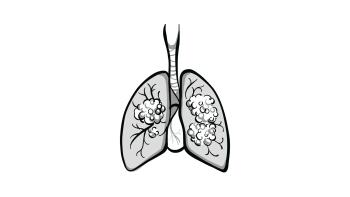
The TROPION-Lung12 trial uses a circulating tumor DNA assay to preoperatively screen patients with non–small cell lung cancer for eligibility in post-surgical adjuvant treatment regimens.
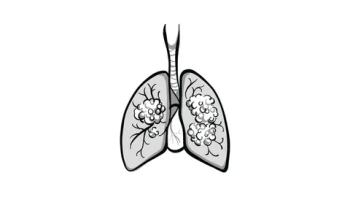
The phase 1 INSIGHT-003 trial showed that adding eftilagimod alpha to pembrolizumab and chemotherapy achieved a median overall survival of 32.9 months in metastatic non–small cell lung cancer.
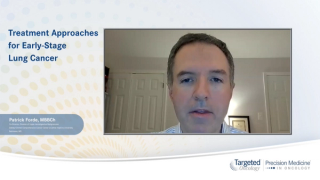
During a Case-Based Roundtable® event, Patrick M. Forde, MD, discussed safety and tolerability concerns with immunotherapy in patients with squamous non–small cell lung cancer.
Hatim Husain, MD, discusses how the implementation of proactive prophylaxis strategies for patients taking amivantamab, including prophylactic antibiotics, good skin hygiene, and insights from the phase 2 COCOON study, can help manage potential adverse effects and improve treatment outcomes.
NKTR-255 in combination with durvalumab following chemoradiation was well-tolerated in patients with non–small cell lung cancer, with a safety profile similar to earlier studies.
The 22nd Annual Winter Lung Cancer Conference, January 31-February 2, 2025, will cover advances in NSCLC and SCLC treatment.
Panelist discusses how the second interim overall survival data from MARIPOSA-2, presented at the European Society for Medical Oncology Congress 2024, affect treatment strategies for patients with non–small cell lung cancer that has developed resistance to osimertinib.

During a Case-Based Roundtable® event, Chul Kim, MD, discussed the ALTA-1 trial and BRIGHTSTAR trials of brigatinib in ALK+ lung cancer in the first article of a 2-part series.
The FDA has extended its review of zenocutuzumab's in NRG1+ NSCLC and PDAC to February 2025, with efficacy and safety data from the eNRGy trial supporting the application.
Three phase 3 trials of combinations including datopotamab deruxtecan for the treatment of non–small cell lung cancer are beginning.
Panelist discusses how an early analysis of the mechanisms of acquired resistance to first-line treatment with amivantamab plus lazertinib vs osimertinib was presented at the European Society for Medical Oncology Congress 2024, shedding light on potential strategies for managing EGFR-mutated and MET-amplified non–small cell lung cancer.
An expert addressed the emerging role of immune checkpoint inhibitors in the perioperative space based on findings from the CheckMate 816, IMpower010, PEARLS, and ADAURA trials.
Neoadjuvant pembrolizumab with chemotherapy led to greater pathologic regression based on percent residual volume tumor vs placebo plus chemotherapy in patients with early-stage non–small cell lung cancer.
Aumolertinib improved progression-free survival vs placebo in patients with unresectable stage III non–small cell lung cancer, according to data from an interim analysis of the phase 3 POLESTAR trial.
Panelist discusses how agents such as osimertinib, initially developed to target resistance mechanisms in refractory disease, are now being used proactively to prevent drivers of disease progression.
Recent advancements in protein engineering, especially antibody-drug conjugates, show promise in lung cancer treatment, with ivonescimab outperforming pembrolizumab in PD-L1-positive advanced non-small cell lung cancer.

During a Case-Based Roundtable® event, Ticiana Leal, MD, discusses phase 3 trials of combinations in the non–small cell lung cancer setting in the second article of a 2-part series.
Following promising results from the phase 3 LUNAR trial, the FDA has approved Optune Lua for use with PD-1/PD-L1 inhibitors or docetaxel in patients with metastatic non–small cell lung cancer.
Nicolas Girard, MD, PhD, discusses patient-reported outcomes from the LUMINOSITY trial of telisotuzumab vedotin in NSCLC.
Nicolas Girard, MD, PhD, discusses the rationale of targeting PD-L1 and LAG-3 in NSCLC in the RELATIVITY-104 study.
The FDA has approved nivolumab plus chemotherapy as a neoadjuvant treatment for operable stage IIA to IIIB non–small cell lung cancer, based on data from the phase 3 CheckMate 77T trial.
Hatim Husain, MD, discusses how acquired resistance to kinase inhibitors in EGFR-mutated non-small cell lung cancer (NSCLC) poses a significant challenge in long-term treatment efficacy, necessitating ongoing research into novel therapeutic strategies and combination approaches to overcome resistance mechanisms.
Percy Lee, MD, discussed findings from a trial evaluating a hypofractionated approach to concurrent chemoradiation, incorporating an adaptive stereotactic ablative radiotherapy boost in non–small cell lung cancer.
Advertisement
Advertisement
Trending on Targeted Oncology - Immunotherapy, Biomarkers, and Cancer Pathways
1
SOT106 Receives New FDA FTD and ODD in Sarcoma
2
Iberdomide Doubles MRD-Negative CR Rate in Phase 3 EXCALIBER-RRMM Trial
3
IMS 2026 Day 4 Recap: MRD-Guided Regimens Highlight Final Sessions
4
Trispecifics: A New Strategy to Prevent Antigen Escape
5